
Vertex Certificate Center helps tax teams collect, store, track, and manage sales and use tax exemption certificates. It can suit large enterprises already using Vertex products, especially when certificate records must integrate with a broader tax-determination environment and established ERP systems.
However, certificate software does not always remove the operational workload from an internal finance team. Employees may still need to contact customers, review exceptions, monitor renewals, map documents to transactions, and prepare supporting evidence when auditors question exempt sales. These responsibilities form part of the wider sales tax compliance process.
Businesses searching for a Vertex Certificate Center alternative may also consider a done-for-you sales tax service such as Galvix. Galvix manages certificate collection, document review, customer follow-up, renewal tracking, organized storage, and audit preparation instead of asking teams to administer another software tool or platform.
This guide compares the top alternatives to Vertex Certificate Center across workflow depth, state-specific support, implementation requirements, cost structure, wider tax coverage, and operational ownership. It helps buyers distinguish focused tax software from a managed sales tax service that handles recurring compliance work.

Why Do Businesses Look for a Vertex Certificate Center Alternative?
Businesses compare Vertex Certificate Center alternatives when they want simpler ownership, managed support, clearer pricing, or wider sales tax coverage. The decision often depends on who handles customer outreach, state-rule interpretation, renewals, integrations, exception review, filings, notices, and audit preparation after implementation.
1. Certificate Management Still Needs Operational Ownership
Vertex can support exemption certificate workflows, but internal teams may still need to chase customers, review exceptions, connect documents with transactions, and explain untaxed sales during audits.
Galvix solves this by combining certificate workflows with specialist review and customer follow-up. Instead of leaving finance teams to manage every missing, invalid, or expiring certificate, Galvix helps keep the process moving through a managed workflow.
2. Broader Sales Tax Work Can Sit Outside the Certificate Tool
Exemption certificates represent one part of sales tax compliance. Businesses may also need nexus monitoring, tax determination, state registrations, return preparation, notice management, and sales tax audit support.
Galvix connects exemption certificate management work with these broader obligations through its managed sales tax service. This helps teams avoid maintaining certificate records in one platform while handling filings, notices, nexus exposure, and audit preparation through disconnected systems.
3. Enterprise Platforms May Feel Heavy for Lean Teams
Vertex is strong in complex enterprise environments, but smaller finance teams may prefer a more managed model in which specialists own recurring compliance work rather than adding another software or platform to administer.
Galvix is better suited to lean teams that want a managed partner rather than another internal software project. Its modular pricing model lets businesses choose the support they need without committing to a heavy all-in-one setup.
4. State-Specific Rules Require More Than Document Storage
Each jurisdiction may prescribe different forms, validity periods, renewal rules, registration numbers, out-of-state requirements, and verification methods. Businesses may therefore need an alternative that helps operationalize state-specific rules rather than treating every uploaded document as part of a single generic workflow.
Galvix helps teams manage exemption certificates with the state context attached. This is useful when a business has exempt customers across several jurisdictions and needs cleaner records for audit review.
5. Validation Terminology Can Create False Confidence
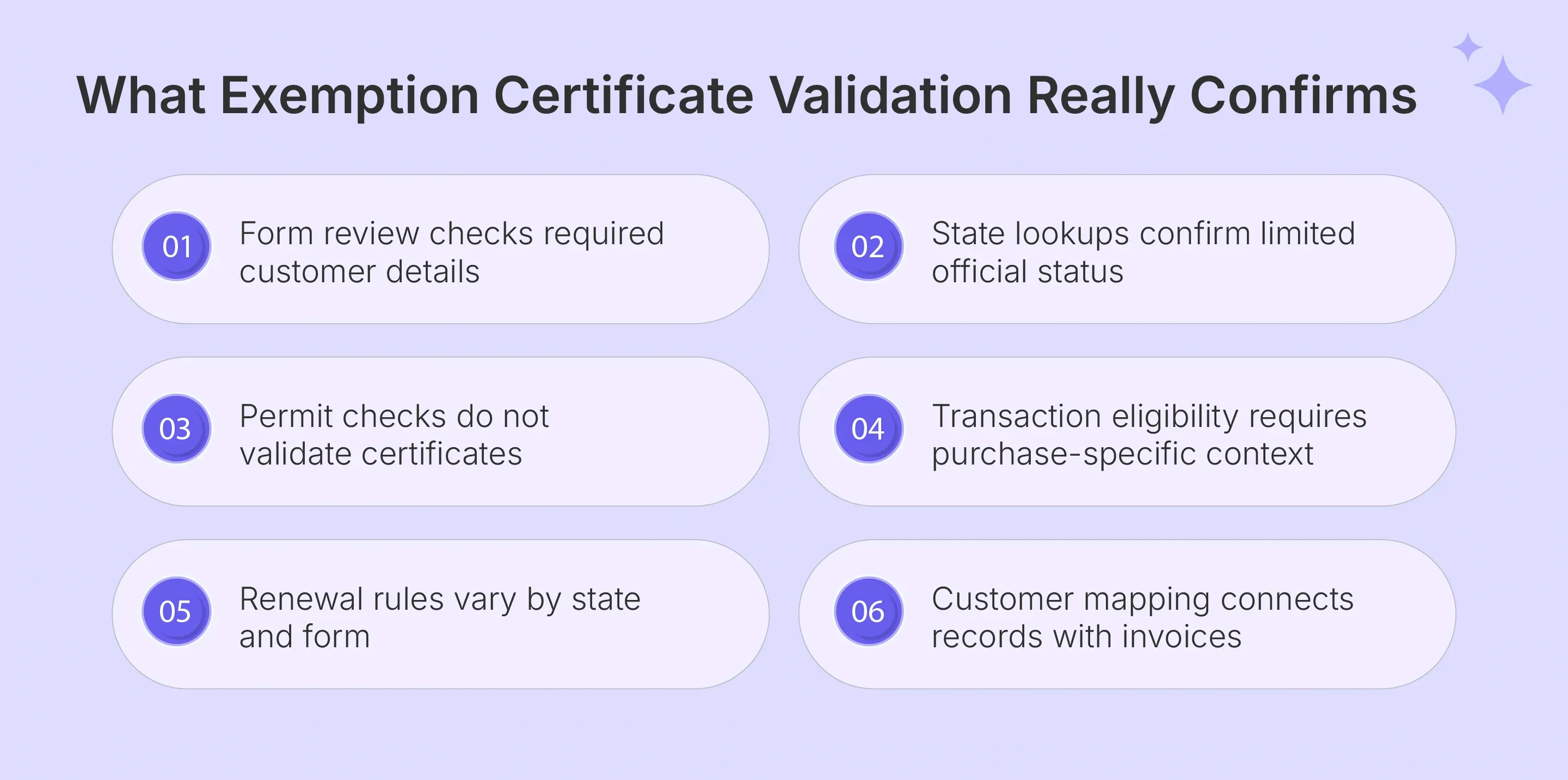
A platform may validate whether required fields are present without proving that the state issued the certificate or that the claimed exemption applies to the transaction. Buyers should ask vendors to define precisely what “validation” means, which state tools are used, and what remains subject to human review.
Galvix adds human review to the exemption certificate management process, so businesses do not rely solely on field-level checks. The team can flag missing details, mismatched customer information, unclear exemption reasons, and records that need follow-up before audit pressure begins.
6. Implementation and Support Questions Need Early Answers
Implementation planning should cover data migration, user access, customer mapping, ERP integration, renewal rules, support escalation, and post-launch ownership. Businesses using Microsoft Dynamics, NetSuite, SAP, or other ecommerce platforms should confirm the integration scope before committing.
Feature lists rarely show how a platform performs in practice and in everyday use. The Reddit discussions below provide real-world user context on setup, integration, pricing, and support across the broader Vertex environment.
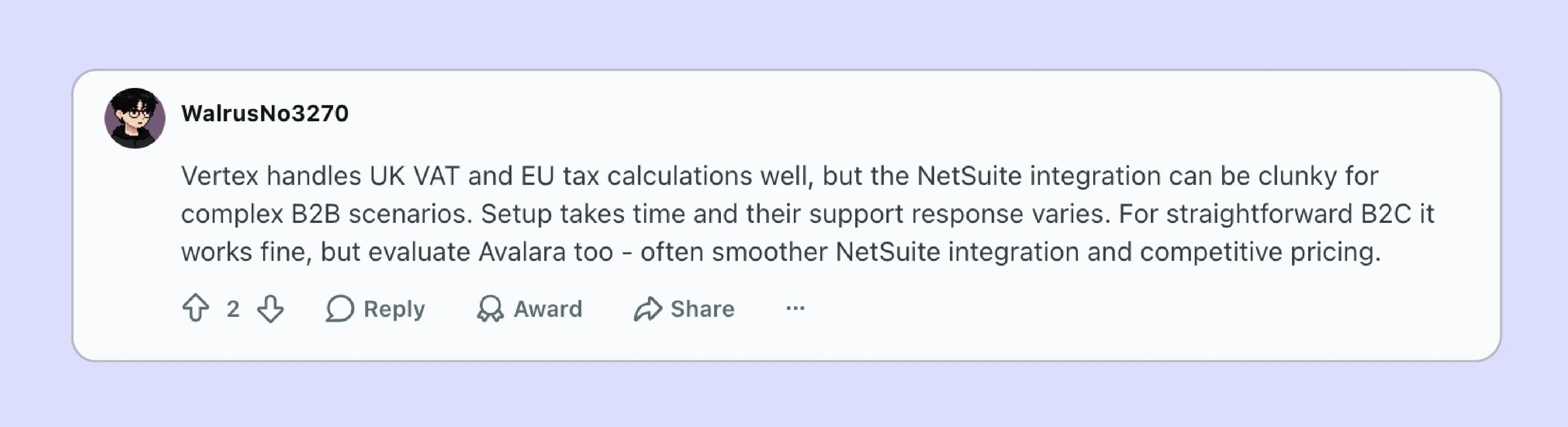
One user described the NetSuite integration as difficult for complex B2B scenarios, with lengthy setup and variable support. This feedback highlights why buyers should clarify ownership of implementation, integration testing, and escalation routes before selecting an enterprise tax environment.
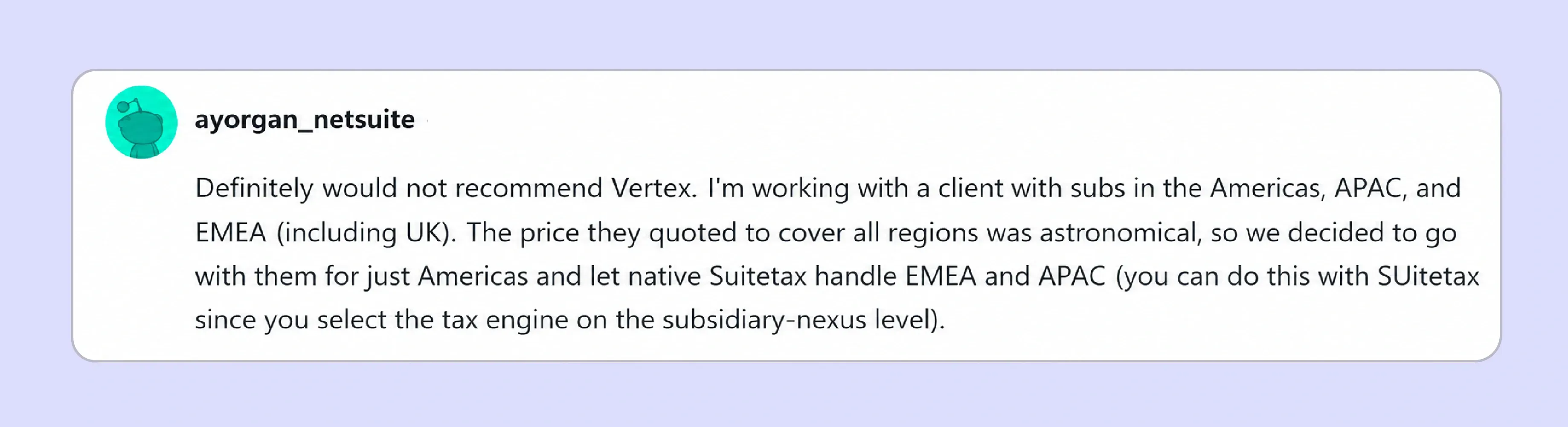
A second user focused on regional pricing and chose SuiteTax for the Americas while retaining Vertex elsewhere. Together, these comments show why buyers should compare geographic requirements, implementation effort, service coverage, and total cost before making a platform decision.
What Should a Vertex Certificate Center Alternative Actually Validate?
A Vertex Certificate Center software alternative should check more than whether a form is complete. Buyers need to know what the document proves, what the state confirms, whether the certificate fits the transaction, and when renewal is required.
Each check supports a different compliance decision.
| Validation Layer | What It Should Confirm | What It Does Not Automatically Prove |
|---|---|---|
| Document completeness | Required names, numbers, dates, signatures, exemption reasons, and purchase descriptions appear | The purchaser or transaction legally qualifies |
| Official state status | The relevant certificate, entity number, reseller permit, permit, or registration remains active | The completed document covers every purchase |
| State and form applicability | The form is accepted in the sourcing state for the exemption claimed | Every required field contains accurate information |
| Transaction eligibility | The purchaser, product, intended use, state, and transaction period support exemption | The certificate remains valid indefinitely |
| Validity and renewal | The document follows its annual, fixed-term, continuing, or event-driven rule | Purchaser circumstances have remained unchanged |
| Customer and transaction mapping | The certificate connects with the correct customer, invoices, jurisdiction, and exemption category | The underlying exemption claim is legally correct |
These layers become harder to manage across states because the same label can describe very different checks. One jurisdiction may confirm a certificate number, while another only verifies an active permit. Businesses need a reliable tool for state-level guidance before they configure workflows or approve exempt customer accounts.
Quick Comparison of the Best Vertex Certificate Center Alternatives
Here is a quick comparison of the 7 leading Vertex Certificate Center alternatives:
| Platform | Operating Model | Best Fit | Wider Tax Coverage | Human Operational Support |
|---|---|---|---|---|
| Galvix | Done-for-you service with supporting technology | Lean teams transferring recurring compliance work | Nexus, registrations, determination, returns, notices, and audits | Included through a dedicated specialist |
| Avalara ECM | Software-led certificate lifecycle platform | Businesses using Avalara products | Connected Avalara products provide wider coverage | Depends on plan and service scope |
| Sovos CertManager | Enterprise certificate management software | Companies with substantial certificate volumes | Connects with wider Sovos products | Buyers should confirm service scope |
| Thomson Reuters ONESOURCE | Software within ONESOURCE Determination | Established corporate tax departments | Global sales tax, GST, and VAT environment | Primarily software-led |
| EXEMPTAX | Focused ECM software with managed options | Businesses seeking dedicated certificate functionality | Mainly certificate-centered | Available through selected plans |
| Numeral | Certificate and sales tax platform | Ecommerce companies and SaaS companies | US compliance and global VAT services | Tax expert access depends on plan |
| Zamp | Managed sales tax provider | Businesses outsourcing US sales tax compliance | Registrations, filings, notices, and audit support | Included within managed scope |
This table offers a quick view of seven leading options and their operating models. Now, it’s time to examine all 15 Vertex Certificate Center alternatives in detail across key parameters.
Also Read: 12 Vertex Alternatives for Sales Tax Management
Galvix
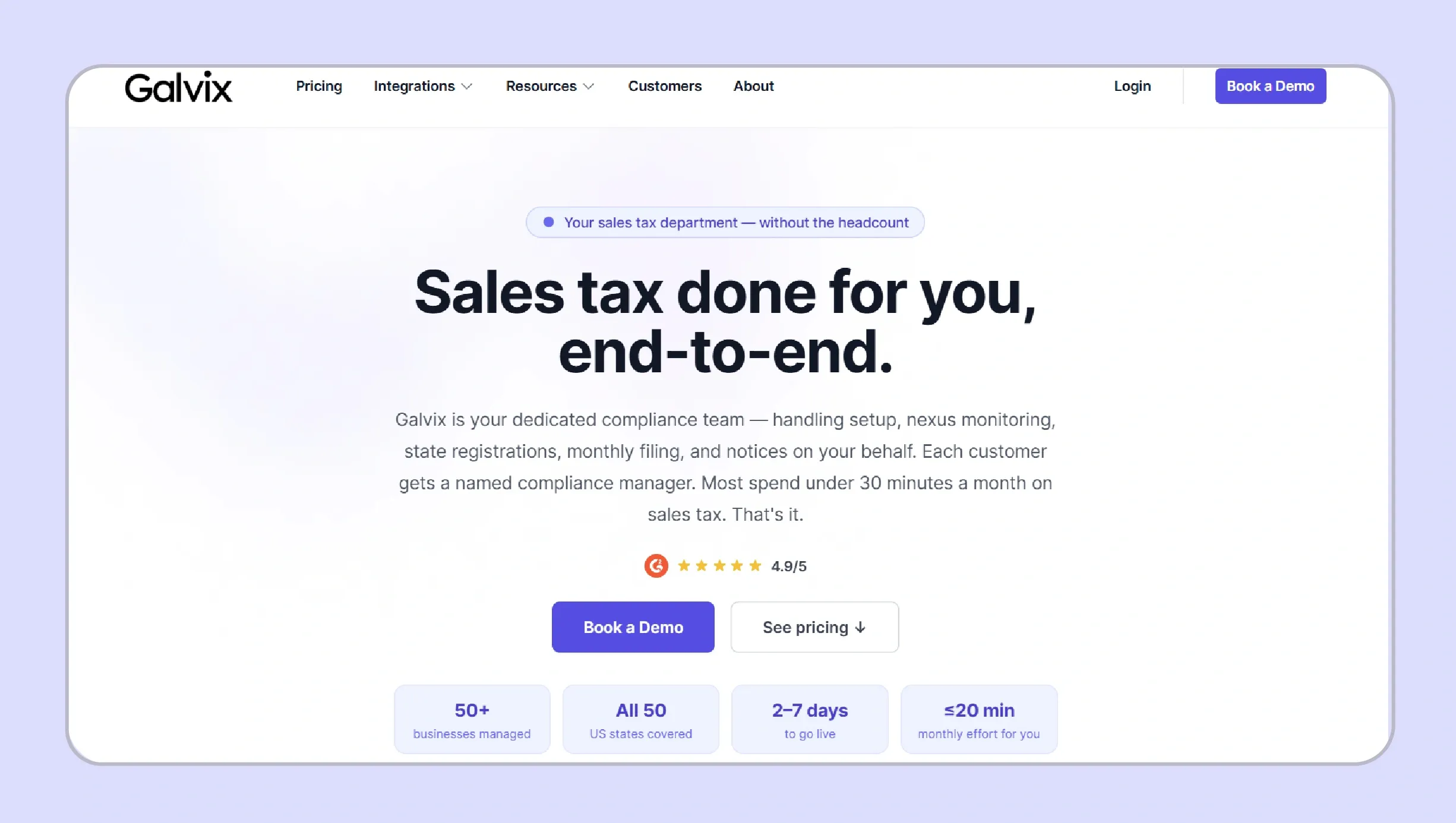
Galvix provides exemption certificate management as a done-for-you service within a broader sales tax compliance workflow. Instead of asking a finance team to administer another repository, Galvix combines structured technology with specialist ownership across collection, review, customer follow-up, renewals, storage, and audit preparation.
Businesses can connect certificate management with active nexus thresholds, sales tax determination, state registrations, return preparation, state notices, and tax audit support. This model supports growing businesses that want fewer handoffs and a team familiar with their business context.
Key Features
- Customers submit resale and exemption documents through a structured workflow that reduces requests across email and shared folders.
- Specialists identify missing details, mismatched customer information, unclear exemption reasons, expired documentation, and state-specific form concerns.
- Available tools support certificate, entity-number, reseller-permit, permit, or registration checks within each jurisdiction’s documented limits.
- Renewal controls follow annual, fixed-term, continuing, and event-driven requirements attached to each individual exemption certificate.
- Every document connects with the relevant customer account and available transaction records for easier audit tracing.
- Businesses receive organized audit-ready evidence instead of reconstructing certificate histories after an inquiry begins.
- Optional modules connect certificates with nexus monitoring, registrations, determination, returns, notices, and audit support.
How Much Does Galvix Cost?
Galvix uses modular pricing, so customers pay for selected services rather than one fixed bundle. Exemption certificate management pricing depends on service volume and the work required, including the factors listed on the applicable Galvix pricing page. Other modules are priced according to the workload dimensions relevant to those services.
Why Is Galvix a Strong Vertex Certificate Center Alternative?
Galvix pairs exemption certificate handling with registrations, returns, and audit-ready reconciliation under one accountable specialist. Vertex leaves these workflows across separate modules and internal teams. The result is faster time to compliance and reduced audit exposure for growing finance teams.
This matters when finance teams need confidence that certificates, filings, notices, and nexus work are connected. Galvix reduces internal handoffs because the same service relationship can support certificate management and wider sales tax compliance.
How Galvix Reduced a Customer’s Sales Tax Workload
Lindye Galloway Inc. was spending 60 to 80 hours a month managing sales tax across states, reports, and filings. After moving to Galvix, the team reduced that work to about 25 minutes a month, freeing finance time for operations, planning, and business priorities. As the customer put it, “With Galvix managing it all for me, I don’t even remember how many states I have to do sales tax in anymore. It’s just taken care of.”
Also Read: Vertex Pricing Explained
Avalara Exemption Certificate Management
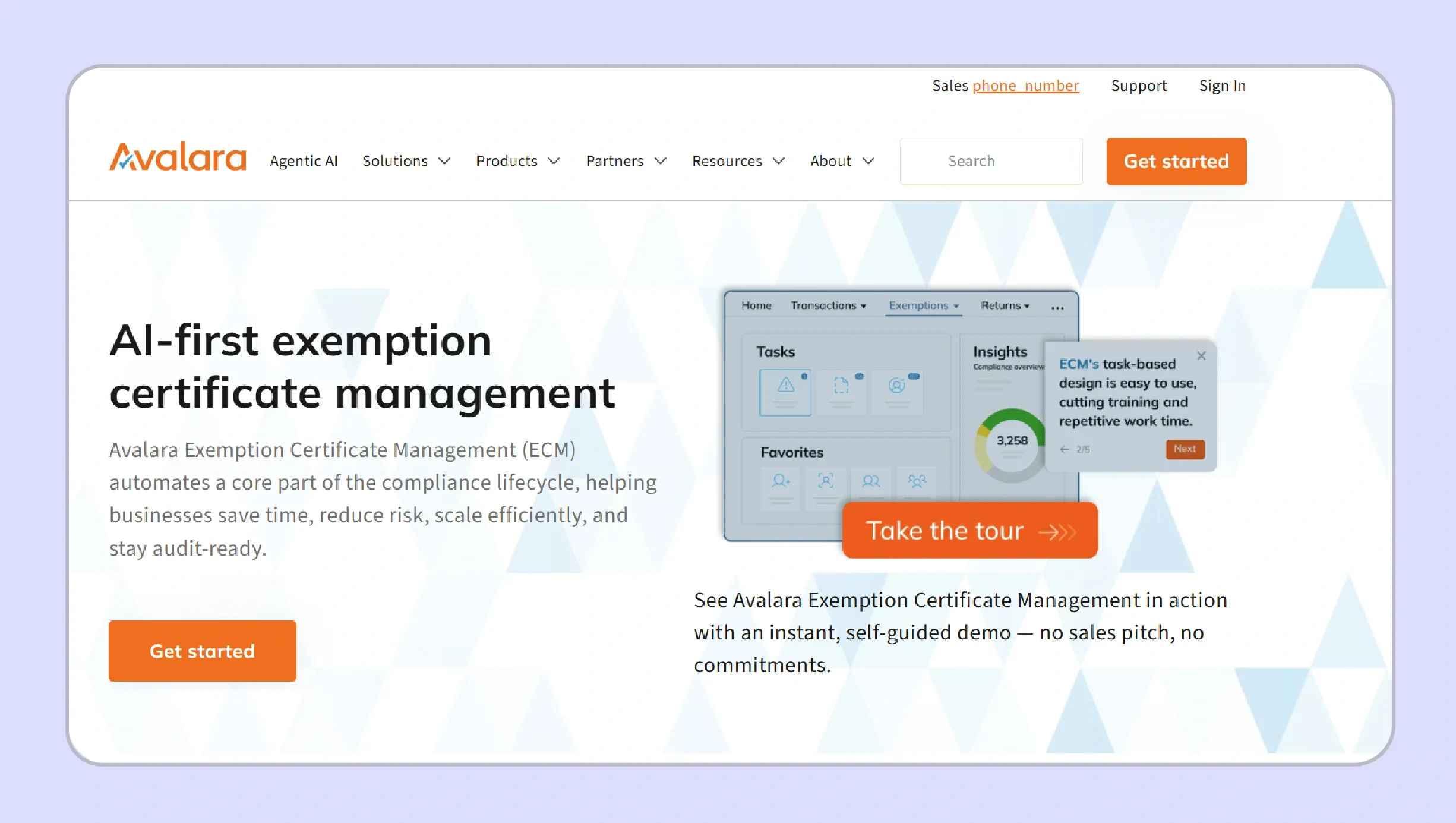
Avalara Exemption Certificate Management (ECM), previously associated with CertCapture, provides software-led certificate collection, validation, storage, and renewal workflows. It connects with Avalara tax products and supports businesses ranging from small businesses with simple exemptions to organizations processing significant certificate volumes.
Key Features
- Customers can create or upload certificates through guided electronic collection processes across online and offline sales channels.
- Centralized storage keeps exemption documents accessible while status views identify missing, invalid, or expiring records.
- Renewal campaigns support certificate replacement before expired documents interrupt customer purchases or create unsupported exempt transactions.
- Prebuilt connectors link ECM with ERP, ecommerce, financial, and Avalara tax calculation workflows.
How Much Does Avalara Exemption Certificate Management Cost?
Avalara does not publish one fixed ECM price covering every business. Buyers generally need a quote based on the selected plan, certificate volume, connectors, implementation requirements, support scope, and other Avalara products.
Pros and Cons
| Pros | Cons |
|---|---|
| Mature certificate workflows with extensive connector coverage | Final cost depends on plan, volume, integrations, and connected products |
| Strong fit for existing AvaTax customers | Internal teams may still own policies and unresolved exceptions |
| Multiple plans support different business sizes |
How Does Avalara Compare With Galvix?
Avalara ECM may suit businesses already using AvaTax and related Avalara products. Galvix offers a stronger fit for lean teams seeking done-for-you certificate operations, wider sales tax support, modular services, and one accountable specialist relationship.
Also Read: Avalara vs Vertex
Sovos CertManager
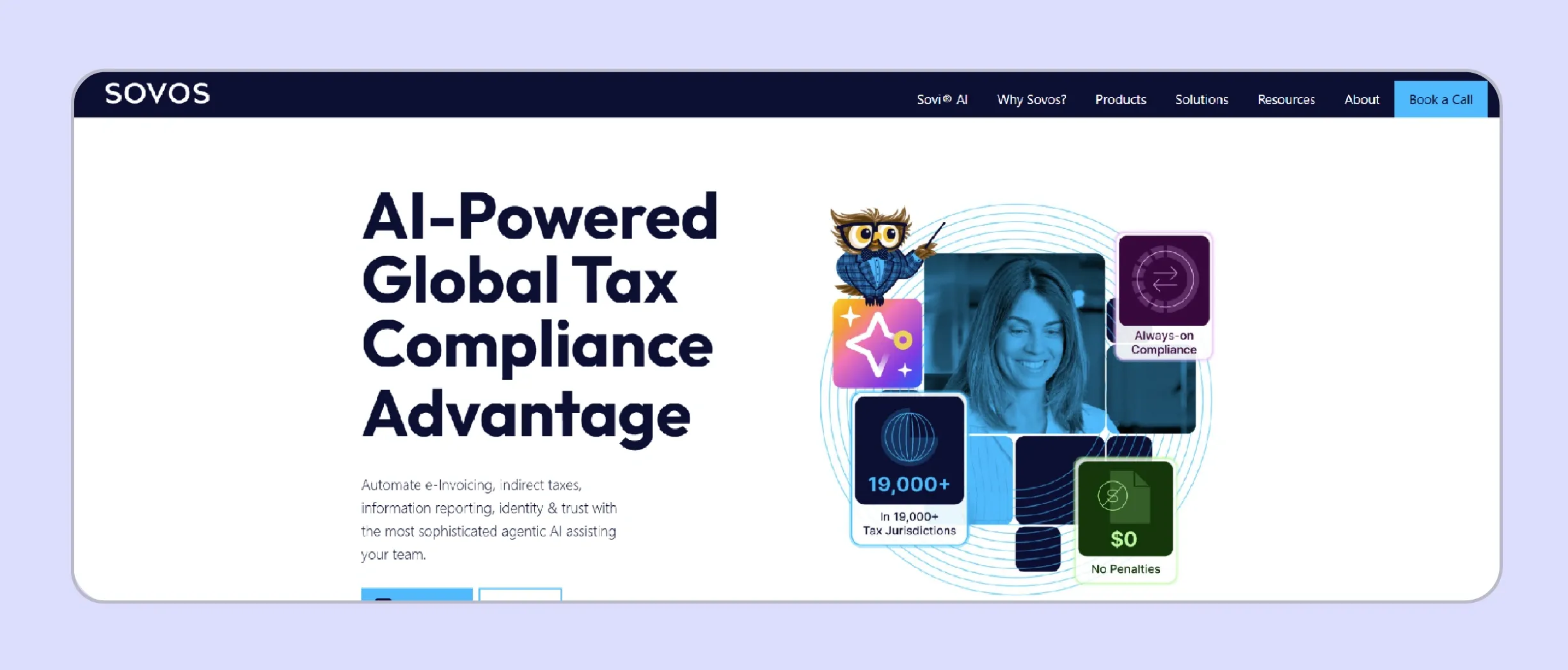
Sovos CertManager is enterprise exemption certificate management software that supports collection, centralized storage, workflow automation, and connection with Sovos tax determination. It suits enterprise clients handling substantial certificate volumes and seeking certificate controls within a broader indirect tax environment.
Key Features
- Automated collection workflows help businesses request exemption documentation without increasing repetitive administrative effort.
- Certificate information connects with tax determination, helping applicable exemption data influence transaction treatment.
- Reporting and workflow tools support certificate application, expiration monitoring, and audit-readiness processes.
How Much Does Sovos CertManager Cost?
Sovos does not publish a standard CertManager price on its product page. Businesses should request a quote covering certificate volume, implementation, integration requirements, support levels, and any managed services.
Pros and Cons
| Pros | Considerations |
|---|---|
| Centralized repository supports large certificate volumes | Implementation may require technical and tax resources |
| Sovos offers wider indirect tax products | Daily exception ownership should be confirmed before purchase |
How Does Sovos CertManager Compare With Galvix?
Sovos CertManager may suit enterprises needing certificate workflows connected with Sovos tax determination. Galvix is better suited to lean teams that want specialists to manage collection, renewals, exceptions, and wider sales tax compliance through one modular service relationship.
Thomson Reuters ONESOURCE Certificate Manager
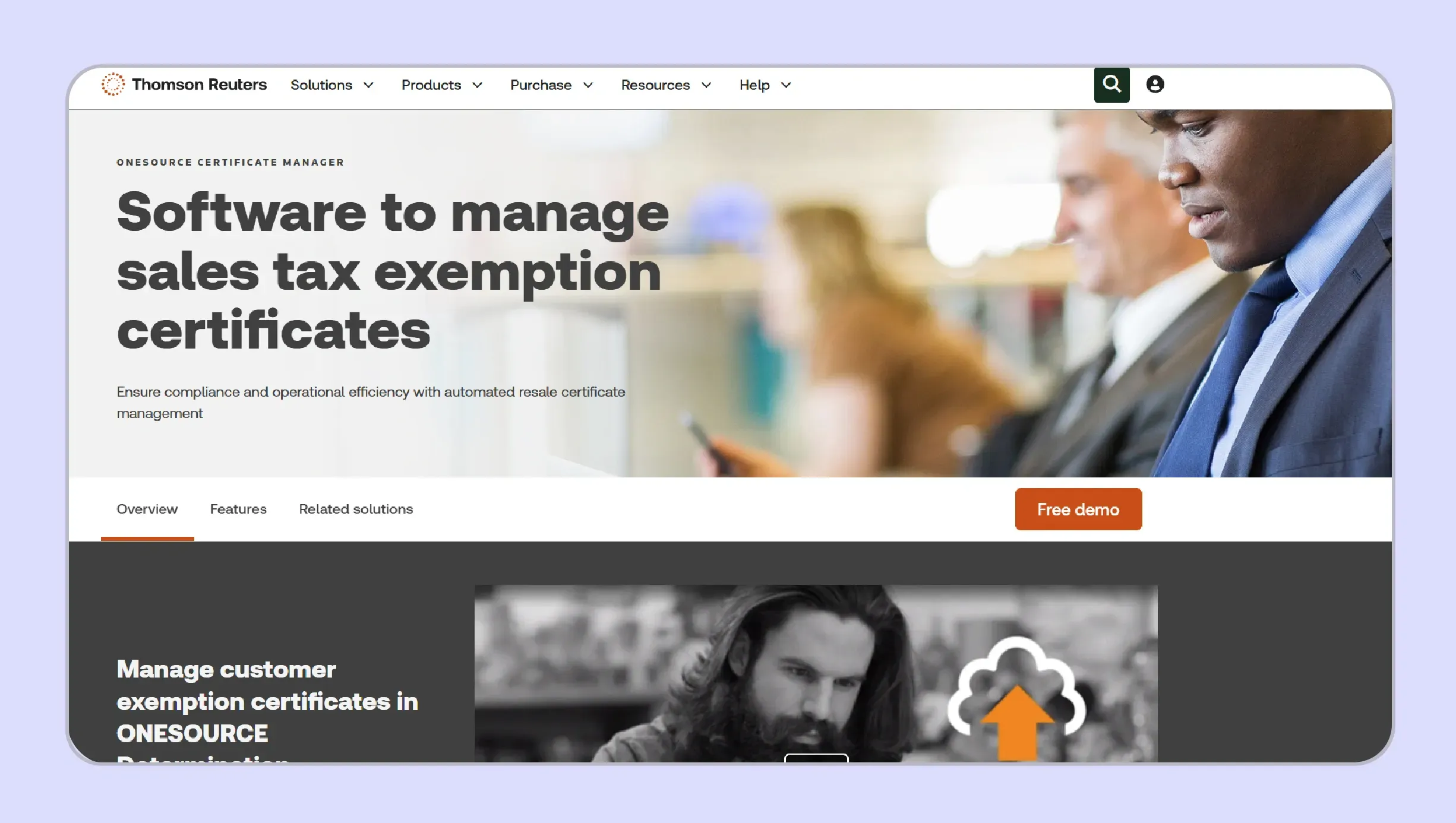
ONESOURCE Certificate Manager sits within Thomson Reuters ONESOURCE Determination and helps established tax departments manage exemption documentation alongside enterprise tax calculations. The software supports certificate entry, reminders, reporting, customer communications, and integrations with systems including NetSuite and Microsoft Dynamics.
Key Features
- A customer portal lets buyers enter certificates without requiring tax teams to rekey every submitted record.
- Automated reminders and customizable email templates support certificate collection and scheduled renewal communication.
- Integration with ONESOURCE Determination connects certificate information with enterprise transaction tax calculations.
How Much Does ONESOURCE Certificate Manager Cost?
Thomson Reuters uses custom pricing for ONESOURCE products. Buyers should confirm whether Certificate Manager, Determination, migration, implementation, integrations, and support are included within one proposal or separately scoped.
Pros and Cons
| Pros | Considerations |
|---|---|
| Strong connection with ONESOURCE Determination | Best value may depend on using the wider ONESOURCE environment |
| Supports global sales tax, GST, and VAT workflows | Implementation can require enterprise technical resources |
How Does ONESOURCE Compare With Galvix?
ONESOURCE Certificate Manager may suit established tax departments using Thomson Reuters enterprise systems. Galvix provides a stronger option for lean finance teams seeking managed certificate operations, connected sales tax services, modular pricing, and less internal platform administration.
EXEMPTAX
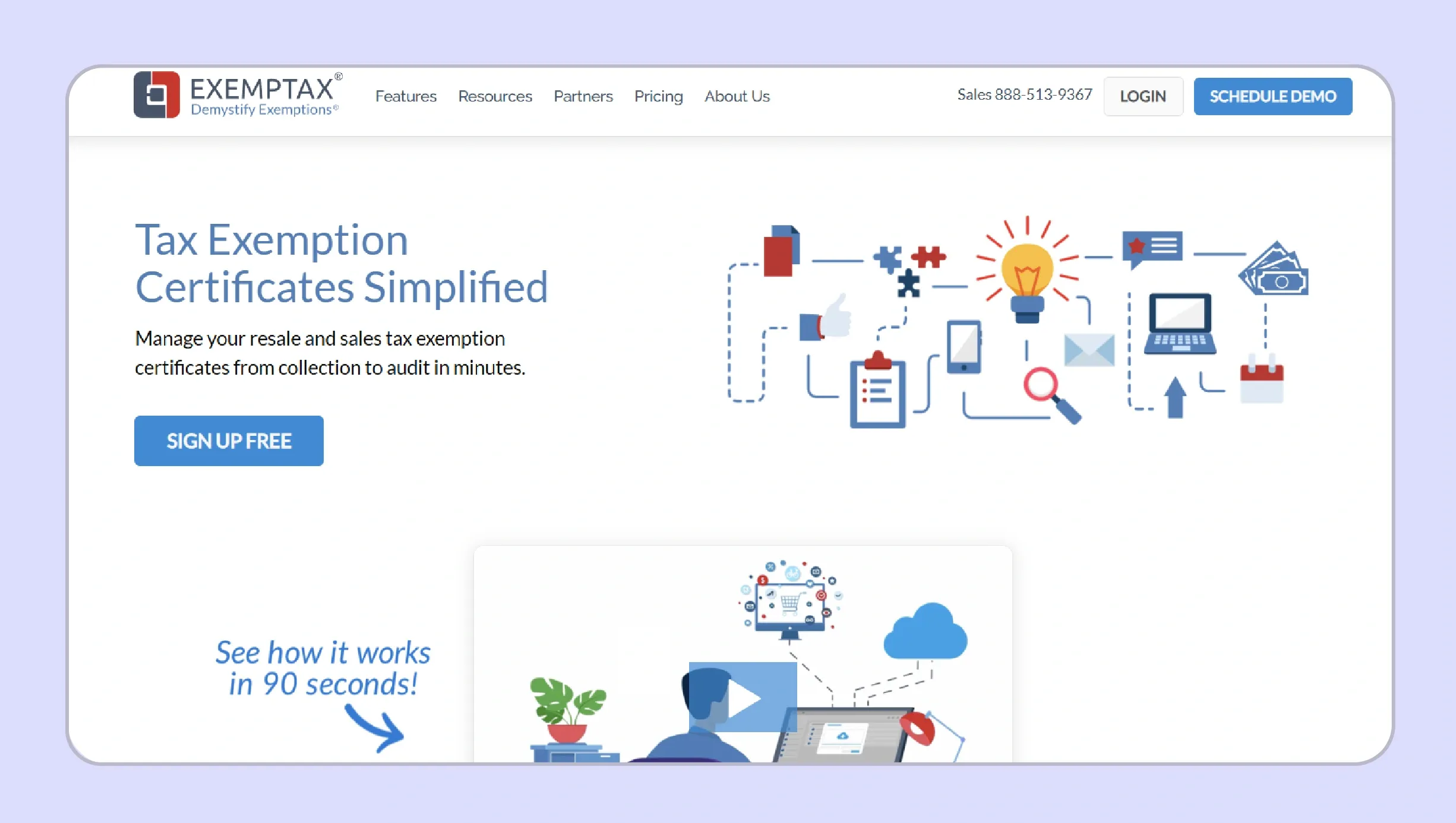
EXEMPTAX is a dedicated exemption certificate platform covering electronic collection, validation, storage, renewals, customer campaigns, and audit reporting. It can operate as focused ECM software or include managed services for businesses that want trained analysts to reduce their certificate workload.
Key Features
- Guided customer workflows help buyers submit completed certificates using the appropriate exemption reason and supporting information.
- Centralized records highlight missing, invalid, expired, and expiring certificates through a searchable compliance dashboard.
- APIs, bulk uploads, Shopify, BigCommerce, and other integrations connect certificate records with operational systems.
How Much Does EXEMPTAX Cost?
EXEMPTAX offers a free 14-day trial for a single user. The Standard plan covers 10 users at $250 per month (on a 12-month license). Enterprises need to get in touch with the team for a custom plan covering a higher number of users.
Pros and Cons
| Pros | Considerations |
|---|---|
| Dedicated ECM platform with guided customer collection | Wider sales tax services are less central than certificate workflows |
| APIs and ecommerce integrations support connected processes | Transaction-specific decisions remain with the seller |
| Managed service options reduce internal workload | Buyers should confirm state verification scope in writing |
How Does EXEMPTAX Compare With Galvix?
EXEMPTAX may suit businesses seeking focused certificate software with guided collection and managed-service options. Galvix offers broader value for teams wanting done-for-you certificate management, connected sales tax services, modular pricing, and one specialist accountable for recurring compliance work.
Numeral
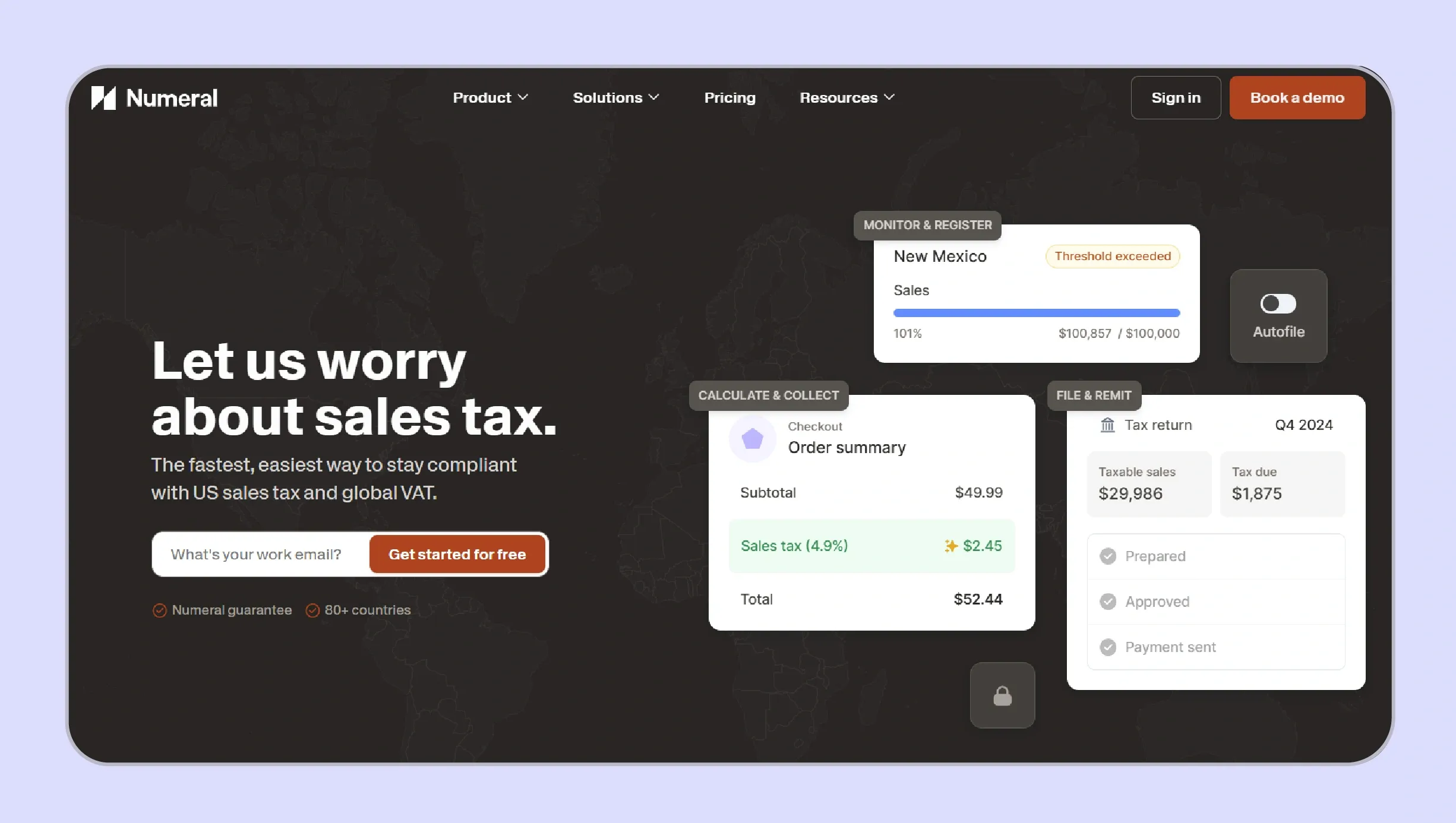
Numeral combines exemption certificate management with wider sales tax automation for ecommerce companies, software companies, and SaaS companies. Its platform supports uploads, data extraction, jurisdiction assignment, expiration tracking, customer renewal requests, and connected nexus monitoring.
Key Features
- Customers can upload resale, nonprofit, government, and other certificate types through connected workflows.
- Automated extraction assigns key certificate details to relevant jurisdictions and organized customer records.
- Expiration tracking and health monitoring identify documents requiring renewal or customer follow-up.
How Much Does Numeral Cost?
Numeral publishes tiered pricing, with exemption certificate management available for free (covering up to 50 certificates). The brand offers custom plans for users requiring 50+ certificates.
Pros and Cons
| Pros | Considerations |
|---|---|
| Modern dashboard combines certificates with wider sales tax workflows | Advanced ECM capabilities sit within a higher plan |
| Transparent information supports easier budget modeling | Service ownership should be confirmed for exceptions and audits |
| Integrations suit ecommerce and technology businesses | Global coverage may exceed some US-only requirements |
How Does Numeral Compare With Galvix?
Numeral may suit ecommerce and SaaS companies seeking modern certificate and sales tax automation. Galvix is better suited to lean teams wanting specialists to own certificate follow-up, exceptions, renewals, and wider compliance through a modular managed service.
Zamp
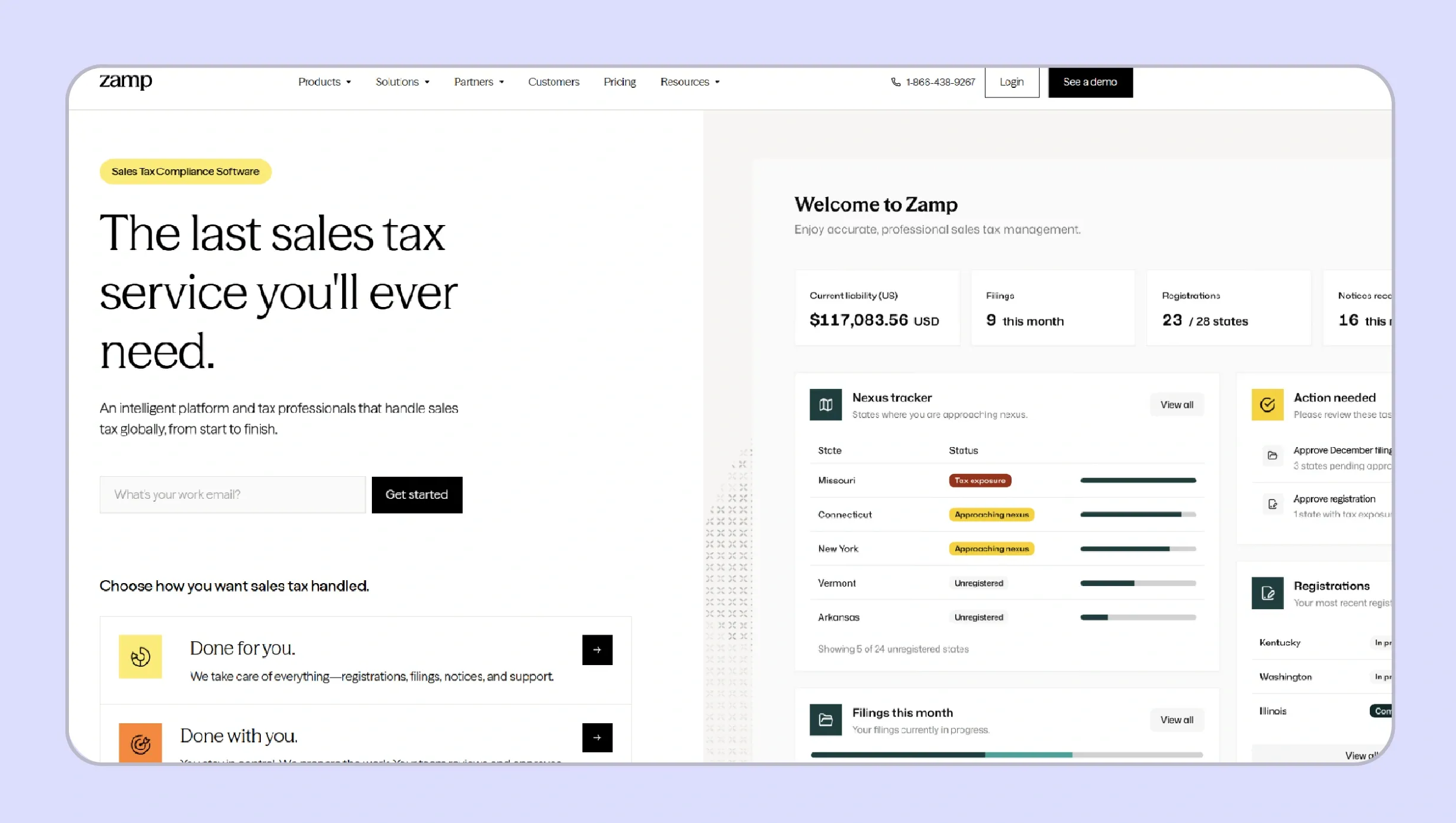
Zamp positions itself as a managed sales tax provider rather than a standalone ECM tool. Its offerings include certificate collection, validation, storage, registrations, filings, notice support, and audit assistance for businesses outsourcing US sales tax operations.
Key Features
- Managed collection and storage help businesses maintain documentation for wholesale and other exempt customer relationships.
- Certificate validation supports exempt transaction controls within the wider managed sales tax process.
- Registration and return services cover recurring compliance activity across the business’s active state footprint.
- Notice and audit support extend the service beyond calculation and basic certificate storage.
How Much Does Zamp Cost?
Zamp offers a Free Plan covering basic requirements of US and Canada businesses. They have two more packages: US and US+Canada but their pricing is not clearly published. Users need to get in touch with the team for custom pricing.
Pros and Cons
| Pros | Considerations |
|---|---|
| Managed model reduces recurring internal administration | Custom scope makes direct price comparison harder |
| Wider support includes filings, notices, and audits | Bundled services may provide less modular flexibility |
| Relevant for wholesale and B2B sellers | Buyers should confirm certificate workflow depth for their use case |
How Does Zamp Compare With Galvix?
Zamp may suit businesses seeking a broad managed sales tax package under one service scope. Galvix offers greater flexibility for teams that prefer modular services, dedicated certificate ownership, and the ability to select only the compliance support they need.
Kintsugi
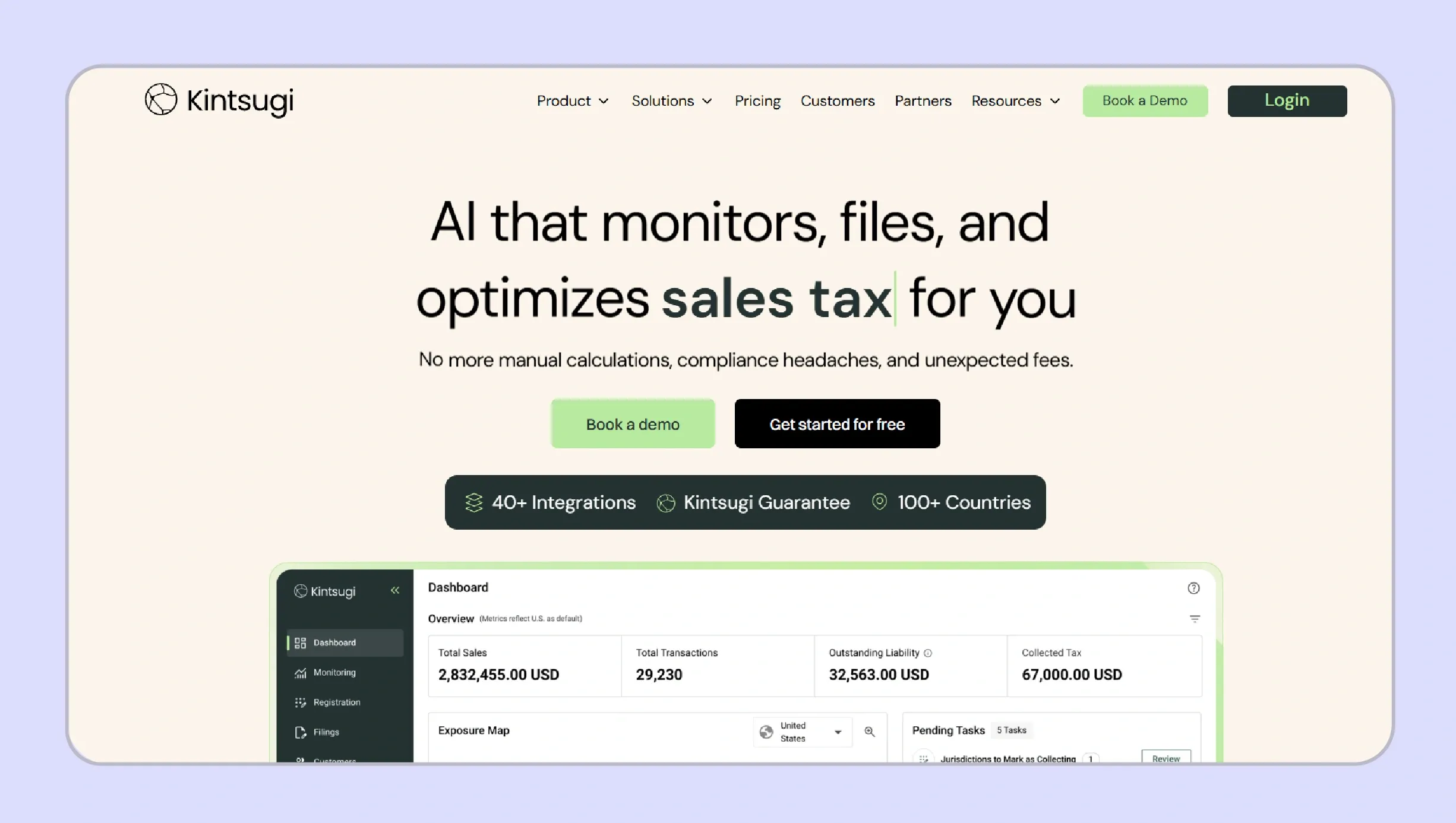
Kintsugi is a broader sales tax automation platform supporting nexus monitoring, registrations, tax calculation, filings, reporting, and exemption certificate storage or validation. It targets multi-channel sellers that want software-led automation with published pricing options.
Key Features
- Certificate tools store and validate exemption records for resellers, nonprofits, and other qualifying customers.
- Nexus monitoring tracks exposure across sales channels and helps identify registration obligations.
- Registration and filing automation reduces repetitive portal activity across supported state jurisdictions.
How Much Does Kintsugi Cost?
Kintsugi offers a Free Plan but that does not offer Exemption Certificate management. Basic Exemption Certificate management is available under the Starter Plan at $75 per filing or registration. The Premium Plan offers Exemption Certificate management and bulk uploads but requires users to request a custom quote.
Pros and Cons
| Pros | Considerations |
|---|---|
| Broad automation covers several sales tax workflows | Certificate exception ownership should be confirmed |
| Published pricing supports early budget comparison | Advanced needs may require higher plans |
How Does Kintsugi Compare With Galvix?
Kintsugi may suit businesses seeking software-led automation across nexus, registrations, filings, and certificate workflows. Galvix provides a stronger fit for teams wanting specialists to manage recurring certificate work and wider sales tax compliance without operating another platform internally.
Sphere
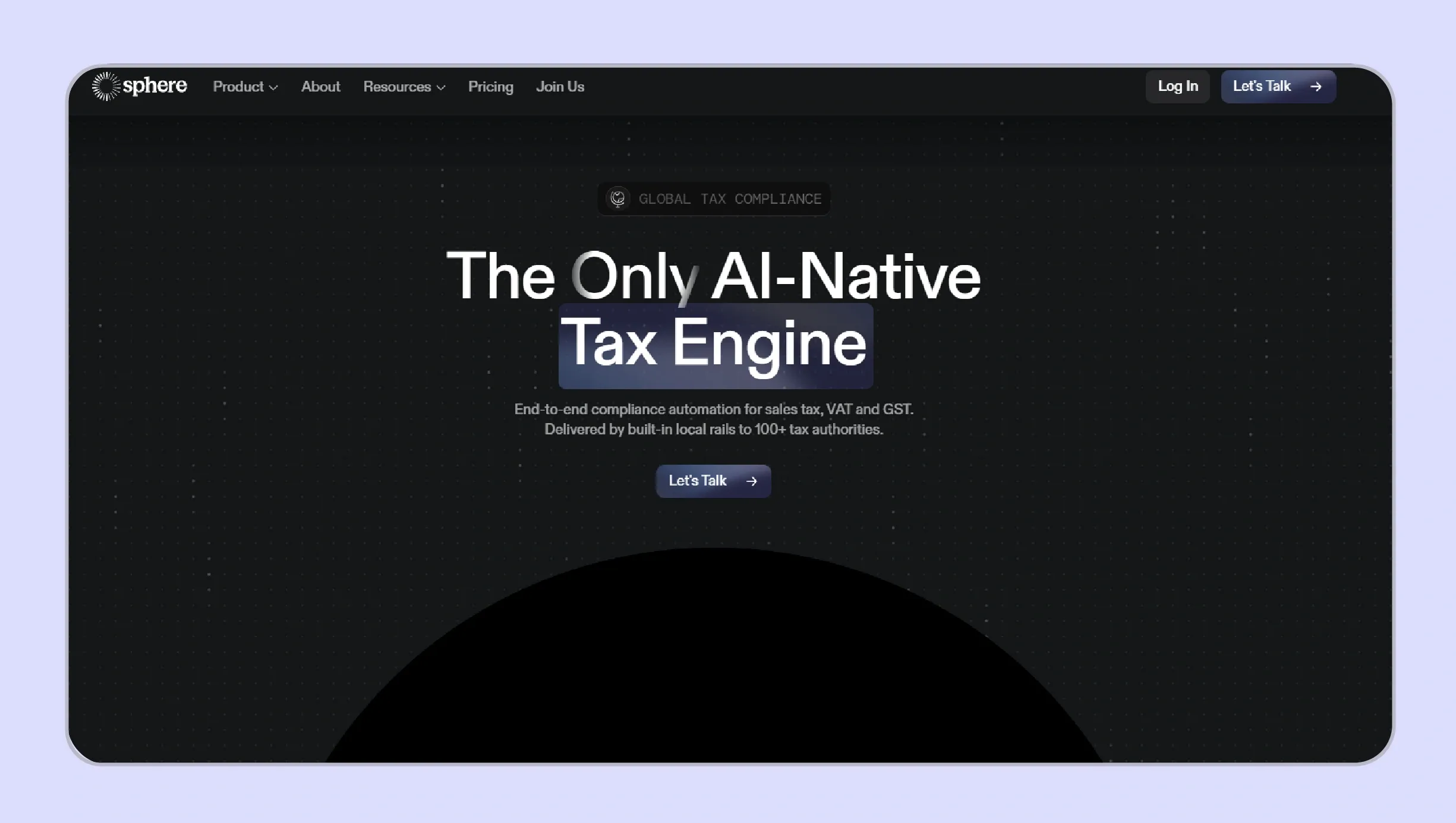
Sphere provides a global sales tax, VAT, and GST platform for digital-first companies. Its platform includes certificate uploads, validity dates, renewal reminders, customer-level records, and broader global indirect tax compliance across more than 100 regions.
Key Features
- US customers can upload exemption certificates and assign applicable validity periods within their records.
- Renewal reminders prompt teams to request replacement documents before current certificates expire.
- VAT and GST identification can be validated across supported international tax authority registries.
How Much Does Sphere Cost?
Sphere offers a Starter plan (less than 10 regions) at $100/region per month. Users that need to cover 10+ regions must ask for custom quote from the sales team.
Pros and Cons
| Pros | Considerations |
|---|---|
| Exemption certificate management is included within the wider tax compliance platform | Costs increase as the business adds active jurisdictions |
| Global coverage suits SaaS and digital businesses selling across several countries | International scope may exceed the needs of US-focused businesses |
How Does Sphere Compare With Galvix?
Sphere may suit subscription and digital businesses needing global sales tax, VAT, and GST coverage. Galvix is better suited to US-focused teams seeking done-for-you certificate management, state compliance support, modular services, and specialist ownership across recurring sales tax work.
Commenda
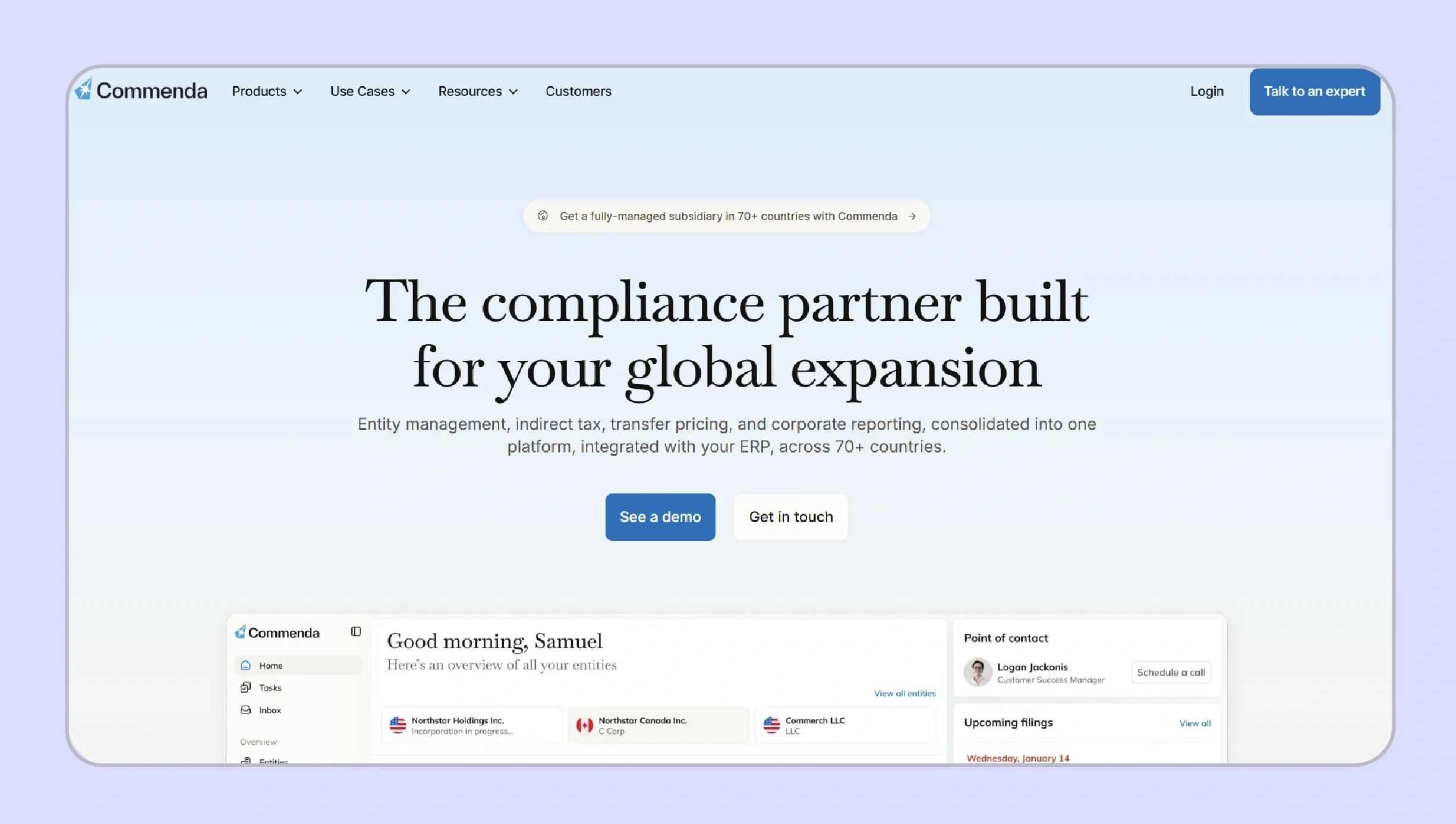
Commenda provides a wider global compliance platform covering US sales tax and international obligations. Its materials describe exemption certificate management, state guidance, nexus monitoring, registrations, calculations, filings, and dashboards that flag missing or invalid records.
Key Features
- Certificate management supports collection, storage, and identification of missing or invalid customer documentation.
- Nexus monitoring identifies threshold exposure and connects findings with registration and filing workflows.
- Wider services support international indirect tax, entity, and compliance requirements across multiple markets.
How Much Does Commenda Cost?
Commenda does not display one standard exemption certificate price across its website. Businesses should request a quote based on their custom requirements.
Pros and Cons
| Pros | Considerations |
|---|---|
| Broad international compliance coverage | Dedicated ECM depth should be confirmed during evaluation |
| Nexus, registrations, and filings connect with certificates | Pricing requires a custom sales conversation |
| Useful for cross-border businesses | International scope may exceed US-only needs |
How Does Commenda Compare With Galvix?
Commenda may suit businesses managing indirect tax obligations across several countries and entities. Galvix offers a stronger fit for US-focused teams that need managed certificate operations, state registrations, returns, notices, and one accountable specialist relationship.
Quaderno

Quaderno is lightweight global tax software for SaaS, ecommerce, and digital businesses. It automates tax calculation, reporting, invoicing, and selected registration or filing services across sales tax, VAT, and GST jurisdictions. Its public materials discuss exemption handling, although they provide less detail about a dedicated enterprise ECM product.
Key Features
- Real-time calculation applies location-based sales tax, VAT, or GST during checkout across connected sales channels.
- Integrations support Stripe, Shopify, WooCommerce, PayPal, Xero, and other common platforms.
- Guidance covers exemption documentation, although buyers should confirm collection, renewal, and verification functionality directly.
How Much Does Quaderno Cost?
Quaderno offers multiple plans based on user requirements:
| Plan | Monthly Charges |
|---|---|
| Hobby (1 user and 25 monthly transactions) | $29 |
| Startup (Unlimited users and 250 monthly transactions) | $49 |
| Business (Unlimited users and 1000 monthly transactions) | $99 |
| Growth (Unlimited users and 2500 monthly transactions) | $149 |
| Enterprise | Custom price |
Pros and Cons
| Pros | Considerations |
|---|---|
| Published subscription plans make initial cost comparison easier | Pricing increases with monthly transaction volume |
| Global tax calculations support ecommerce, SaaS, and digital businesses | Public materials emphasize broader tax compliance over dedicated US certificate management |
How Does Quaderno Compare With Galvix?
Quaderno may suit smaller online businesses with straightforward global tax calculation and reporting needs. Galvix is better suited to companies requiring managed US certificate operations, specialist review, renewal follow-up, audit preparation, and wider sales tax compliance support.
Smyyth
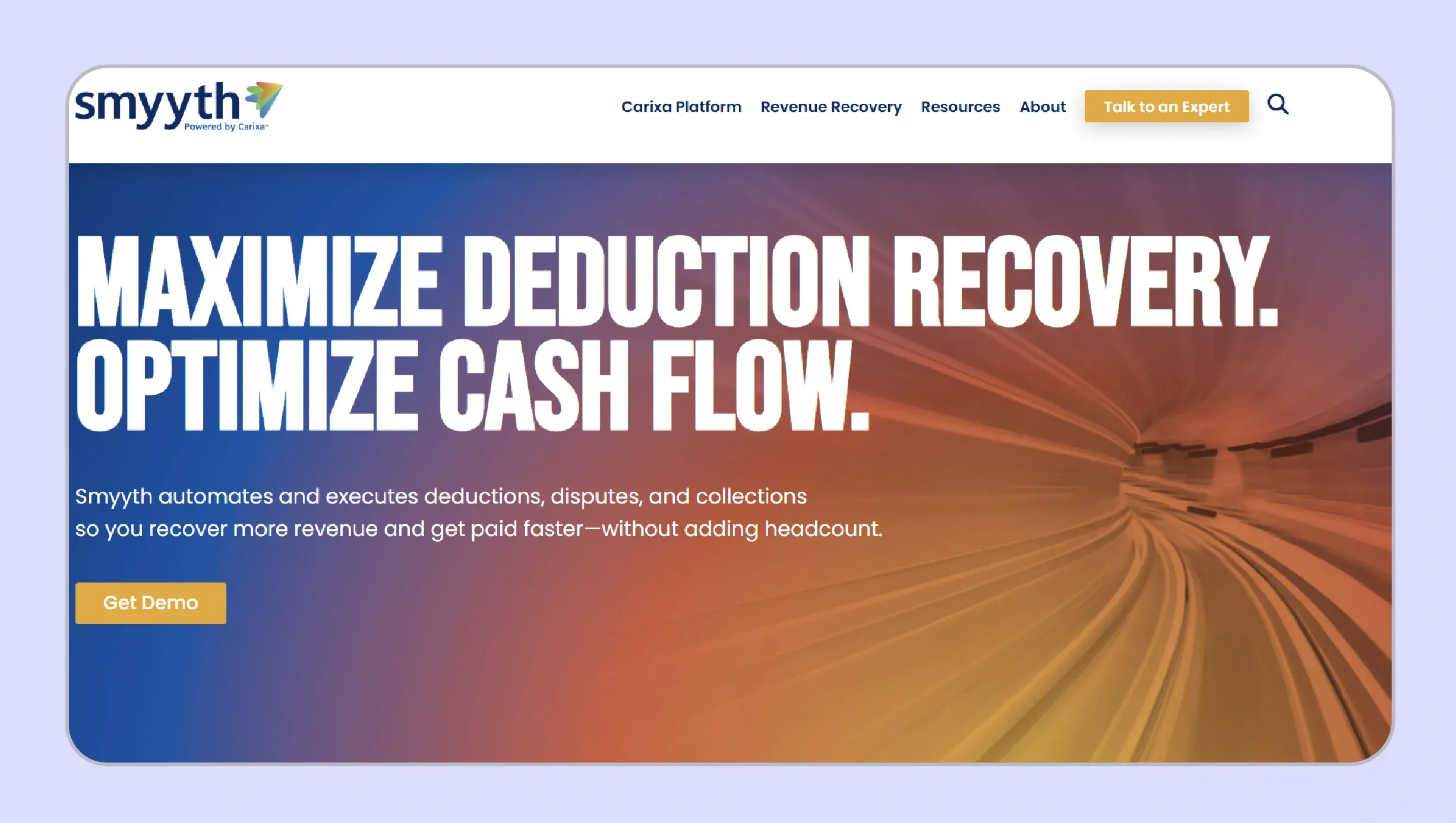
Smyyth combines its Carixa technology with outsourced back-office operations for sales tax exemption certificates and broader accounts receivable processes. The offering focuses on collecting, maintaining, storing, and retrieving certificate records while reducing labor for enterprise finance teams.
Key Features
- Document review helps identify missing or unsuitable records requiring customer correction or follow-up.
- Centralized storage keeps exemption certificates accessible for compliance checks and audit requests.
- Renewal and maintenance services reduce ongoing administrative activity for internal finance employees.
How Much Does Smyyth Cost?
Smyyth does not publish standard certificate-management pricing on its product page. Buyers should request a custom quote.
Pros and Cons
| Pros | Considerations |
|---|---|
| Combines technology with outsourced certificate operations | Wider sales tax compliance coverage appears limited |
| Relevant for accounts receivable teams | Pricing and service scope require direct consultation |
| Human support can reduce collection workload | Tax engine integration depth should be confirmed |
How Does Smyyth Compare With Galvix?
Smyyth may suit businesses connecting certificate operations with accounts receivable and credit workflows. Galvix offers broader support for teams seeking managed certificate collection, renewals, nexus, registrations, returns, notices, and audit assistance through a single modular service relationship.
CereTax SmartExempt
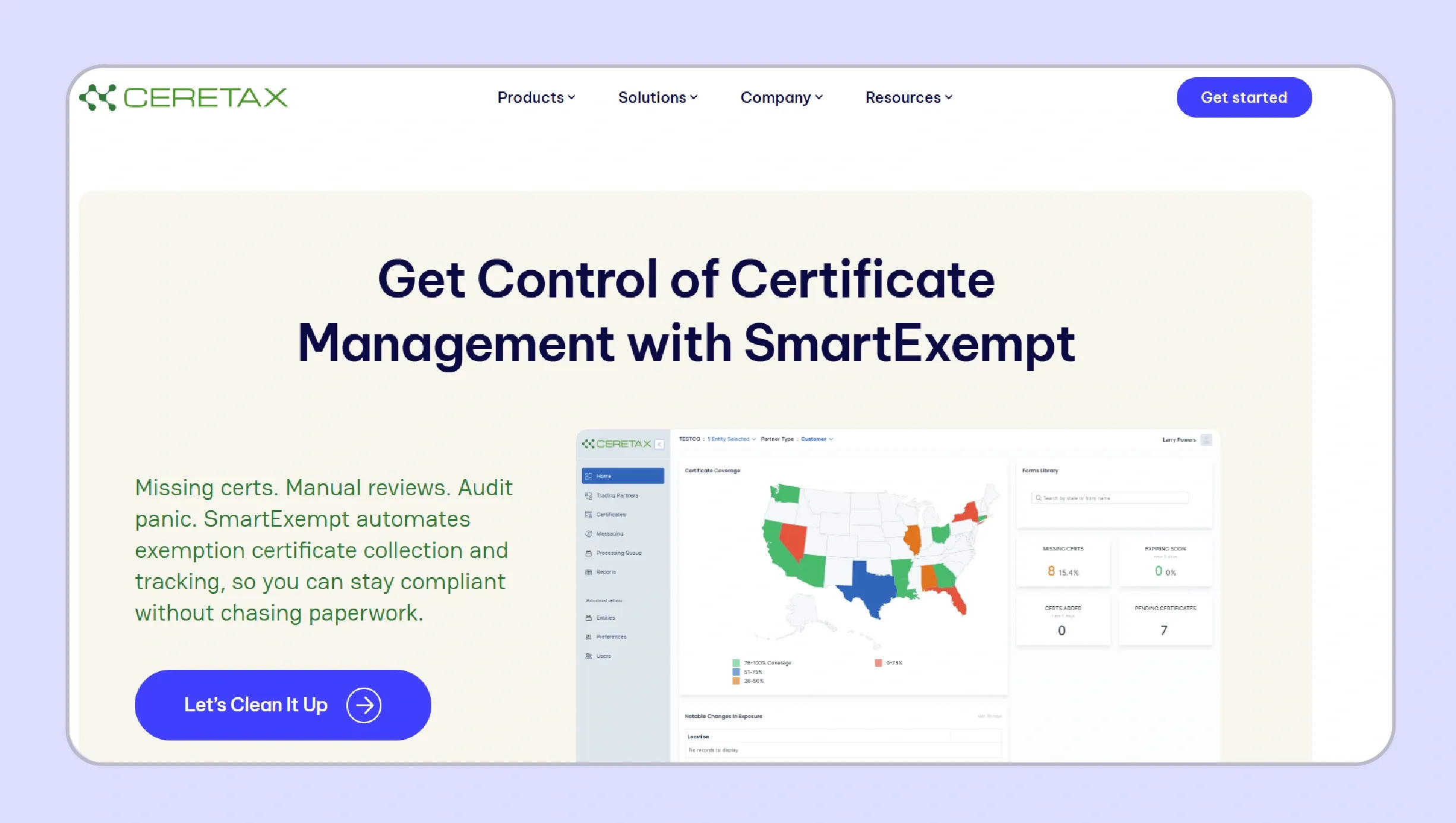
CereTax SmartExempt is dedicated exemption-certificate software integrated with the CereTax sales tax engine. It supports certificate collection, jurisdiction checks, centralized storage, expiration alerts, customer mapping, transaction application, audit trails, APIs, and ERP integrations.
Key Features
- Expiration alerts support renewal outreach before documents become outdated or unusable.
- Buyer and transaction mapping connects exemption decisions with invoices and customer records.
- APIs, bulk uploads, and ERP integrations support high-volume certificate environments.
How Much Does CereTax SmartExempt Cost?
CereTax does not publish a fixed SmartExempt price on its product page. Businesses should request a quote based on certificate volume and transactions.
Pros and Cons
| Pros | Considerations |
|---|---|
| APIs and ERP integrations suit complex environments | Human operational support should be confirmed |
| Transaction mapping strengthens exemption application | Best fit may depend on using CereTax products |
How Does CereTax SmartExempt Compare With Galvix?
CereTax SmartExempt may suit businesses seeking certificate software connected directly with tax determination and ERP systems. Galvix provides a stronger option for teams wanting specialists to manage collection, review, renewals, exceptions, and wider compliance through one accountable service.
TaxConnex
TaxConnex combines certificate management technology with sales tax professionals who manage documentation from collection through renewal. Its service includes certificate review, customer outreach, centralized records, reporting, and support for resale, government, nonprofit, manufacturing, and other exemption categories.
Key Features
- The service supports collection, validation, storage, maintenance, and renewal across several exemption categories.
- Centralized technology provides visibility into certificate status, customer records, and audit documentation.
- Monthly outreach can address missing or expired documents before they create continuing compliance gaps.
How Much Does TaxConnex Cost?
TaxConnex does not publish standard pricing for its certificate service. The final scope may depend on certificate volume, customer outreach, document review, and integrations.
Pros and Cons
| Pros | Considerations |
|---|---|
| Managed model combines software with human oversight | Pricing requires a direct consultation |
| Monthly outreach reduces missing-document workload | Buyers should confirm integration coverage |
| Wider sales tax services are available | Service packaging may differ from modular alternatives |
How Does TaxConnex Compare With Galvix?
TaxConnex may suit businesses seeking managed certificate support alongside broader sales tax consulting. Galvix offers a modular alternative for teams wanting transparent service selection, dedicated certificate ownership, and connected compliance support based on their actual workload.
CCH SureTax Exemption Certificate Manager

Wolters Kluwer offers two CCH SureTax exemption certificate options. Standard ECM supports businesses with lower exempt-sales volume, while Premium ECM powered by CERTifyTax targets high-volume or complex environments. Both sit within the wider CCH SureTax sales and use tax platform.
Key Features
- Centralized certificate management supports organized documentation and application to relevant exempt transactions.
- Standard ECM provides a right-sized option for organizations with lower certificate or exempt-sales volume.
- Premium ECM addresses complex environments requiring stronger automation and audit protection.
How Much Does CCH SureTax ECM Cost?
Wolters Kluwer does not publish fixed pricing for either ECM option. Businesses should request a quote covering the chosen certificate product.
Pros and Cons
| Pros | Considerations |
|---|---|
| Two ECM levels address different certificate volumes | Pricing requires a custom proposal |
| Connects with wider CCH SureTax capabilities | Full value may depend on the broader platform |
| Wolters Kluwer provides established tax content | Operational ownership should be clarified |
How Does CCH SureTax Compare With Galvix?
CCH SureTax ECM may suit enterprises seeking certificate software within the wider Wolters Kluwer tax environment. Galvix is better suited to lean teams wanting done-for-you certificate management, modular pricing, specialist ownership, and connected sales tax compliance services.

How to Choose the Best Vertex Certificate Center Alternative?
The best Vertex Certificate Center alternative depends on internal capacity, certificate volume, state complexity, integrations, and desired ownership. Businesses comparing the top Vertex alternatives should assess the complete sales tax program rather than selecting sales tax software based on feature lists or a monthly platform fee alone.
The best Vertex alternatives should also match the company’s operating model, internal resources, and required level of service ownership.
- Certificate Lifecycle Coverage: Confirm whether the platform collects, reviews, stores, renews, maps, and retrieves records while reducing manual work and the wider operational burden on finance teams.
- Validation Definition: Ask whether validation means field checks, official lookups, permit status, registration status, or transaction review, and which results appear in real time to reduce audit risk.
- Operational Ownership: Identify who contacts customers, resolves exceptions, replaces expired records, and prepares audit evidence. Confirm whether a dedicated account manager owns the continuing compliance workload.
- State-Specific Intelligence: Check whether the provider supports named forms, validity rules, MTC acceptance, out-of-state buyers, and current requirements under the Streamlined Sales Tax Program.
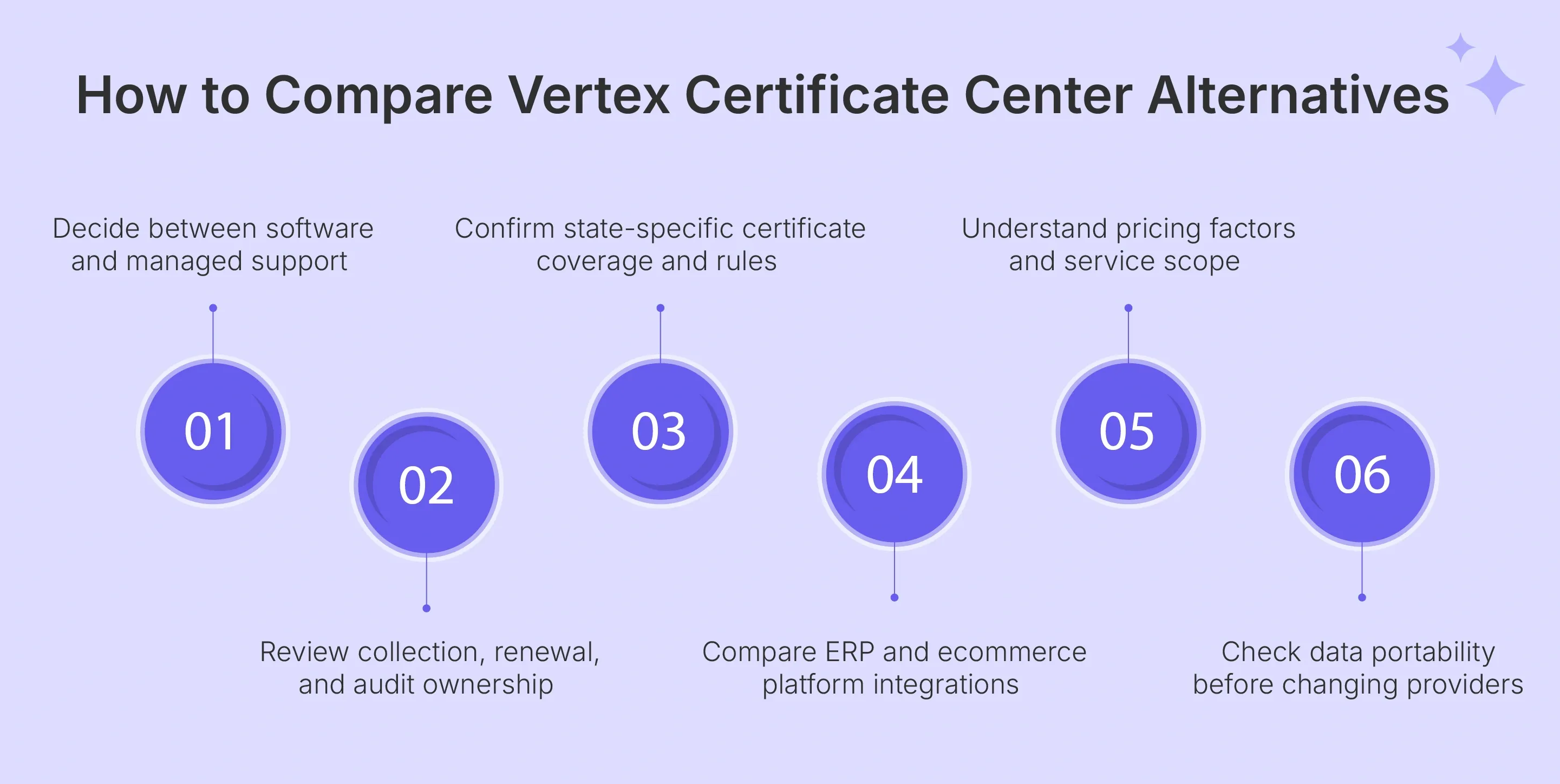
- Wider Compliance Coverage: Determine whether nexus tracking, registrations, returns, notice management, complex state correspondence, corporate income, and broad indirect tax compliance require separate products or providers.
- Integration Requirements: Review connections with ecommerce systems, ERP platforms, accounting tools, point-of-sale systems, and billing infrastructure. For subscription businesses, test data flow and overall user experience before purchase.
- Pricing Structure: Compare enterprise pricing, service tiers, transaction charges, certificate limits, and support fees. Calculate total compliance costs for the specific business, rather than relying on a generic example.
- Data Portability: Confirm that documents, review histories, verification results, renewal data, and customer mappings remain exportable. Strong portability protects continuity during future sales tax management changes.
The selection should also consider current exposure, active nexus thresholds, implementation measured in business days, and expected support response times. Where available, a free nexus study can help compare platform scope with the actual filing footprint of a growing business.
Why Is Galvix a Strong Vertex Certificate Center Alternative?
Vertex Certificate Center can suit tax departments already using the Vertex ecosystem and maintaining a dedicated internal tax team. Those businesses may value centralized software, strong integration options, and alignment with existing enterprise infrastructure that their employees can configure and operate.
As a Vertex alternative, Galvix serves businesses seeking done-for-you collection, specialist review, renewal tracking, customer follow-up, and organized audit evidence. The Galvix team can also manage nexus, registrations, returns, notices, and audits, reducing the workload placed on a lean finance function.
Galvix pricing remains modular, so customers pay only for the services they use. Exact pricing reflects the work volume associated with each module, helping the specific business avoid a fixed package that exceeds its compliance needs.
Book a personalized Galvix demo today to compare the current Vertex workload with a managed plan built around the company’s actual requirements.
Frequently Asked Questions
What is the best Vertex Certificate Center alternative?
The best Vertex Certificate Center alternative depends on whether the business needs enterprise software, dedicated certificate functionality, or done-for-you compliance. Vertex, Avalara, Sovos, and ONESOURCE suit software-led environments. Galvix suits lean teams seeking specialist ownership across collection, renewals, audit records, and wider sales tax work.
Which Vertex Certificate Center alternatives manage exemption certificates?
Prominent options include Galvix, Avalara ECM, Sovos CertManager, Thomson Reuters ONESOURCE, EXEMPTAX, Numeral, CereTax SmartExempt, TaxConnex, and CCH SureTax ECM. Each supports different workflow depths. Buyers should compare collection, state rules, renewals, integrations, human review, and responsibility for resolving certificate exceptions.
Is Galvix a good alternative to Vertex Certificate Center?
Galvix is a suitable alternative for businesses wanting specialists to manage certificate collection, document review, customer follow-up, renewals, account mapping, and audit-ready records. Optional modules cover nexus, registrations, determination, returns, notices, and audits. Its modular pricing reflects selected services and the workload associated with each module.
Does Vertex Certificate Center manage sales tax filings?
Vertex Certificate Center focuses on exemption certificate storage, collection, tracking, renewals, workflow management, and audit reporting. Vertex offers other products and services across tax determination and compliance. Buyers should confirm which filing capabilities, implementation services, and ongoing support arrangements are included within their proposed Vertex environment.
Which alternative is best for done-for-you certificate management?
A done-for-you provider should manage customer outreach, document review, renewal follow-up, exception handling, customer mapping, and audit preparation. Galvix and TaxConnex offer managed models, while EXEMPTAX provides optional managed services. The right choice depends on integration needs, state footprint, wider compliance requirements, and preferred pricing structure.
What does exemption certificate validation actually mean?
Validation can describe required-field review, official certificate lookup, entity-number checking, reseller-permit confirmation, or tax-registration verification. None of these automatically proves transaction eligibility. Buyers should request a written definition explaining each check, the source used, what occurs automatically, and which decisions remain subject to human review.
Can Vertex Certificate Center alternatives manage state-specific renewal rules?
Capable providers can track annual, fixed-term, continuing, and event-driven certificate validity at the document level. Buyers should confirm whether the system recognizes named state forms, purchaser changes, permit expirations, SST or MTC conditions, and other replacement triggers rather than assigning one generic renewal date to every customer.