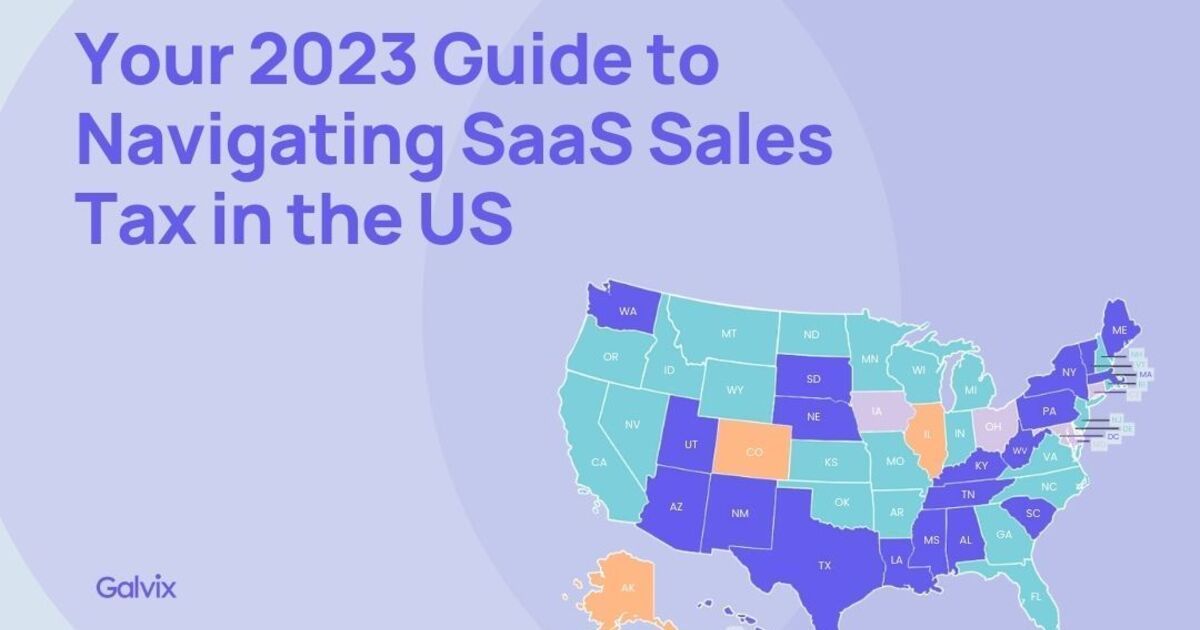

Running a software-as-a-service (SaaS) company? If so, mastering sales tax compliance is crucial for your business's growth and longevity. However, it's not an easy task. With 21 states and Washington, D.C. taxing SaaS today, California and Colorado joining them in 2027, and each with its own rules, meeting compliance is complex. Moreover, the rapid growth of many SaaS companies often results in an unexpected expansion into these taxable states. But don't worry, we're here to help you understand sales tax compliance in the SaaS sales tax landscape.
 Take control with a step-by-step approach
The impact of supreme court ruling on SaaS sales tax compliance
First, let's explore the root cause of this tax complexity. Back in 2018, the Supreme Court ruling in South Dakota v. Wayfair, Inc. changed the sales tax game. The court ruled that states could tax out-of-state businesses exceeding a specific economic threshold, even without physical presence in the state.
This ruling hit the SaaS world hard because: SaaS offerings, being cloud-based, are delivered electronically without needing in-state presence.
Since the ruling, every state with a sales tax has set an economic nexus threshold, most often $100,000 in sales, with some states also counting 200 or more transactions.
Years on, the ruling's impact keeps growing. States are set to increase enforcement as historical non-compliance becomes a greater issue.
Why sales tax compliance is essential now
Sales tax compliance is pressing now for two main reasons:
- Non-compliance builds up liabilities and exposures, increasing the risk for companies, especially those who haven't adhered to the Wayfair nexus standards.
- The growing number of remote employees expands the nexus footprint of tech companies, raising new compliance issues.
Plus, during M&A activities or capital raises, tax exposure is a critical part of the due diligence process. Therefore, tax compliance should be a key part of preparing for an exit or capital raise.
State tax policies and remote work: A double challenge
States are now redefining taxable services to include SaaS, making sales tax compliance even more challenging. For instance, Maryland imposes sales tax on digital products like SaaS. State treatment also varies significantly, adding to the complexity.
On top of that, the rise of remote work further muddies the water. As companies hire employees in different states, determining nexus and sales tax obligations becomes trickier. It's crucial for SaaS companies to keep track of remote employees' locations and start dates to better understand their tax obligations.
Taking control of your sales tax compliance
To manage sales tax compliance effectively, it's essential to understand your risk exposure and take proactive steps.
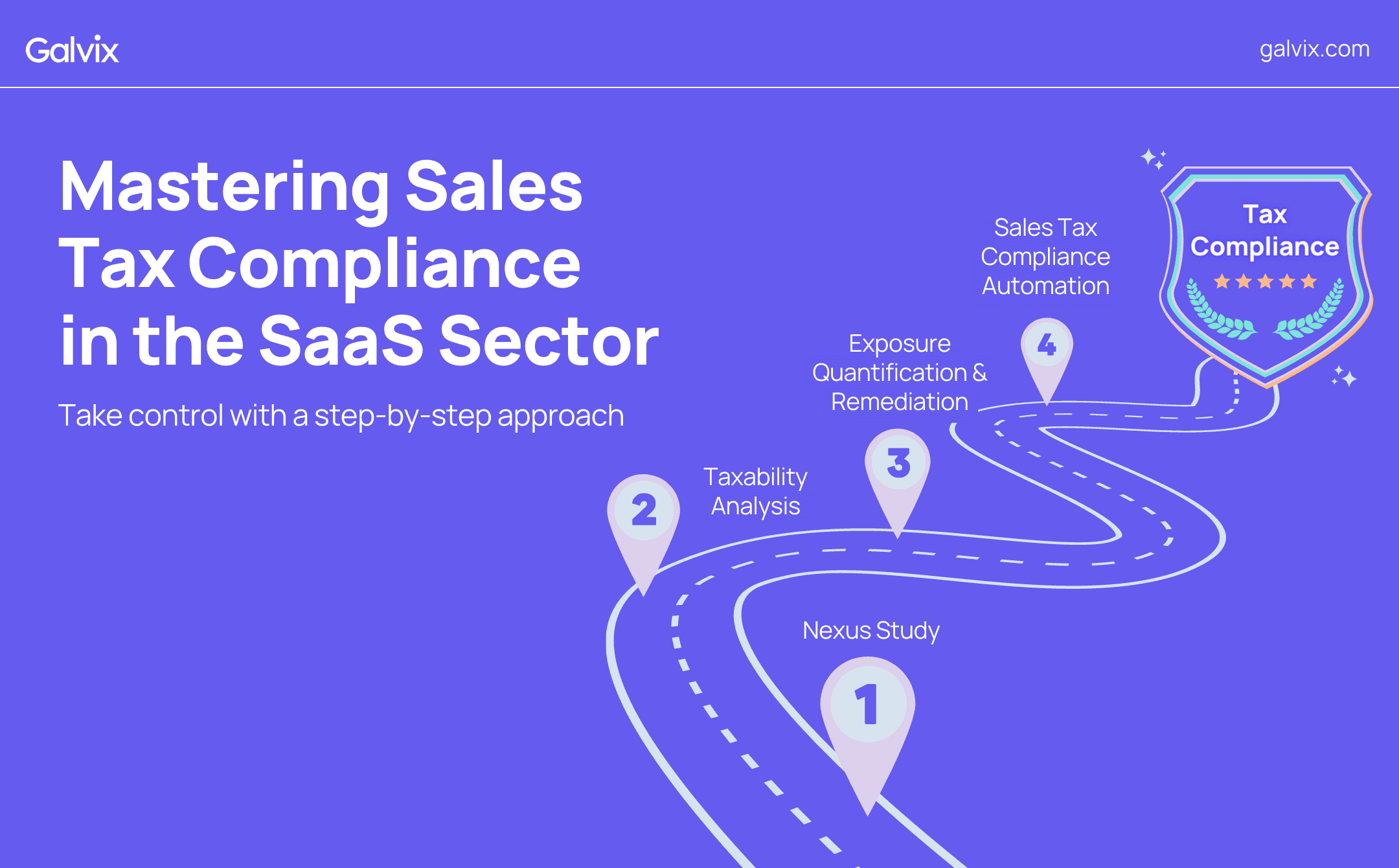
Here's a step-by-step approach:
- Nexus Study: Determine your filing obligation in various states by examining your company's state-specific activities.****
- Taxability Analysis: Once you've established your nexus profile, assess whether the states identified in the nexus study subject SaaS and other ancillary services to sales tax.****
- Exposure Quantification/Remediation: If you have tax obligations, quantify your exposure to determine the scope in those states. Consider participating in voluntary disclosure programs to limit penalties.
- Sales Tax Compliance Automation: Once you've addressed potential exposure, automate your compliance for efficiency, time-saving, and risk mitigation.
Developing a sales tax compliance plan before any diligence process is crucial. It prevents unwanted surprises and helps maintain control over the process.
Looking ahead
Understanding state and local taxes (SALT) can significantly influence your SaaS company's success. Not complying could result in financial risks and even damage customer relationships. It's a crucial year for M&A opportunities with a lot of cash reserves ready for spending. To leverage these opportunities, proactively tackling sales and tax compliance is key.
Considering third-party consultation on SALT compliance can also be beneficial. It helps mitigate exposure and liability, ensuring you get your company's full value and feel prepared when it's time to sell.
Navigating sales tax compliance may seem daunting, but with careful planning and due diligence, you can protect your business's future and create lasting value. Stay humble, be efficient, and think long-term. You've got this!
Why SaaS providers need specialized help with sales tax
SaaS providers face a unique set of challenges when it comes to tax compliance. With each state imposing different tax regulations and the advent of remote work complicating matters, it's no longer sufficient to manage sales tax compliance manually or with generic tools.
Sales tax software can calculate the tax, but someone still has to decide where you have nexus, register, reconcile the data, file every return and answer state notices. Specialists who do this every day can assess your activity in each state, quantify and clean up past exposure, and keep every month's filings on time.
In essence, the right compliance partner keeps SaaS providers in control of their tax obligations as the rules keep changing.
Experience Galvix: Your trusted partner for seamless tax compliance
We at Galvix understand the unique challenges SaaS providers face in mastering sales tax compliance. Our mission is to simplify this complexity, acting as your dedicated sales tax compliance team across the diverse US sales tax landscape. We believe in creating a future where SaaS businesses can focus on their core mission without worrying about the burden of sales tax compliance.
Our team monitors your nexus in every state, registers you when you cross a threshold, and prepares and files your returns each month, while you keep full visibility in the Galvix dashboard. When you need more, we also run historical nexus studies, map how your products are taxed, and handle voluntary disclosures and back-filing for past exposure.
Are you ready to experience a simplified approach to sales tax compliance? Request a free demo of Galvix today and let us help you navigate the complexities of sales tax compliance with ease. We're committed to making your journey simpler, efficient, and more productive.
Remember, sales tax compliance is not just about meeting legal obligations; it's about creating value for your business and stakeholders. Long-term thinking, prudence, and professional diligence are the cornerstones of efficient tax management. With Galvix, you can be assured of an authentic, humble partner dedicated to your success.
Let's create a future where sales tax compliance is a breeze.