
If your business sells taxable goods to Georgia customers, Georgia sales tax registration is required before you collect a single dollar of tax. This obligation applies to operations with a physical footprint within the state and to remote sellers that cross the economic threshold during the current or previous calendar year.
The registration process runs through the Georgia Tax Center (GTC), the state's official online portal for tax accounts. There is no registration fee for sales tax accounts, and most complete applications generate a tax account number shortly after online submission, allowing sellers to begin collecting without lengthy approval delays.
This Georgia sales tax registration guide explains who needs a sales tax permit, what details to prepare, how the application works step by step, and what business owners should do after approval. It also shows how Galvix supports finance teams managing Georgia inside a wider multi-state operation.

Is There a Sales Tax in Georgia?
Yes. The State of Georgia imposes a 4% base sales tax rate on most tangible personal property sold to customers inside the state. Counties and local jurisdictions add local sales taxes on top, so the final combined rate depends on the buyer's delivery location, not the seller's office.
Georgia Sales Tax Rate Structure
Georgia combines a statewide base rate with local taxes, so delivery location decides the final checkout rate.
- The 4% state base rate applies uniformly to taxable sales of tangible goods across every Georgia jurisdiction.
- Counties layer local option sales tax and special district taxes on top, raising the combined rate charged at checkout.
- The final rate depends on the buyer's delivery county under destination sourcing, not the seller's warehouse or retail store.
What Is Taxable and What Is Not in Georgia
Georgia taxes many physical goods, with exemptions depending on the product category and the quality of buyer documentation.
- Most sales of tangible personal property count as taxable retail sales in Georgia, including electronics, furniture, apparel, and physical merchandise.
- SaaS and most digital services remain exempt sales under current Georgia law when no tangible product changes hands.
- Shipping and delivery charges follow the underlying product, so they become taxable when the goods being shipped are taxable.
- Nonprofit organizations and qualifying resellers can present exemption certificates that remove tax on otherwise taxable products at checkout.
Who Needs to Register for Georgia Sales Tax?
Sales tax registration in Georgia applies to any business making taxable sales to Georgia buyers. Both physical presence inside the state and economic activity from remote selling can independently trigger Georgia sales tax Nexus and require a sales tax license before collection begins.
Physical Presence Triggers for Georgia Businesses
An office, warehouse, or retail location inside Georgia creates physical Nexus from the first day of activity. The same applies when inventory sits in a Georgia distribution center owned by your business. Each location counts as a place of business for sales tax purposes.
Employing workers or contractors based in Georgia can also establish a physical presence for sales tax purposes. Remote employees working from home within the state are subject to this rule. Even short-term staffing creates a sufficient connection that triggers registration obligations.
Storing inventory in an Amazon FBA facility or any third-party warehouse located in Georgia can trigger physical nexus. Attending trade shows in Georgia with selling activity may also create exposure. Each scenario should be reviewed on a case-by-case basis.
Economic Nexus Threshold for Remote Sellers
Georgia uses a dual threshold to determine when an out-of-state seller must register, and either measure alone is enough to trigger economic nexus. The remote seller crosses the line based on Georgia sales revenue or transaction count, whichever happens first during the measurement window.
A remote seller must complete Georgia Sales tax permit registration once Georgia revenue exceeds $100,000 in gross sales. The same applies after more than 200 separate retail transactions are made to buyers inside Georgia during the measurement period.
The measurement window covers the current or previous calendar year. Sellers should review both periods because passing the threshold in either window starts the registration clock. Marketplace facilitators handle the collection of their portion of qualifying sales separately, in accordance with state rules.
Marketplace sales handled by qualifying platforms may be excluded from a seller's own threshold count under current rules. House Bill provisions on marketplace facilitator collection define this carve-out, so seller-level review with a tax specialist remains important before assuming any exclusion applies.
Also Read: Texas Sales Tax Registration Guide
What Information Do You Need Before Applying for Georgia Sales Tax Registration?
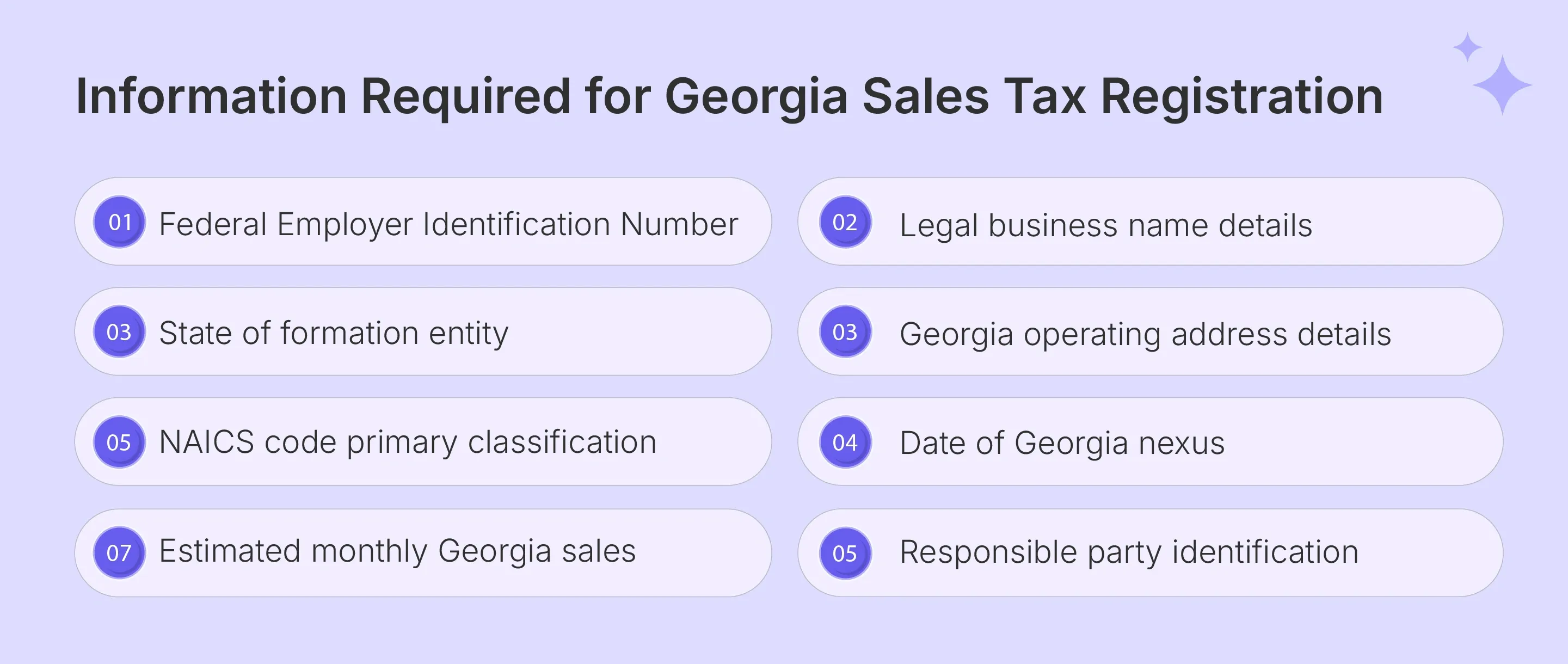
Before starting the Georgia Tax Center application, gather your identification, ownership, business activity, and sales details into a single folder. Clean inputs reduce form errors and help the Georgia Department of Revenue immediately assign the correct tax account and filing frequency.
How Do You Register for Sales Tax in Georgia Step by Step?
Wondering ‘how to register for sales tax permit in Georgia’? Well, the process starts with the online registration pathway at the Georgia Tax Center. The process is fully digital, and sellers should prepare identification, nexus dates, business activity, and sales estimates before opening the application.
Here is a step-wise guide to help you through the process:
Step 1: Preparing Your Business Information

- Gather your federal employer identification number, legal business name, entity type, formation state, and the date Georgia nexus was established.
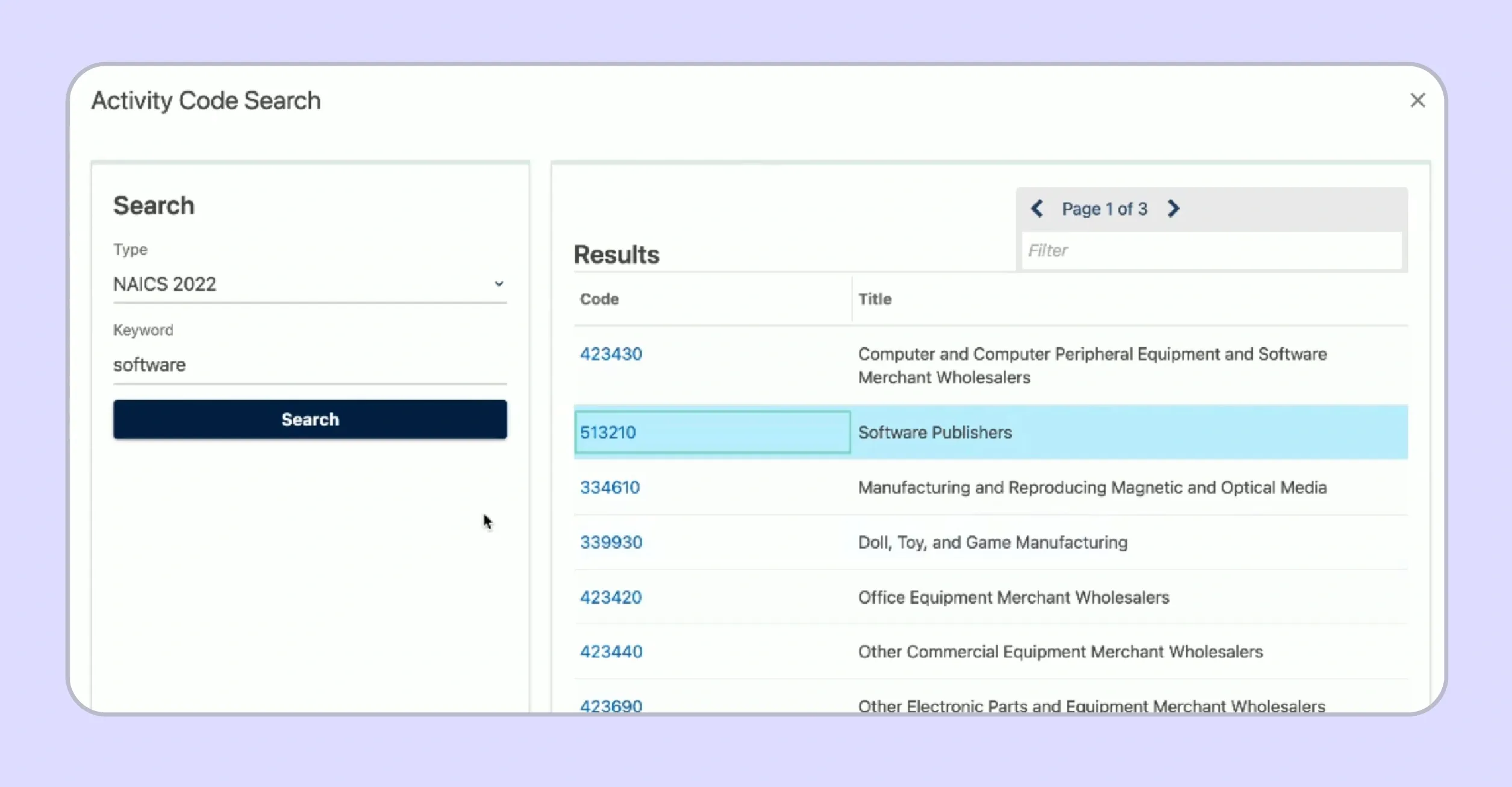
- Look up your NAICS code from the North American Industry Classification System because the form uses it for account classification.
- Prepare contact information for owners, officers, and the responsible party listed on the new sales tax account.
Step 2: Accessing the Georgia Tax Center to Begin Registration
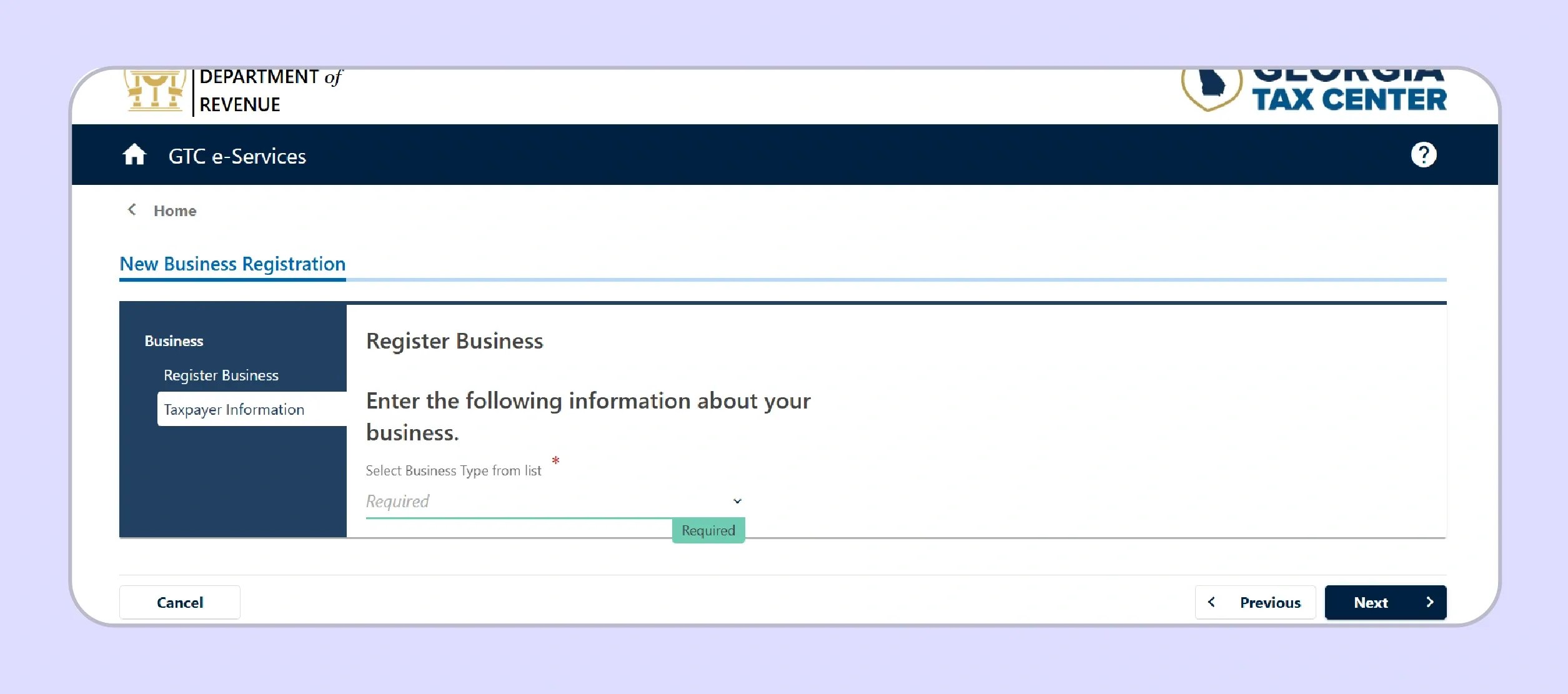
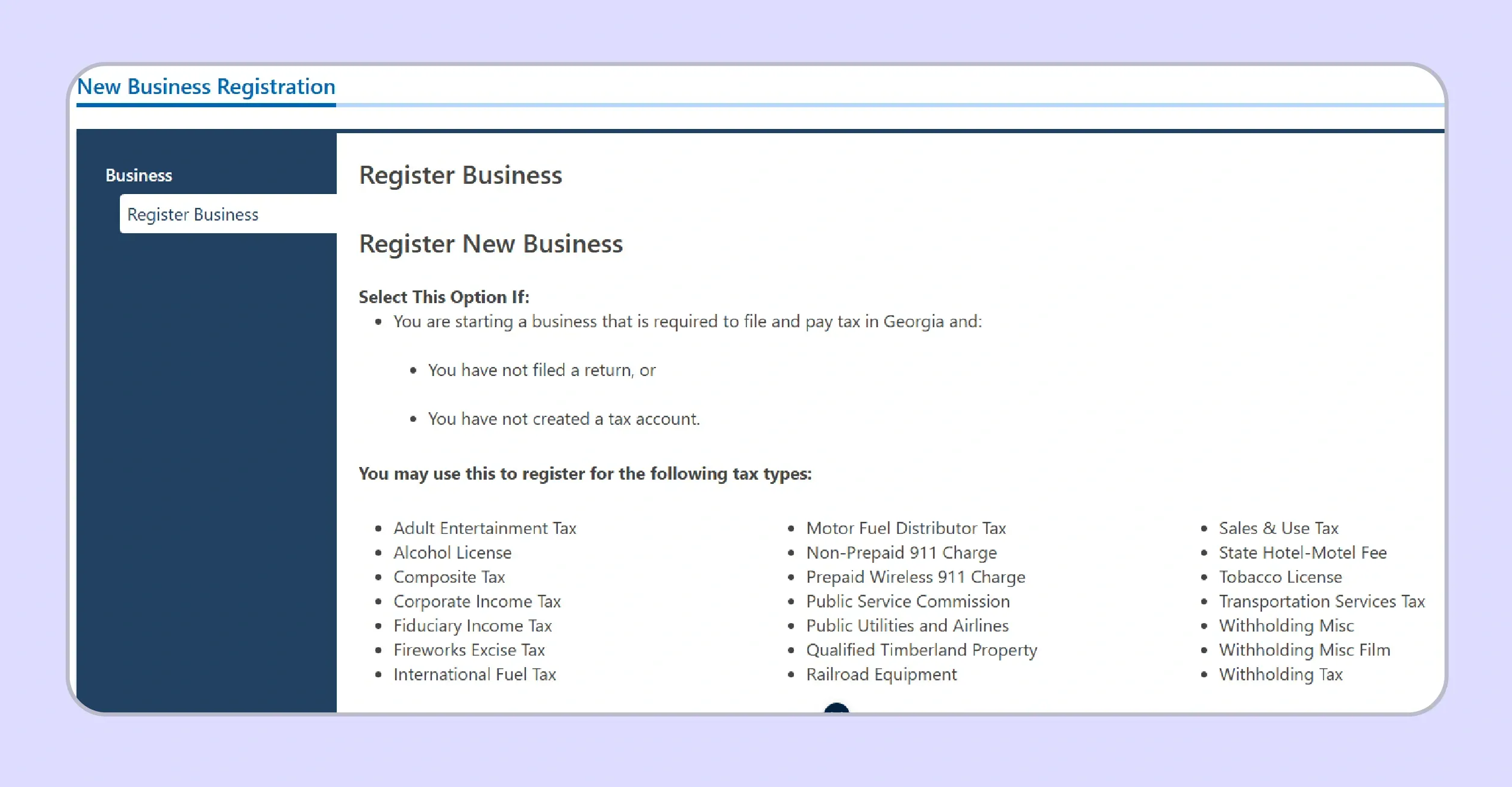
- Navigate to the Georgia Tax Center and choose the Register a New Georgia Business option from the registration section.
- If your business is already registered with the Georgia Secretary of State, some fields may populate automatically from existing records.
- Create a GTC account login with a verified email address because confirmations and certificate documents will arrive electronically going forward.
Step 3: Completing the Sales and Use Tax Application
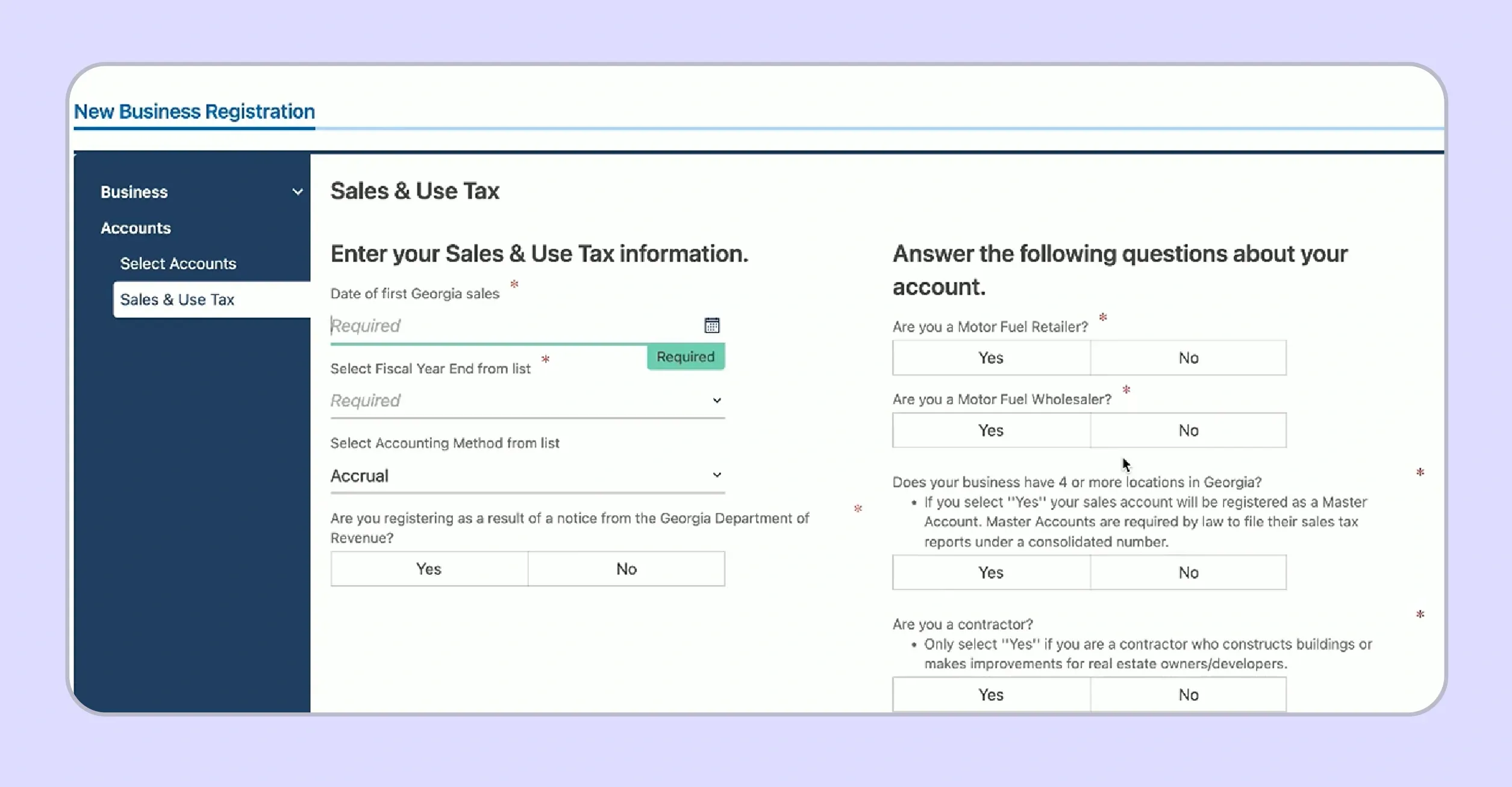
- Select Sales and Use Tax as the account type to begin Sales tax permit registration in Georgia inside the application form.
- Enter the date Georgia Nexus was first established because it affects when collection began and which prior periods need filings.
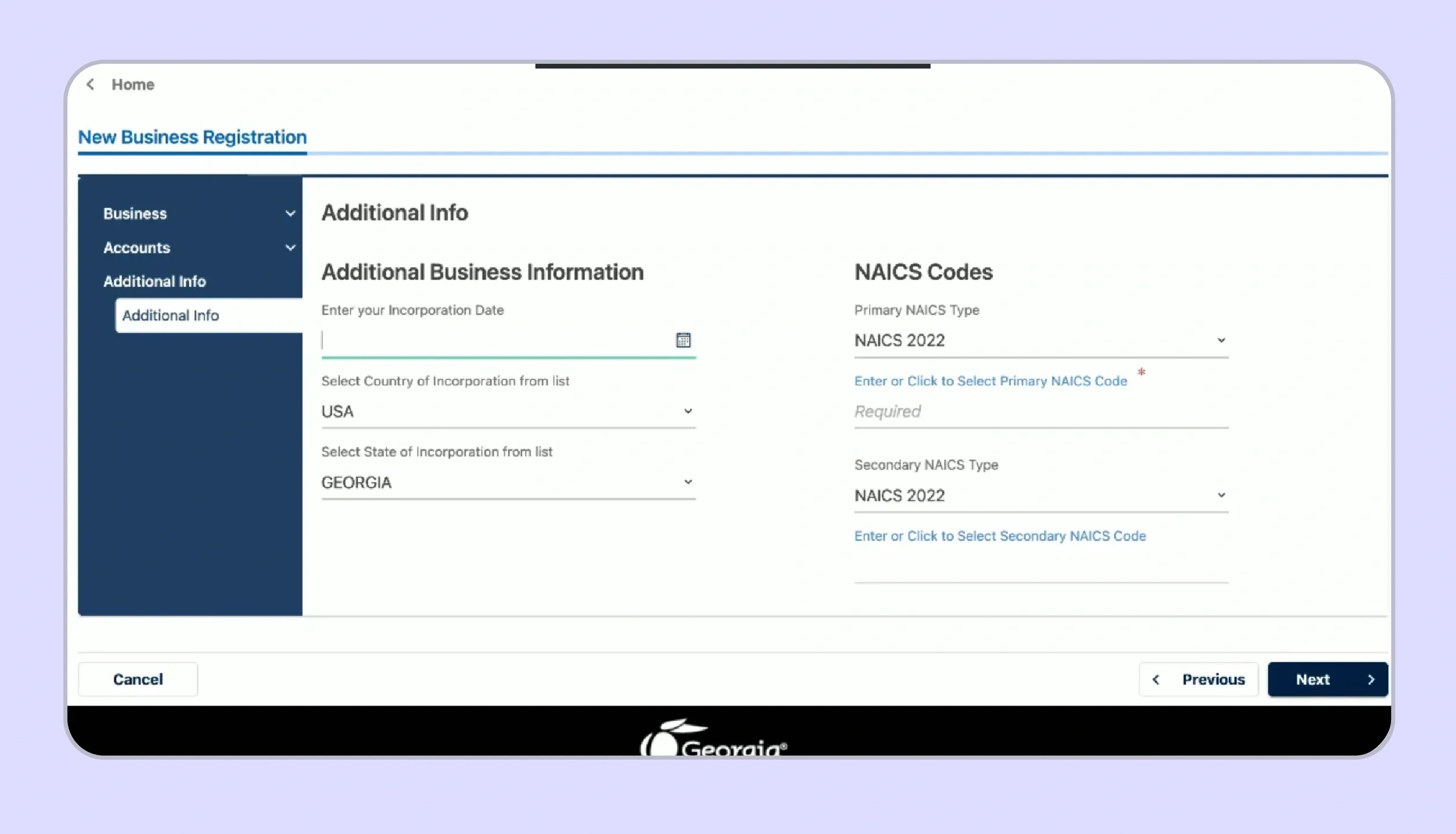
- Provide estimated monthly taxable sales and your primary business activity so the state can assign filing frequency and due dates correctly.
Step 4: Submitting and Receiving Your Certificate
- Review every field before submission because errors on FEIN or effective date can delay account setup and certificate issuance.
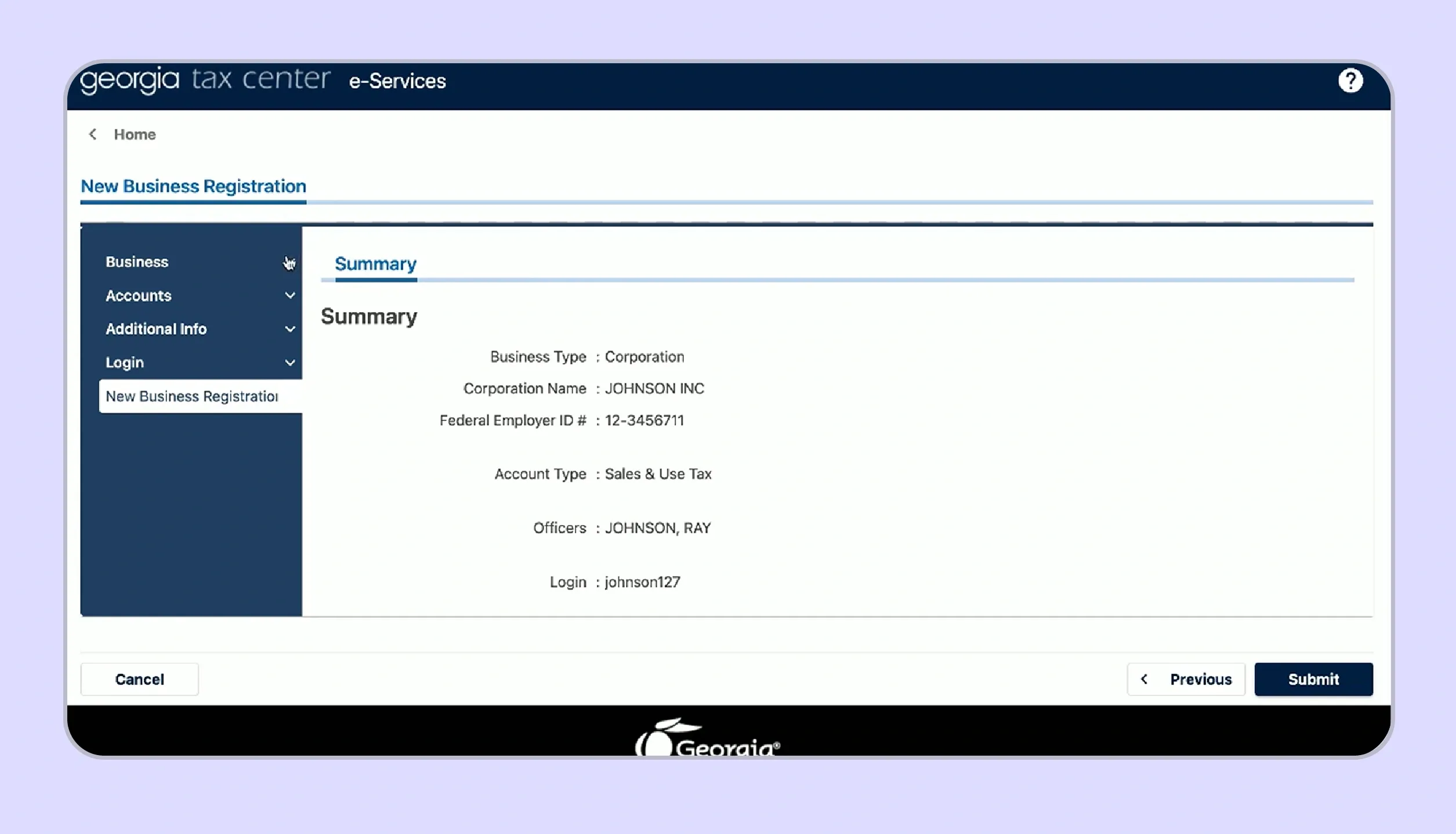
- Complete applications usually receive a sales tax ID and Sales and Use Tax Certificate quickly after the Georgia DOR completes review.
- Configure your GTC profile for e-filing so your first sales tax returns are submitted before the assigned due dates arrive.
Also Read: Florida Sales Tax Registration Guide
What Happens After You Receive Your Georgia Sales and Use Tax Certificate?
Receiving your Georgia sales tax permit starts the ongoing compliance cycle. From that point, your business must collect the correct tax and remit it on schedule before each due date arrives. Filing accuracy protects the account from state notices.
Georgia sales and use tax returns are filed through the Georgia Tax Center. Filing frequency assignment depends on your sales volume, with monthly, quarterly, semi-annual, or annual options available on the schedule. Confirm your fiscal year end immediately after approval.
Recordkeeping matters after registration. Maintain sales records, exemption certificates, resale documentation, return confirmations, and payment receipts so each period can be reviewed accurately. Missing a deadline can trigger a late filing penalty even when the tax due is zero.

What Mistakes Should Sellers Avoid During Georgia Sales Tax Registration?
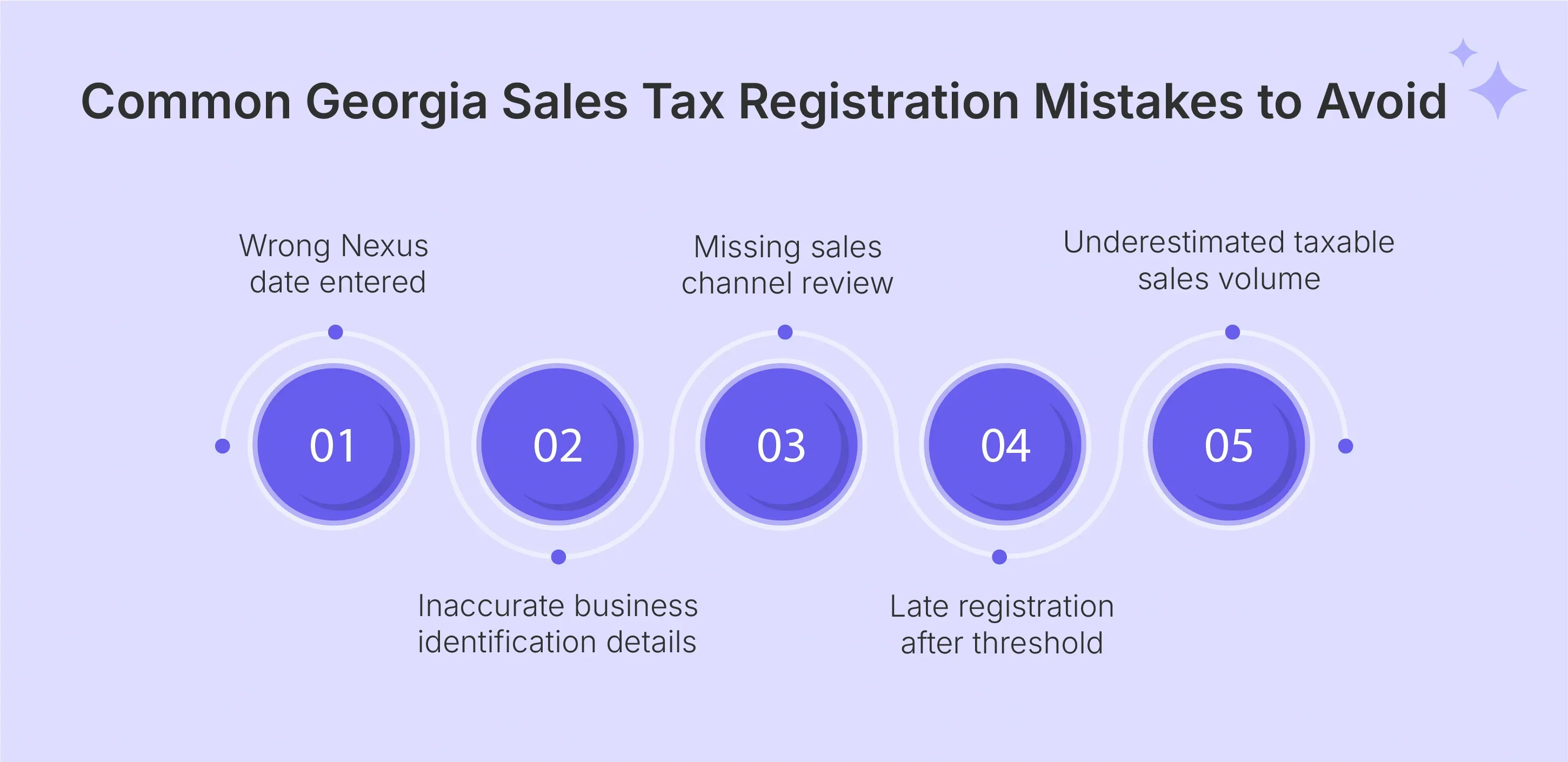
Small registration errors can create large compliance problems later in the year. Sellers should review nexus dates, sales estimates, business details, and account setup before submission, especially when Georgia sits inside a broader multi-state sales tax compliance footprint.
- Using the wrong nexus date affects when Georgia expects sales tax collection to begin and which periods require backfiled returns.
- Entering inaccurate business identification details can delay your tax number issuance or create unnecessary state correspondence after approval.
- Underestimating taxable sales can lead the state to assign a filing frequency that does not match real business volume.
- Forgetting marketplace channels, wholesale orders, retail store activity, or direct ecommerce sales can distort the seller's Nexus review.
- Waiting until well after threshold exposure can create uncollected tax risk on earlier Georgia sales that already happened.
What to Do Once Your Georgia Business Needs to Register in Multiple States?
Georgia Sales Tax registration is a single step inside a multi-state compliance picture for businesses selling nationally. Most companies that cross the Georgia threshold are already approaching similar thresholds in other states, creating a registration and filing workload that grows with each new state entered as the business scales.
Galvix manages Georgia Sales Tax registration as part of a modular compliance model in which businesses pay only for the services they use. The exact pricing depends on the scope and volume of work for each service, with dimensions for registration, filing, monitoring, and notice handling shown on the pricing page.
Here is what Galvix manages after your Georgia registration is complete:
- Nexus Monitoring Across All 50 States: Galvix tracks economic nexus exposure across every state with proactive alerts at 75%, 85%, and 95% of each threshold. Your finance team acts on early signals before a new obligation becomes urgent or costly.
- Done-for-You State Registrations: When your business crosses a threshold in any new state, Galvix manages the full registration process, including portal work, credential setup, and state correspondence. Pricing depends on the scope and volume of registration work required.
- Expert-Prepared Returns Filed on Your Behalf: Every return is independently reconciled against billing data by a named compliance specialist before submission. You approve through a dashboard, and Galvix files across every registered state on schedule.
- Full State Correspondence Management: Georgia Department of Revenue notices, audit inquiries, filing frequency changes, and other multi-state letters are managed by Galvix. Your finance team receives dashboard updates instead of state envelopes piling up.
Schedule a personalized Galvix demo to see how managed Georgia Sales Tax Registration and multi-state compliance can work for your business.
Frequently Asked Questions
How to register for sales tax in Georgia?
Use the Georgia Tax Center and choose the new business registration pathway to start how to register for sales tax in Georgia. Enter your identification, nexus date, and estimated sales details inside the online application. The state usually issues your sales tax account quickly after submission.
What is the registration tax in Georgia?
There is no registration fee for a standard Georgia sales tax account when applying through the Georgia Tax Center. Some other business licenses or specialty permits may carry separate state or local fees. The sales and use tax account itself remains free to open.
Do I need a sales tax permit in Georgia?
You need a seller's permit in Georgia if your business has physical presence in the state or has crossed the economic nexus threshold. Marketplace-only sellers should still confirm exposure with a tax specialist. Registration must happen before you start collecting any sales tax.
Is there a sales tax in Georgia?
Yes. Georgia imposes a 4% state base sales tax rate on taxable sales of tangible personal property. Counties layer local rates on top, so the combined rate at checkout varies by buyer location. New business owners should configure tax engines accordingly from day one.
How to pay sales tax in Georgia?
Sales tax collected from buyers is remitted through your GTC account at the assigned filing frequency. Payments are made by ACH debit, credit card, paper check, or other approved methods inside the portal. Each return must show gross sales, taxable sales, exempt sales, and tax due.
How do tax sales work in Georgia?
Tax sales are auctions of property where back taxes are owed, run by county tax commissioners under Georgia law. This is unrelated to sales and use tax collection by businesses. Property tax sales follow a separate court-supervised process at the county level.
How to calculate Georgia sales tax?
Apply the combined state and local rate to the taxable amount based on the buyer's delivery address inside Georgia. The 4% state rate plus county and special district taxes form the total. Automated tax engines pull the correct rate by ZIP and address.
How do I pay my Georgia sales tax online?
Log in to your GTC account, open the sales and use tax module, and select the period you want to file and pay. Enter gross sales, taxable sales, and exemptions, then submit payment electronically through the portal. Confirmation arrives at the registered email address.