
Every business selling taxable goods or services in the state of New Jersey must complete New Jersey Sales Tax registration before collecting any tax from buyers. This rule covers sellers with a physical place of business in New Jersey and remote sellers that cross the state's Nexus threshold.
New Jersey is a member of the streamlined sales tax agreement, which can simplify registration for eligible multi-state sellers. New Jersey Division of Revenue and Enterprise Services requires businesses to submit the business registration application at least 15 business days before starting taxable sales, so early action matters when approaching any threshold.
This New Jersey sales tax permit registration guide explains who must register, the applicable thresholds, the information to prepare, and how to complete the online application. Our New Jersey Sales tax guide also covers how Galvix manages ongoing compliance for the state of New Jersey once your Certificate of Authority arrives.

Is There a Sales Tax in New Jersey?
Yes. New Jersey applies a state sales tax rate of 6.625% on most retail sales of tangible personal property, specified digital products, taxable services, and certain bundled transactions. The state of New Jersey does not layer county or city rates on top, which makes rate calculation simpler than in many other states.
Read more: Florida Sales Tax Registration Guide for 2026
What New Jersey Sales Tax Applies To
New Jersey sales tax applies to most taxable tangible personal property sold to customers in the state. This includes electronics, furniture, appliances, tools, and many household goods sold through ecommerce stores, retail outlets, direct invoices, or other taxable retail channels. The state also taxes specified digital products and selected taxable services when New Jersey law treats the underlying transaction as taxable. Shipping and delivery charges are taxable when the item being shipped is taxable, so sellers should review product taxability before applying tax rules.
What Is Exempt From New Jersey Sales Tax
New Jersey exempts several common product categories from the statewide sales tax rate. Most unprepared food and grocery items sold for home consumption are exempt, while most clothing, footwear, prescription drugs, and many over-the-counter medicines also remain outside standard tax collection.
Buyer-based exemptions require stronger documentation. Qualified nonprofit organizations, government bodies, registered charities, and educational institutions may claim exemption when they provide valid exemption certificates that the seller can store and produce during review or audit.
Who Needs to Register for New Jersey Sales Tax?
Any business making taxable sales to customers in New Jersey must register with the NJ Division of Taxation and obtain a Certificate of Authority before any sales tax collection begins. Both physical presence and economic activity can trigger this obligation, even when the seller operates outside New Jersey.
Physical Presence in New Jersey Creates Immediate Registration Obligation
Physical presence creates a registration obligation because the business has a direct operating connection with New Jersey. Sellers should review facilities, people, inventory, and temporary selling activity before deciding whether registration can wait.
- Maintaining an office, retail location, warehouse, or storage facility inside New Jersey creates physical Nexus for sales tax purposes.
- Employing workers or independent contractors in New Jersey, including remote employees, can establish physical presence under state rules.
- Storing inventory in a New Jersey fulfillment center or any third-party warehouse can create immediate sales tax Nexus exposure.
- Selling at trade shows, flea markets, craft shows, or other temporary venues inside the state may also trigger registration.
Economic Nexus Threshold for Remote Sellers in 2026
Economic Nexus can apply even when a seller has no physical operation in New Jersey. The state reviews sales activity into New Jersey, so remote sellers should track both revenue and transaction count before crossing the threshold.
- New Jersey uses an OR-logic threshold for any remote seller analyzing economic Nexus into the state.
- A remote seller must register after crossing $100,000 in gross revenue or 200 separate transactions delivered into New Jersey.
- The threshold applies to current calendar year or prior calendar year sales delivered to New Jersey customers.
- New Jersey Sales Tax registration may apply even when a seller has no physical office or warehouse here.
- Marketplace sales handled by a marketplace facilitator still factor into total New Jersey activity during threshold review.
What Information Do You Need Before Starting the New Jersey Registration?
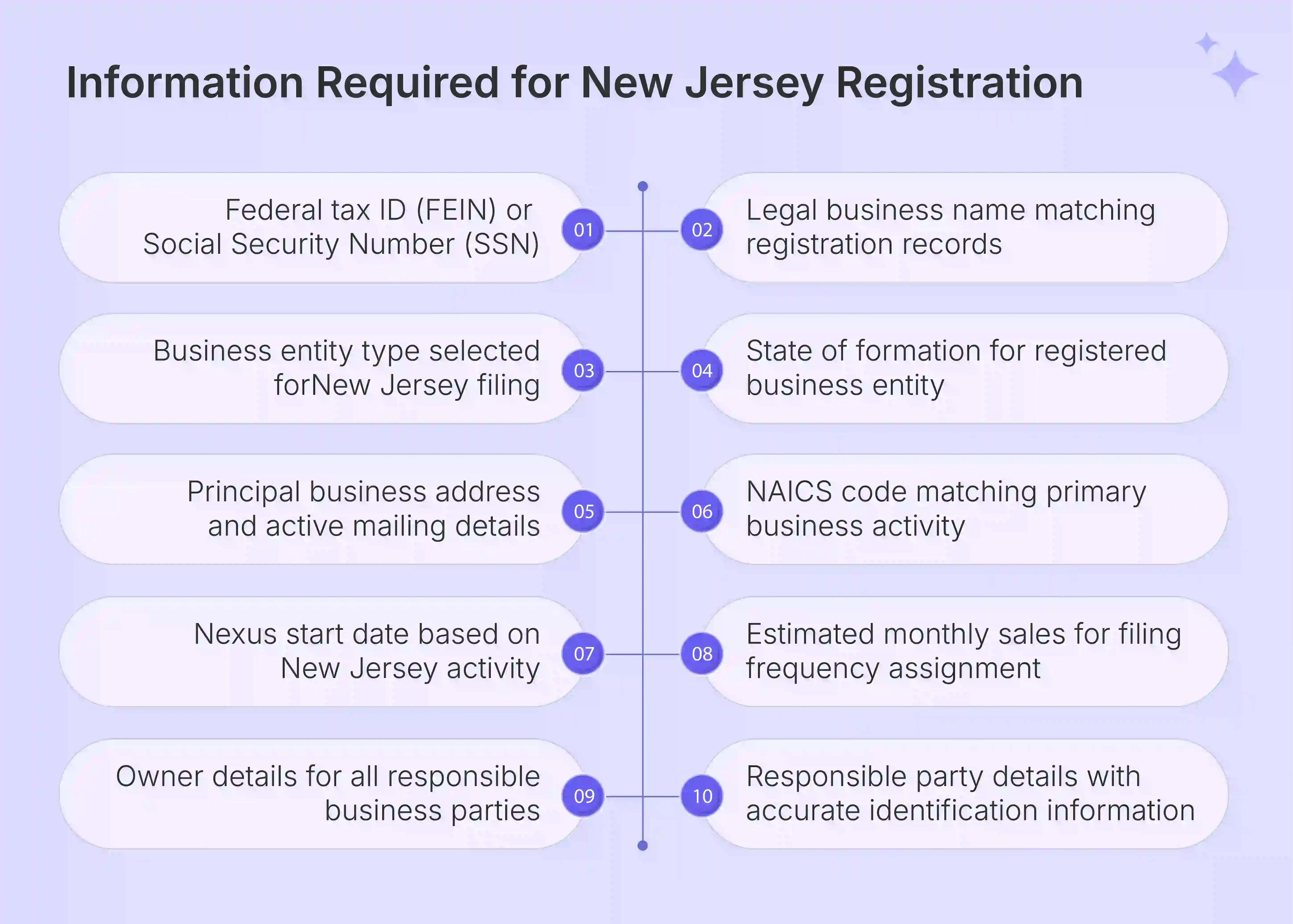
Before opening Form NJ-REG, gather your business identification, ownership, and sales activity details together. Completing this checklist in advance can reduce errors and avoid delays during New Jersey Sales Tax registration through the portal.
How Do You Register for Sales Tax in New Jersey Step by Step?
New Jersey Sales Tax registration is completed online through the NJ Division of Revenue Business Registration portal using the business registration application Form NJ-REG. The application carries no filing fee, although every business should submit it at least 15 business days before starting taxable activity or beginning collection.
Here is a step-wise guide to help you understand the New Jersey Sales Tax registration process:
Step 1: Access the NJ Business Registration Portal
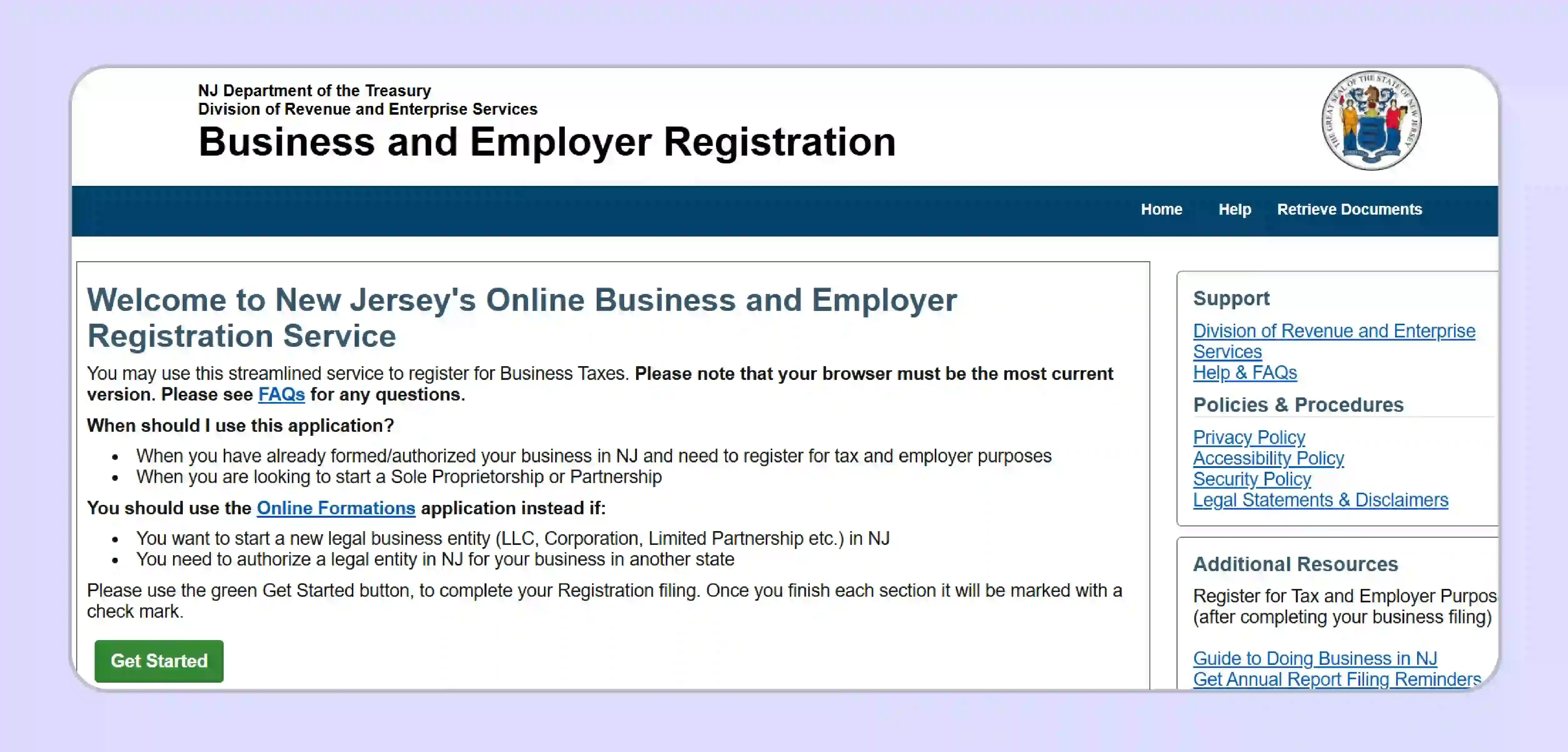
- Open the NJ Business Registration portal and select the option to register a new business in the state.
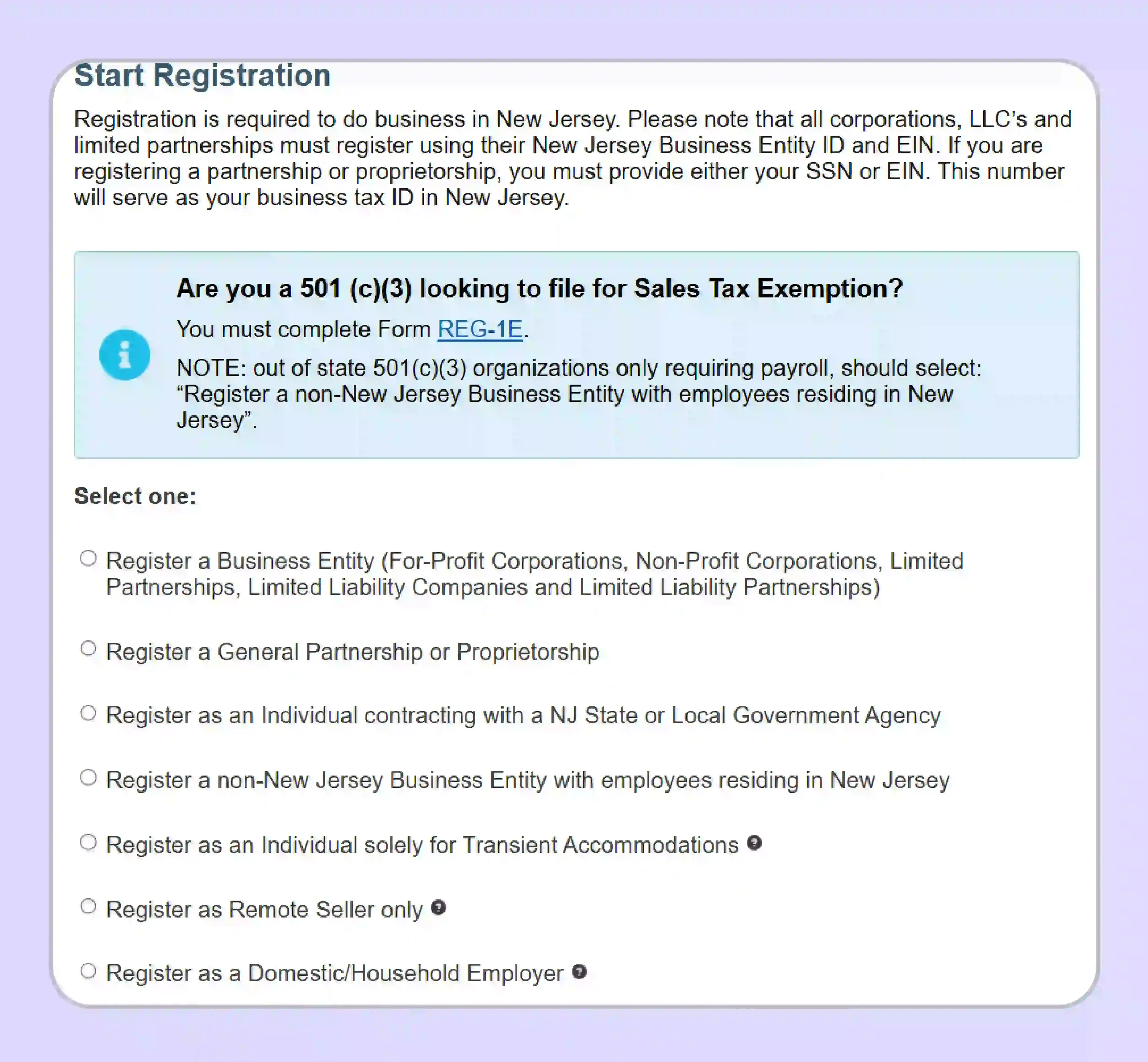
- Choose the correct business type, including out-of-state entities where no New Jersey location currently exists for operations.
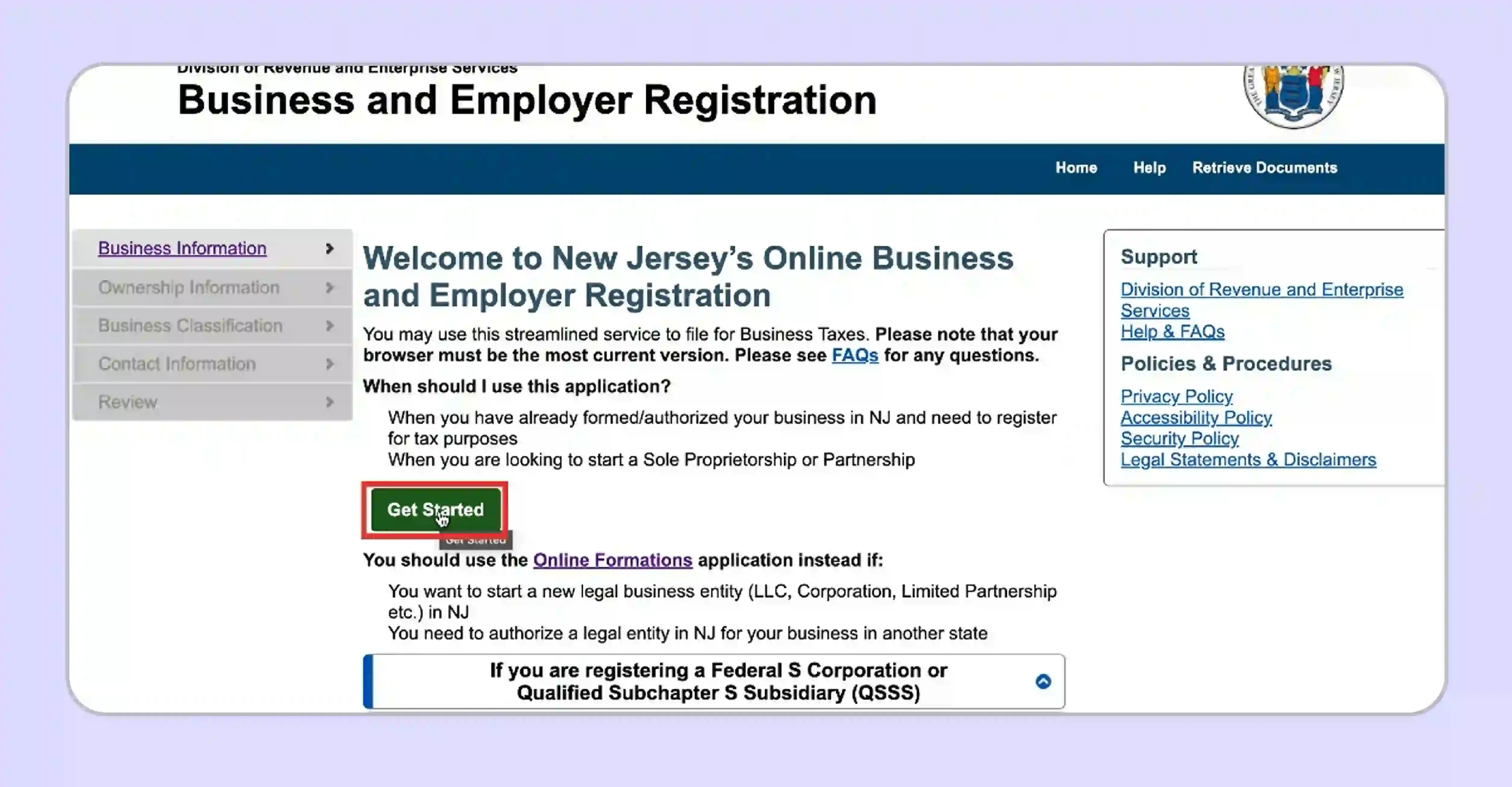
- This step marks the official starting point for how to register for a sales tax permit in New Jersey through the NJ tax portal.
Step 2: Complete the Form NJ-REG Application
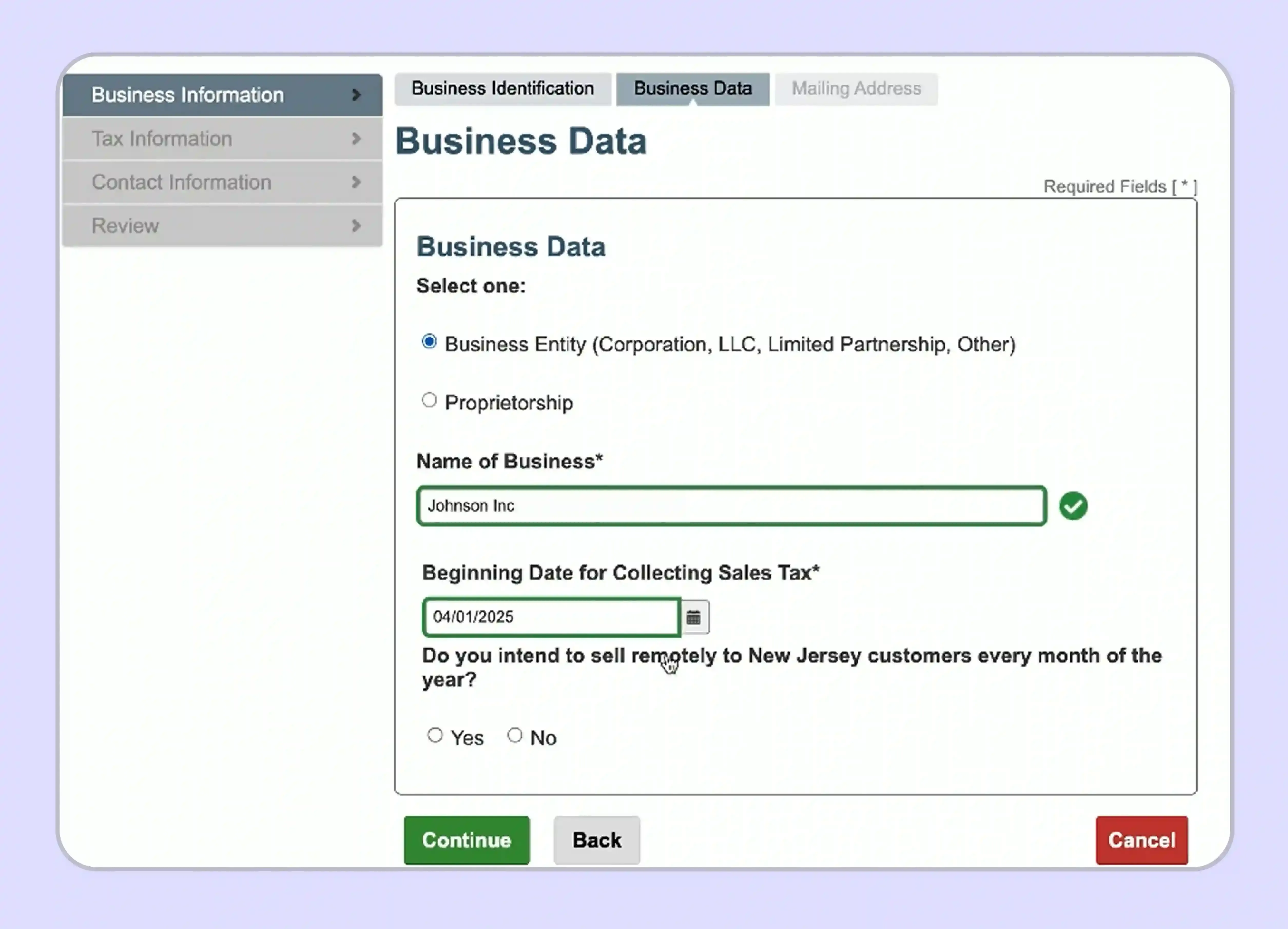
- Enter your FEIN or social security number, legal business name, entity type, formation state, and principal business address.
- Add your New Jersey Nexus date carefully because this date affects when sales tax collection obligations actually began for you.
- Enter your NAICS code, activity description, owner details, and responsible party contact information for ongoing state records.
- Provide estimated New Jersey sales volume so the New Jersey Division of Taxation can assign your filing frequency correctly.
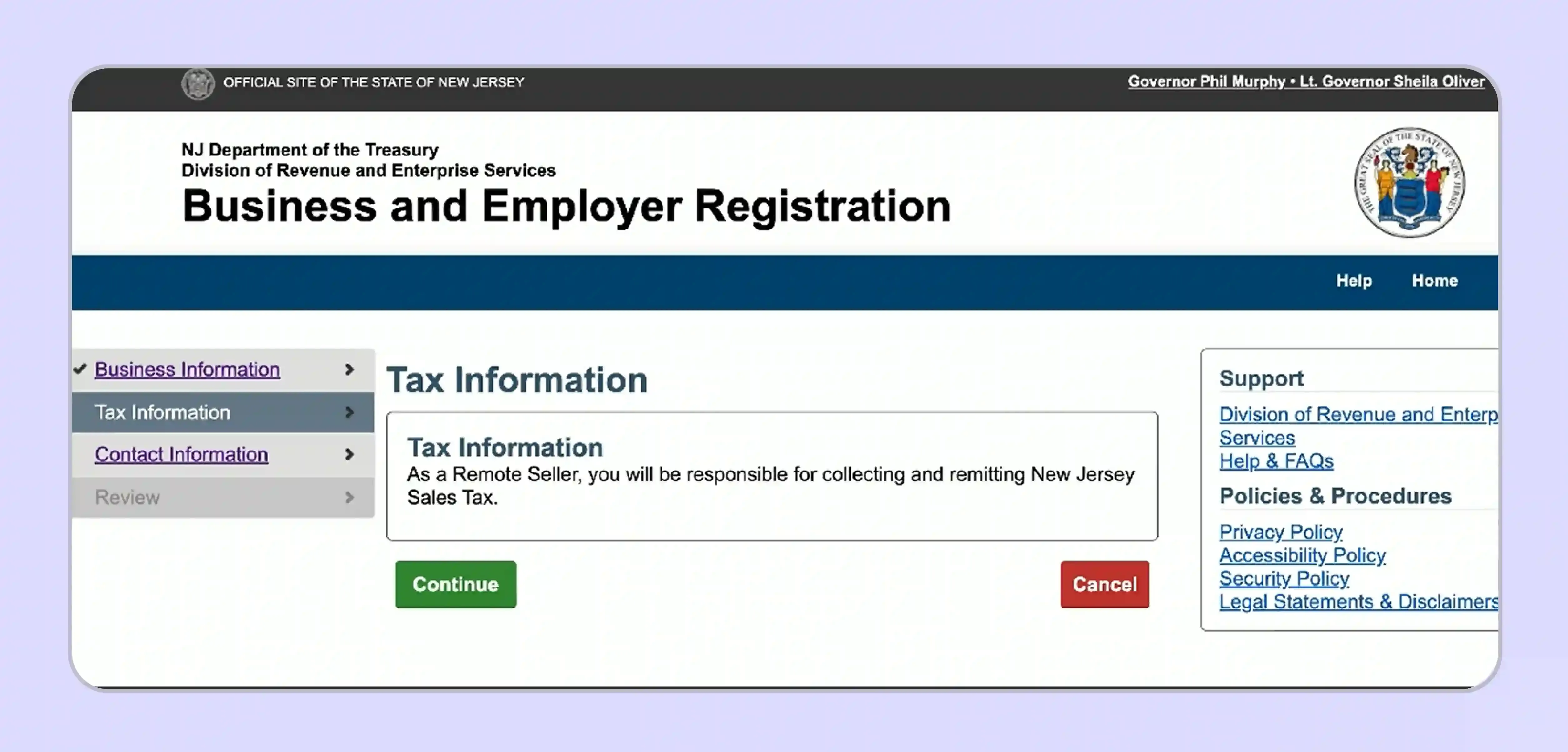
Step 3: Submit the Application and Save Your Certificate
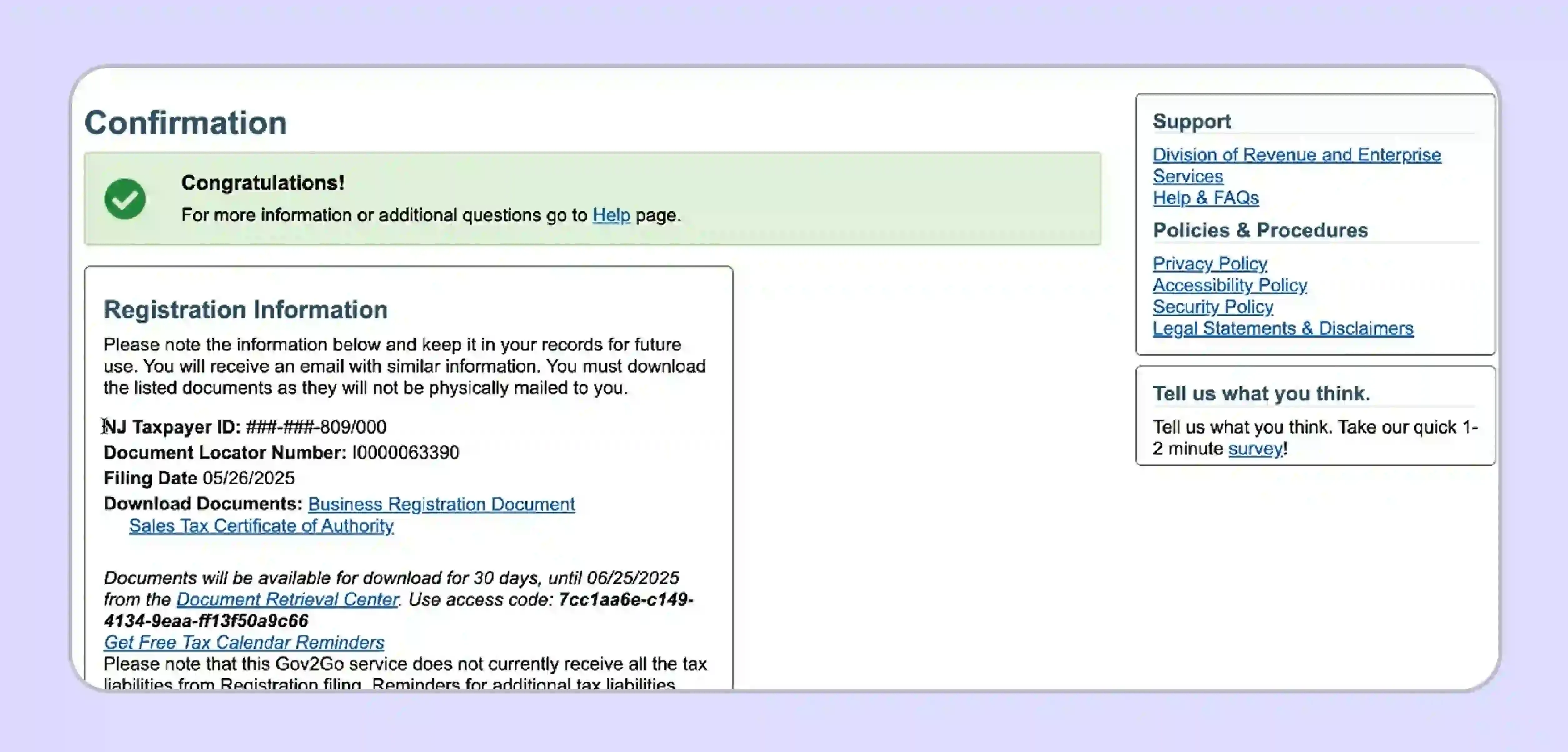
- Review the application summary before submission to catch errors in FEIN, address, Nexus date, or other key fields.
- Approved applicants receive a Certificate of Authority, which permits the business to legally begin collecting sales tax.
- Store the certificate, taxpayer ID, filing frequency, and portal access details together with all internal compliance records.
What Happens After You Receive Your New Jersey Certificate of Authority?
Receiving the Certificate of Authority starts your New Jersey compliance cycle, not a one-time setup task. From that point, your business must collect tax correctly, follow the assigned reporting period, and keep every filing action supported by clear records internally.
Sales tax collection should begin only after the Certificate of Authority becomes active for your business. Returns must be filed according to the filing frequency assigned by the New Jersey Division of Taxation, with payments matched to each reporting period.
Recordkeeping becomes equally important after registration. Maintain resale certificates, exemption documents, return confirmations, and payment receipts, then review taxability for digital products, services, tangible goods, and mixed bundles so that every future filing reflects your actual New Jersey activity with greater accuracy.

What Are the Common Mistakes to Avoid During New Jersey Sales Tax Registration?
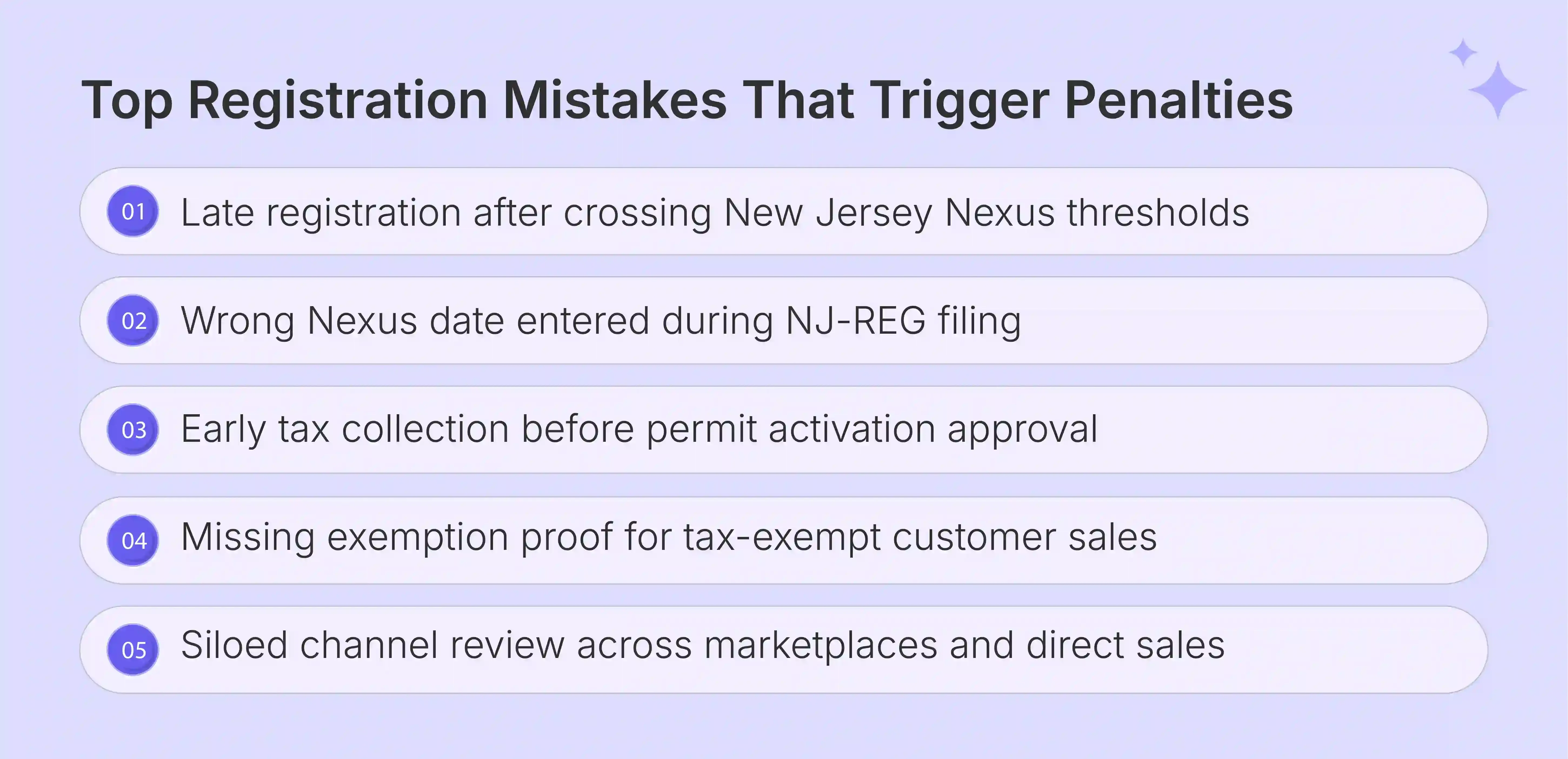
Many New Jersey Sales Tax Registration errors stem from late registration, incorrect effective dates, missing exemption records, and incomplete channel reviews. These mistakes can create avoidable exposure during sales tax filing or later state review.
- Registering only after crossing the economic Nexus threshold, which creates real exposure for the prior uncollected period of taxable sales.
- Entering an incorrect Nexus effective date, which can affect back-tax review, due dates, and ongoing filing frequency expectations.
- Collecting New Jersey sales tax from buyers before the Certificate of Authority has been officially issued by the state.
- Assuming exempt sales need no certificate documentation, reporting discipline, or supporting paperwork inside your sales tax filing workflow.
- Treating marketplace sales, direct sales, wholesale orders, and invoice billing separately when reviewing total New Jersey sales tax Nexus exposure.
What to Do Once Your New Jersey Business Grows Into Multiple States?
New Jersey Sales Tax registration is a single step within a broader multi-state compliance picture for any business selling nationally. Most companies that cross New Jersey's sales threshold have already crossed or are approaching thresholds elsewhere, creating a registration workload that grows with every new market entered.
Galvix handles New Jersey Sales Tax registration as a fully done-for-you service and supports the entire compliance workflow after the Certificate of Authority arrives. Modular pricing means businesses pay only for the services they use, rather than being locked into an expensive all-inclusive package from larger players.
The exact cost depends on the scope and volume of work required across each service area, including registrations, filings, Nexus monitoring, and exemption certificate management. This gives growing businesses a flexible way to scale compliance as state obligations expand into new territories over time.
Here is what Galvix manages after your New Jersey sales tax permit is active:
- Nexus Monitoring Across All 50 States: Galvix tracks economic Nexus exposure across every active state through proactive alerts at 75%, 85%, 90%, and 95% of each threshold. This helps your finance team act before any new obligation becomes urgent or creates back-tax exposure.
- Done-for-You State Registrations: Once a business crosses a threshold in any new state, Galvix manages the full registration process, covering portal navigation, credential setup, account configuration, and direct follow-up with revenue departments. Pricing depends on the scope and volume of registration work needed.
- Expert-Prepared Returns Filed on Your Behalf: Every sales tax return is independently reconciled against billing data by a named compliance specialist before submission. Your team receives an approval notification, and Galvix files quarterly sales tax returns or makes monthly payments in the states where it is registered by each due date.
- Full State Correspondence Management: New Jersey Division of Taxation correspondence, audit inquiries, filing frequency changes, and other state notices are managed directly by Galvix. Your finance team receives dashboard updates rather than state letters that demand internal response and additional information from staff.
Schedule a personalized Galvix demo to see how managed New Jersey Sales Tax registration and multi-state compliance work for your business.
Frequently Asked Questions
Is there a sales tax in New Jersey?
Yes, New Jersey applies a statewide sales tax rate of 6.625% on most retail sales of products and selected services. The state of New Jersey does not add any county or city tax on top of this rate. This single-rate approach makes calculation simpler than many destination-based states elsewhere.
Do I need to register for sales tax in NJ?
You must register when your business has a physical presence in New Jersey or crosses the economic Nexus threshold of $100,000 in gross revenue or 200 separate transactions. Both rules cover taxable goods, qualifying services, digital products, and bundled offerings. Marketplace activity also counts toward your threshold review during the calendar year.
How to apply for a sales tax permit in NJ?
You apply through the NJ Business Registration portal by submitting Form NJ-REG, the state's business registration application, online. The portal asks for entity details, ownership information, NAICS code, and estimated sales volume. The New Jersey Division of Revenue then issues your Certificate of Authority after review.
What is a New Jersey sales tax certificate?
The Certificate of Authority is the official document issued by the New Jersey Division of Revenue and Enterprise Services authorizing your business to collect state sales tax. It must be displayed at your registered place of business or kept accessible to inspectors. The certificate confirms active sales tax permit status.
How to file NJ sales tax?
Registered businesses file through the NJ tax portal using the filing frequency assigned to them, which can include monthly payments or quarterly return submissions. Returns cover both sales tax and use tax owed for the period. The state assigns reporting frequency based on estimated taxable sales volume.
What documents do I need to get a permit in NJ?
You need your FEIN or Social Security Number, legal business name, entity formation details, NAICS code, principal address, and responsible party information. Prepare ownership data and estimated New Jersey sales numbers in advance. Having additional information ready helps speed up the registration process through Premier Business Services.
Who is exempt from paying NJ sales tax?
Most unprepared groceries, clothing, footwear, prescription drugs, and many over-the-counter medicines are exempt from state sales tax for buyer tax purposes. Qualified nonprofit organizations and government entities can also claim exemption with valid exemption certificates on file. Resellers use a resale certificate to support exempt purchases, and Urban Enterprise Zone businesses may qualify for reduced-rate treatment.