
Iowa businesses file sales and use tax through GovConnectIowa using the combined Sales and Retailer’s Use Tax Return. The Iowa sales tax return applies a 6% state sales tax rate, while Local Option Sales Tax can add 1% when a taxable sale is delivered into a participating jurisdiction.
The return requires careful preparation when sales span multiple marketplaces, include exempt customers, involve different local jurisdictions, or include untaxed business purchases. Several entries depend entirely on the filer’s records, including exemption categories and the county allocation used for Local Option Sales Tax.
This blog explains how to file sales tax in Iowa, prepare the return, report exemptions, reconcile marketplace transactions, complete LOST, and make payment. It also explains how Galvix can reduce recurring work when Iowa sits alongside other registered states.

What Are the Iowa Sales Tax Filing Requirements?
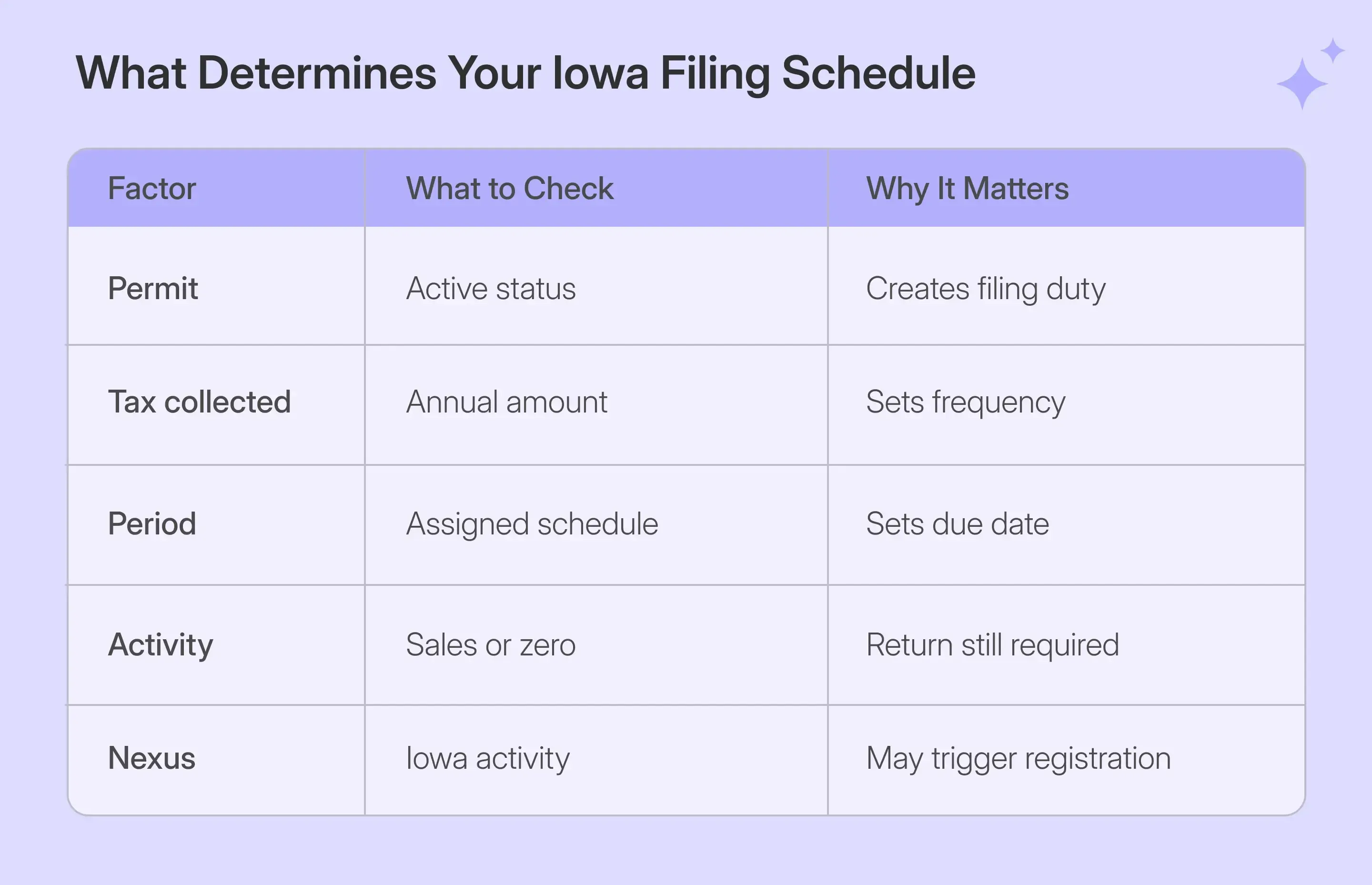
The main Iowa sales tax filing requirements depend on your permit status, assigned filing frequency, sales activity, and nexus position. Businesses with an active sales tax obligation must file returns for each required period, including periods when no tax due is reported.
Which Businesses Need to File in Iowa?
Businesses making taxable Iowa retail sales may need a sales tax permit and recurring returns. Filing obligations depend on physical presence, economic nexus, sales channels, and whether marketplace facilitators already collect and remit Iowa tax on qualifying transactions each period.
- Iowa Retailers: Businesses with a qualifying physical presence in Iowa may need to register and file returns. This includes sellers making direct retail sales from Iowa locations or business operations.
- Remote Sellers: Remote sellers exceeding Iowa’s $100,000 economic nexus threshold may need registration and recurring filing. The threshold applies even when the business has no physical location in Iowa.
- Direct Taxable Sales: Businesses selling taxable goods or taxable services directly to Iowa customers may have filing obligations. Direct sales remain separate from transactions handled by a qualifying marketplace facilitator.
- Marketplace Sellers: Sellers using marketplace facilitators may need to file when they also make taxable direct sales. Marketplace-only sellers may avoid registration when facilitators collect and remit applicable Iowa tax.
- Registration and Permit Setup: The State of Iowa uses one Sales and Use Tax Permit for most sellers. Sales tax registration through GovConnectIowa creates a permit number and taxpayer account.
Registration also collects contact information, including an email address. Businesses researching a tax permit, use tax permit, or retailer’s use tax can review current Iowa sales tax requirements online today.
How Often Do Businesses File an Iowa Sales Tax Return?
The Department assigns a frequency based on annual sales tax liability, so businesses should follow the schedule shown in their account rather than choosing one based on current monthly sales.
| Filing Type | Iowa Rule | Due Date |
|---|---|---|
| Monthly | $1,200 or more annual sales and use tax | Last day of following month |
| Annual | Less than $1,200 annually | January 31 following calendar year |
| Seasonal | $1,200 or more in four or fewer months | Last day after applicable month |
Monthly filers and seasonal filers must submit returns and payment electronically through GovConnectIowa. Annual filers may currently file electronically or use the available paper method.
The sales tax filing deadline therefore follows the assigned schedule rather than the amount of sales in a single tax period. A monthly reporting period closes on the final day of the month, with the return due on the final day of the following month.
Does Iowa Require Zero Returns?
Yes. A business with an active filing obligation should submit its Iowa sales tax return for every assigned period, including periods where no sales or taxable purchases occurred.
A zero filing closes that period rather than leaving an outstanding tax return. Keeping each period current also helps prevent account follow-up when the Department expects a return and none appears.
Businesses can review filing frequency, permits, and other additional information directly on the Iowa Department of Revenue website.
What Data Should You Reconcile Before Filing an Iowa Sales Tax Return?
An accurate Iowa sales tax return starts with reconciled source data. Prepare gross Iowa activity, marketplace deductions, exempt sales, use-tax purchases, LOST allocations, certificate support, and payment information before opening your GovConnectIowa account.
| Figure or Record | What to Prepare |
|---|---|
| GovConnectIowa access | Correct business login and account |
| Gross Iowa sales | Total Iowa activity for the period |
| Marketplace activity | Facilitator-collected sales identified separately |
| Exempt sales | Amounts grouped by exemption category |
| Exemption records | Documentation supporting untaxed transactions |
| LOST sales | Taxable sales mapped by destination |
| Goods consumed | Inventory withdrawn for business use |
| Consumer use tax | Untaxed qualifying business purchases |
| Payment information | Bank or card payment details |
The same reconciliation should distinguish total sales from the amounts eventually subject to tax. The amount of sales tax owed depends on taxable activity after valid deductions, while LOST depends on taxable sales delivered into participating locations.
Treat Marketplace Sales Separately During Reconciliation
Businesses using marketplaces and direct channels should identify each revenue stream before filing. Iowa requires mixed-channel sellers to include marketplace transactions in gross sales, then deduct qualifying sales where the marketplace collected and remitted the Iowa tax.
For example, a business reporting $400,000 of Iowa sales with $325,000 collected through a qualifying facilitator reports the full gross amount. It can then deduct the facilitator-collected portion when calculating the seller’s own taxable amount.
Do not remove marketplace transactions before calculating gross sales for a mixed-channel seller. Current official instructions use a gross-then-deduct approach for qualifying facilitator-collected activity.
This treatment also affects nexus. Iowa counts marketplace sales, wholesale sales, resale activity, and other Iowa revenue when testing the $100,000 threshold.
Prepare Local Option Sales Data Before Opening the Return
Iowa’s local option tax is generally 1% where adopted and follows the destination of taxable transactions. The tax rate therefore depends on where the customer receives the taxable property or first uses the taxable service.
Current location data is crucial because jurisdiction coverage can change on January 1 or July 1. Effective July 1, 2026, Coralville, Iowa City, North Liberty, Oxford, and Shueyville began imposing LOST within Johnson County.
Prepare county-level taxable sales before starting the return. The live GovConnectIowa workflow shows that the portal displays the taxable base and then asks the filer to allocate qualifying sales by county.
There is no local option use tax in Iowa, so qualifying untaxed business purchases follow different treatment from transactions subject to state sales tax and LOST. For quick location checks, you can also use a sales tax calculator as a reference before reconciling destination data.
How To File Sales Tax in Iowa Through GovConnectIowa?
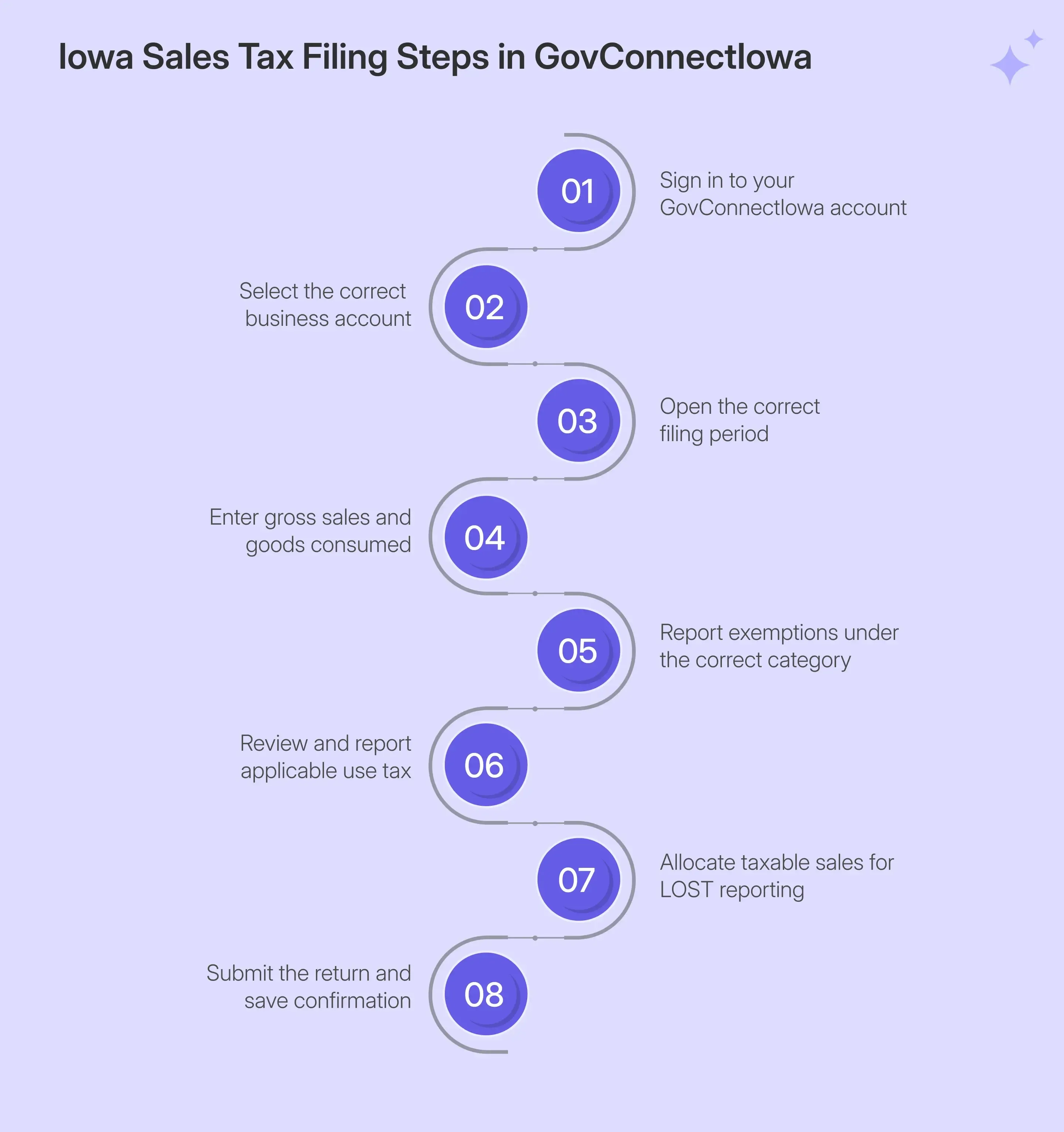
Businesses file Iowa sales tax online through GovConnectIowa using the combined Sales and Retailer’s Use Tax Return. The filing process moves through business selection, sales information, exemptions, use tax, LOST, review, payment, and final submission.
Step 1: Sign In to GovConnectIowa
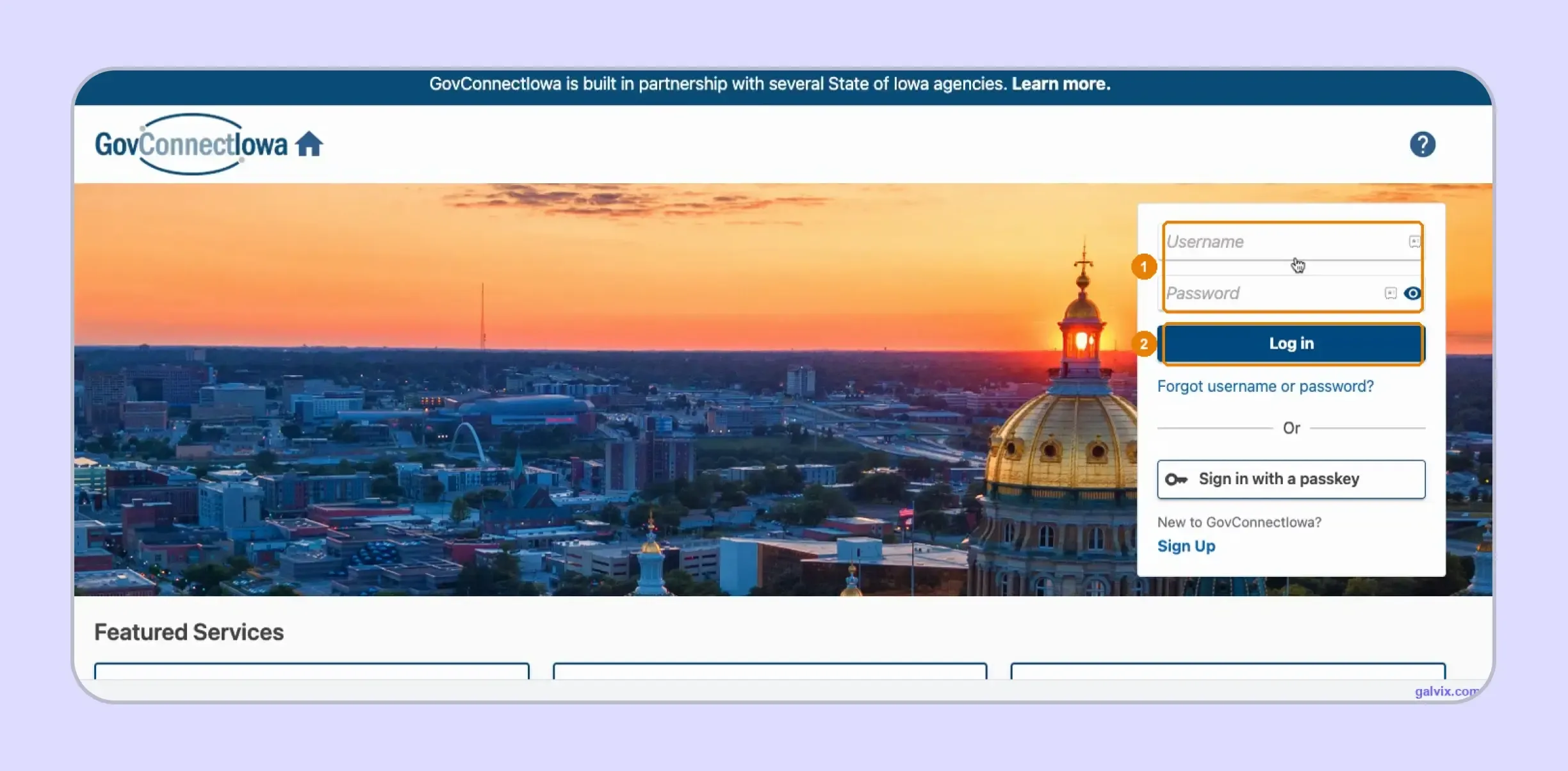
Open GovConnectIowa and enter the username and password connected to your profile before selecting Log in. Your personal login is separate from your business account or permit number, so confirm the credentials before proceeding.
Step 2: Select the Correct Business
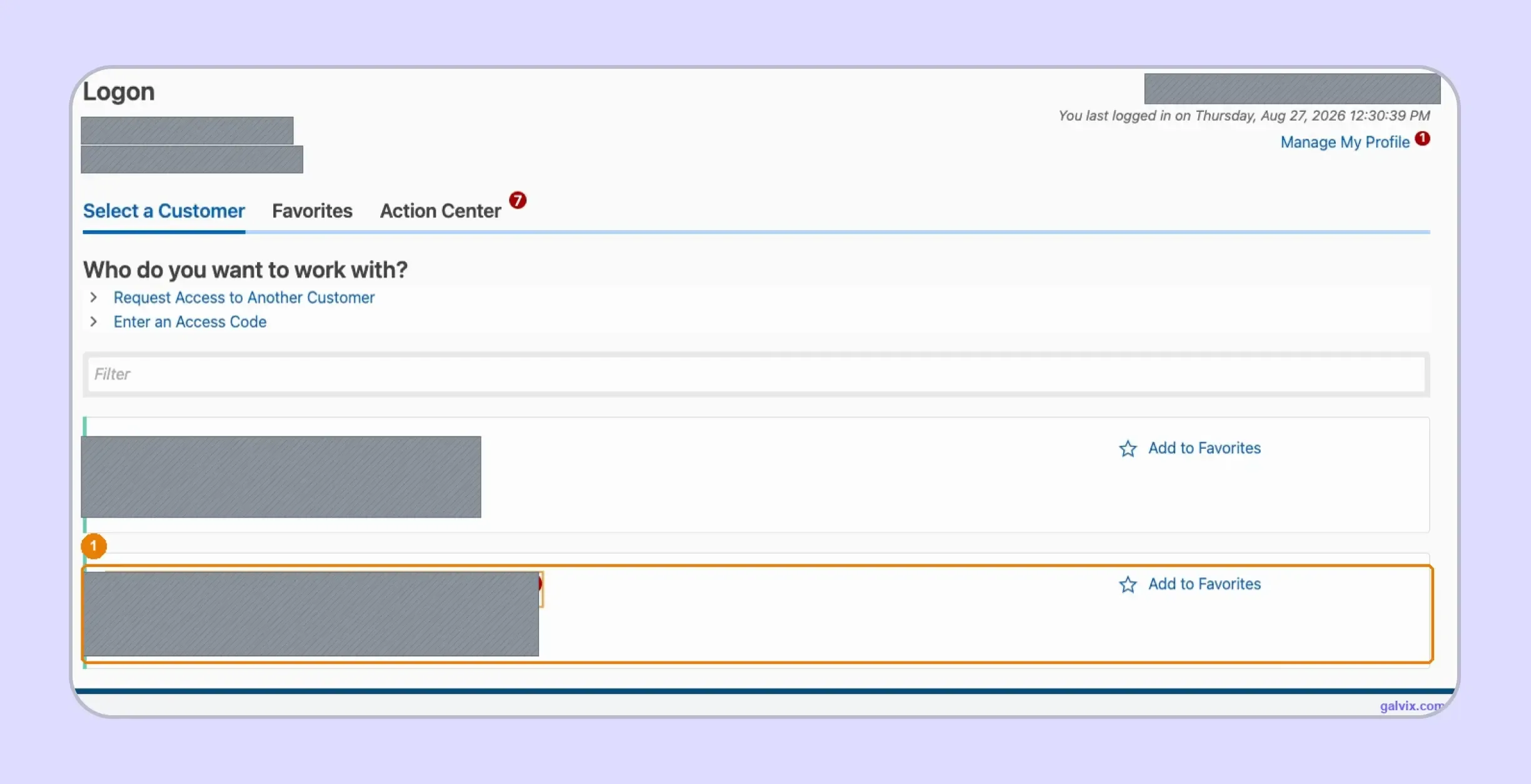
If the login has access to several taxpayers, GovConnectIowa displays ‘Who do you want to work with?’ Select the correct business before continuing, since each account keeps its own return history and balances. Single-business users may move directly to the account home screen without seeing this selection page.
Step 3: Open the Iowa Sales Tax Return
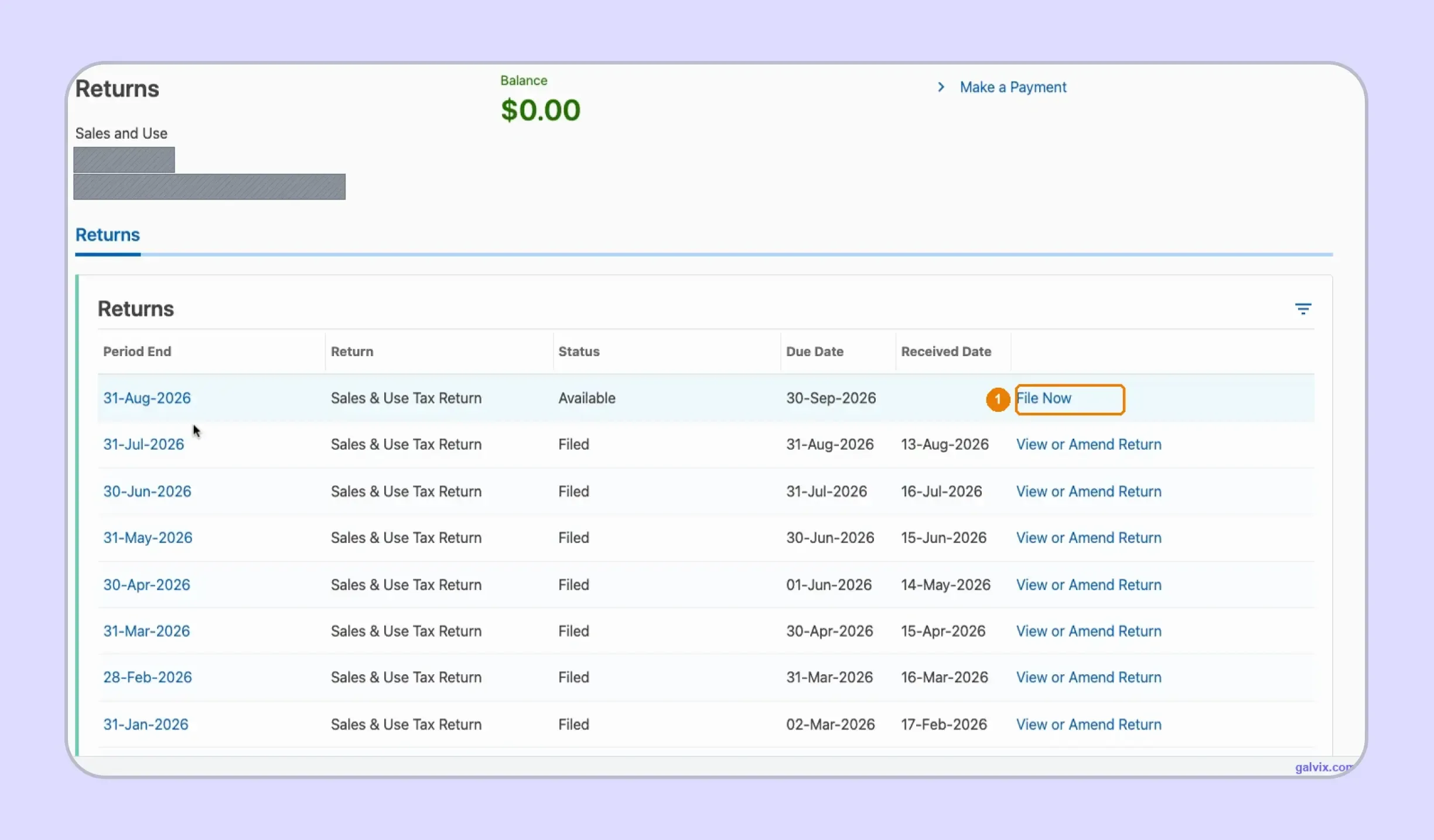
Open the Returns tab and find the period you need to file. Review Period End, status, due date, and Received Date before choosing File Now for the available period.
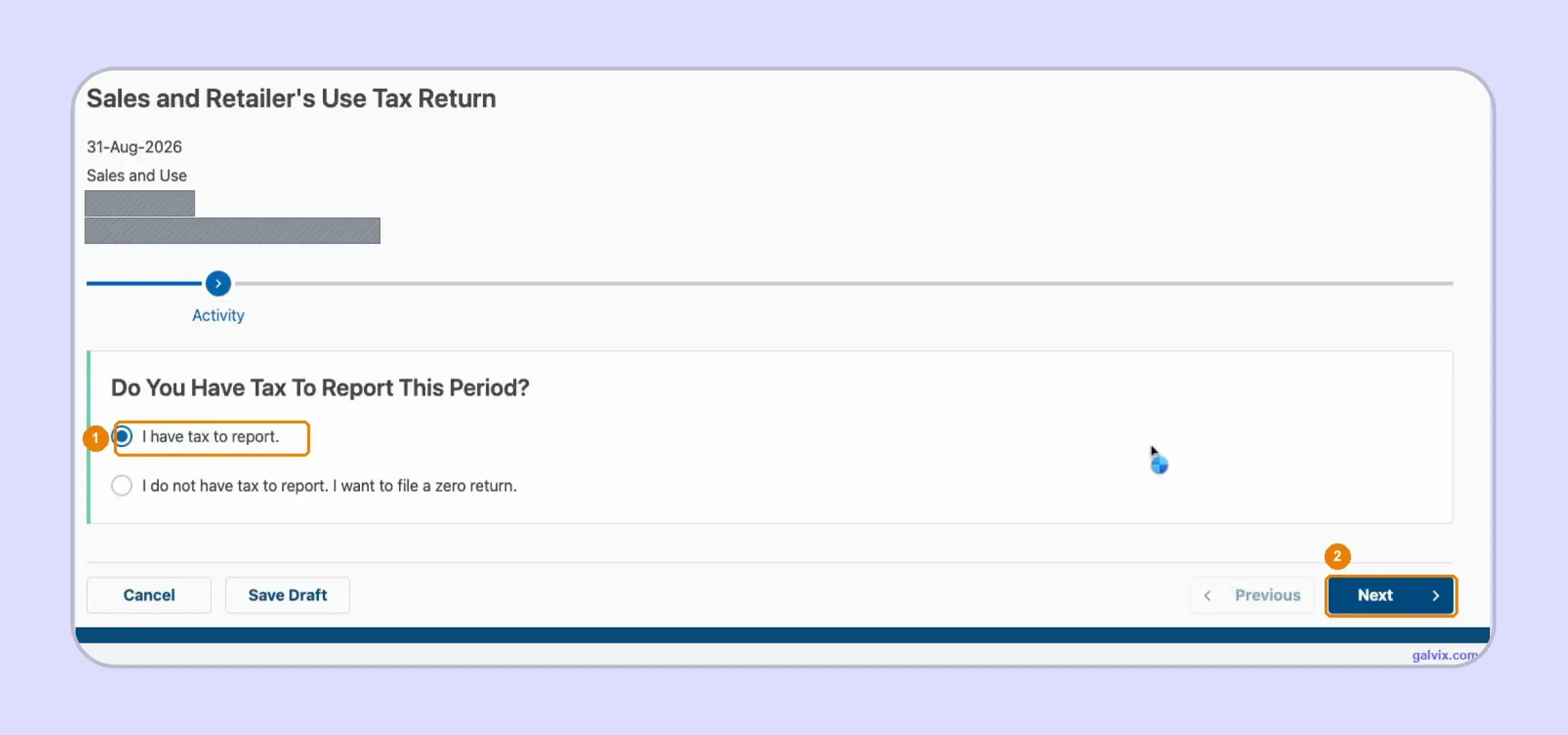
Step 4: Confirm Whether You Have Tax to Report
GovConnectIowa asks whether the period contains tax to report. Select ‘I have tax to report’ when taxable activity exists, then continue through the return. When no qualifying activity occurred, select the zero-return option instead of leaving the period open.
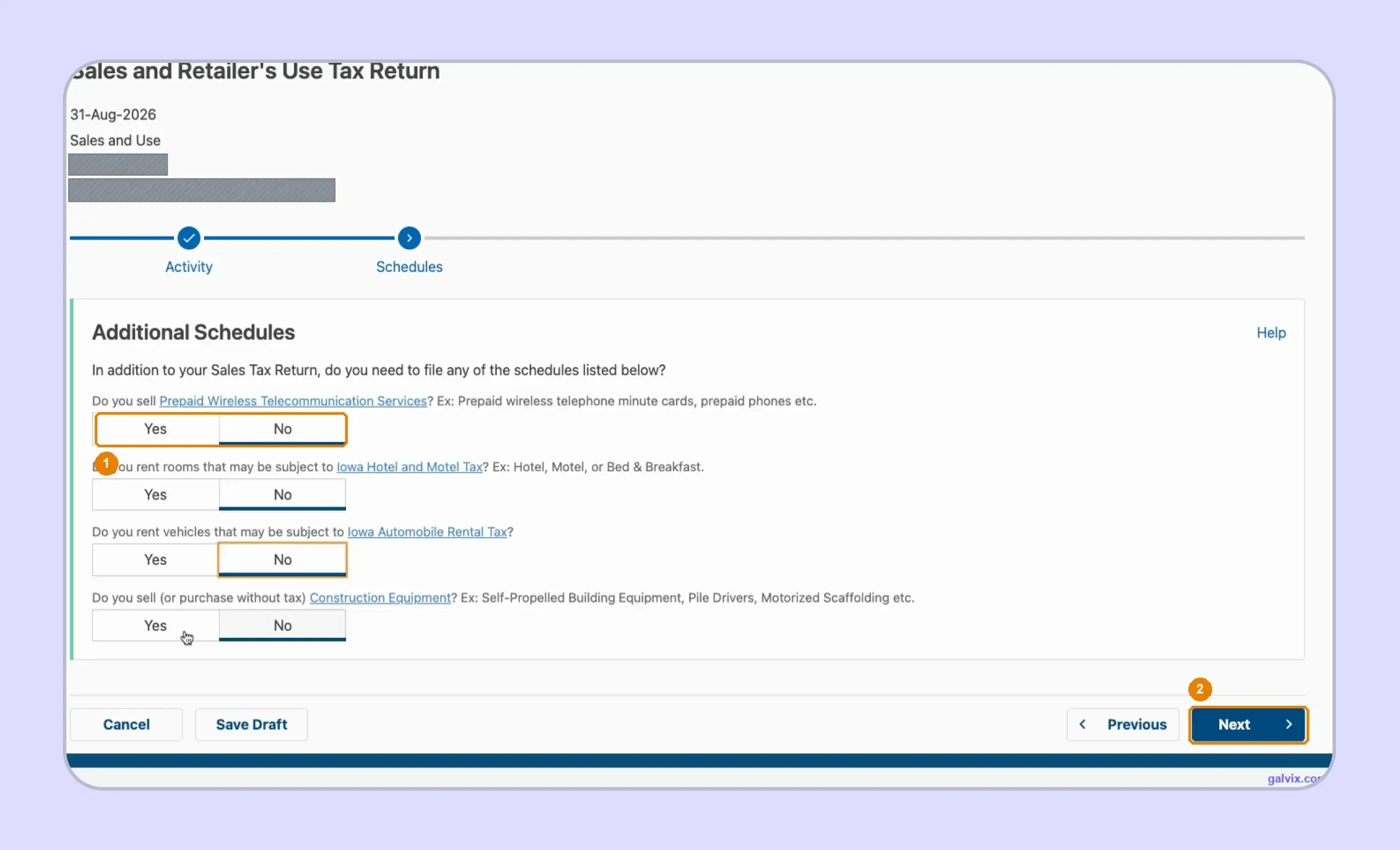
Step 5: Review Additional Schedules
The Additional Schedules screen asks about prepaid wireless services, hotel and motel tax, automobile rental tax, and construction equipment activity. Selecting ‘Yes’ adds the relevant schedule later in the return. Select ‘No’ only where that additional tax does not apply to the business.
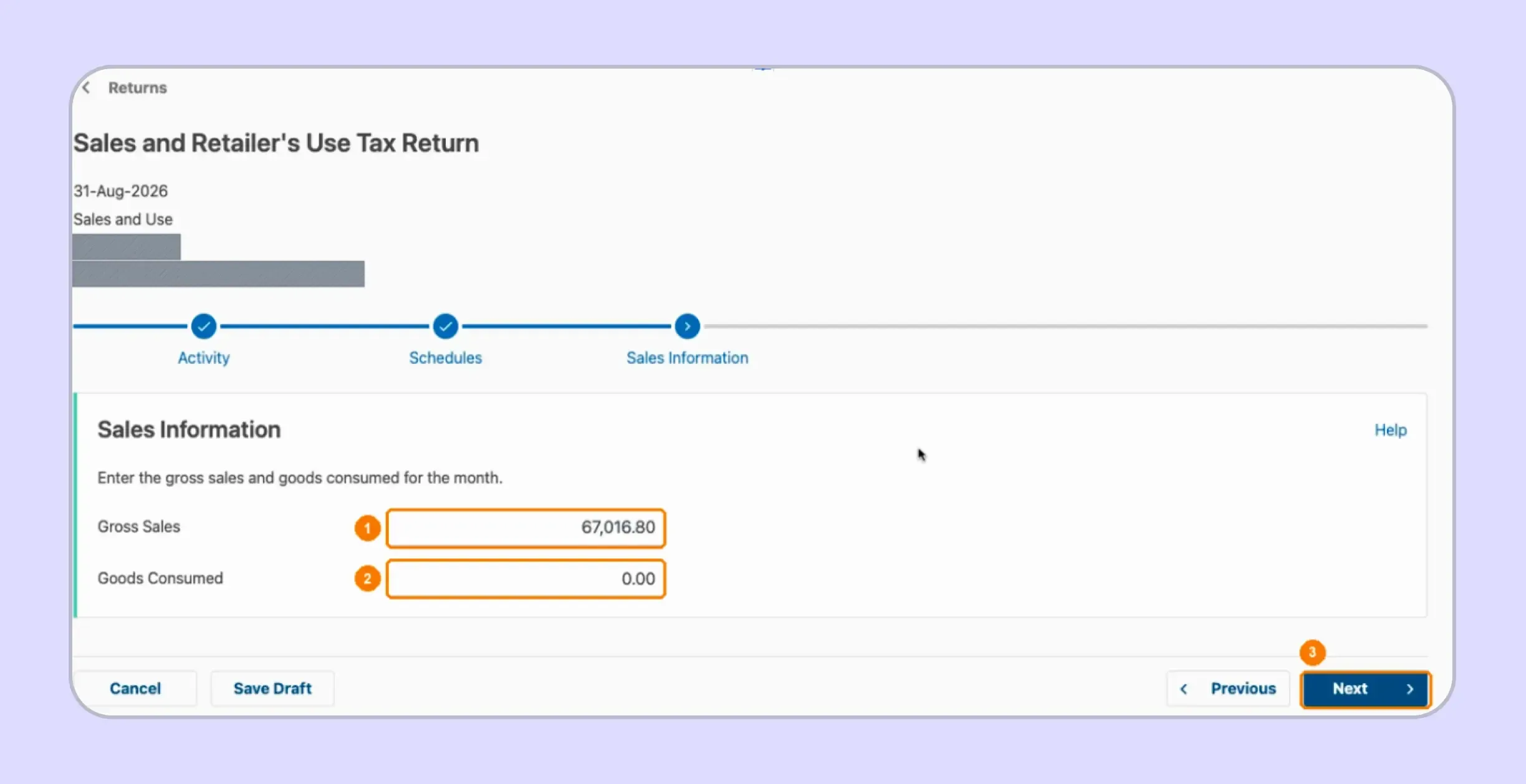
Step 6: Enter Gross Sales and Goods Consumed
Enter Gross Sales for the month and Goods Consumed where applicable. Goods Consumed covers inventory originally purchased for resale and later withdrawn for the business’s own taxable use. The portal uses these figures when calculating amounts shown later in the Iowa sales tax return.
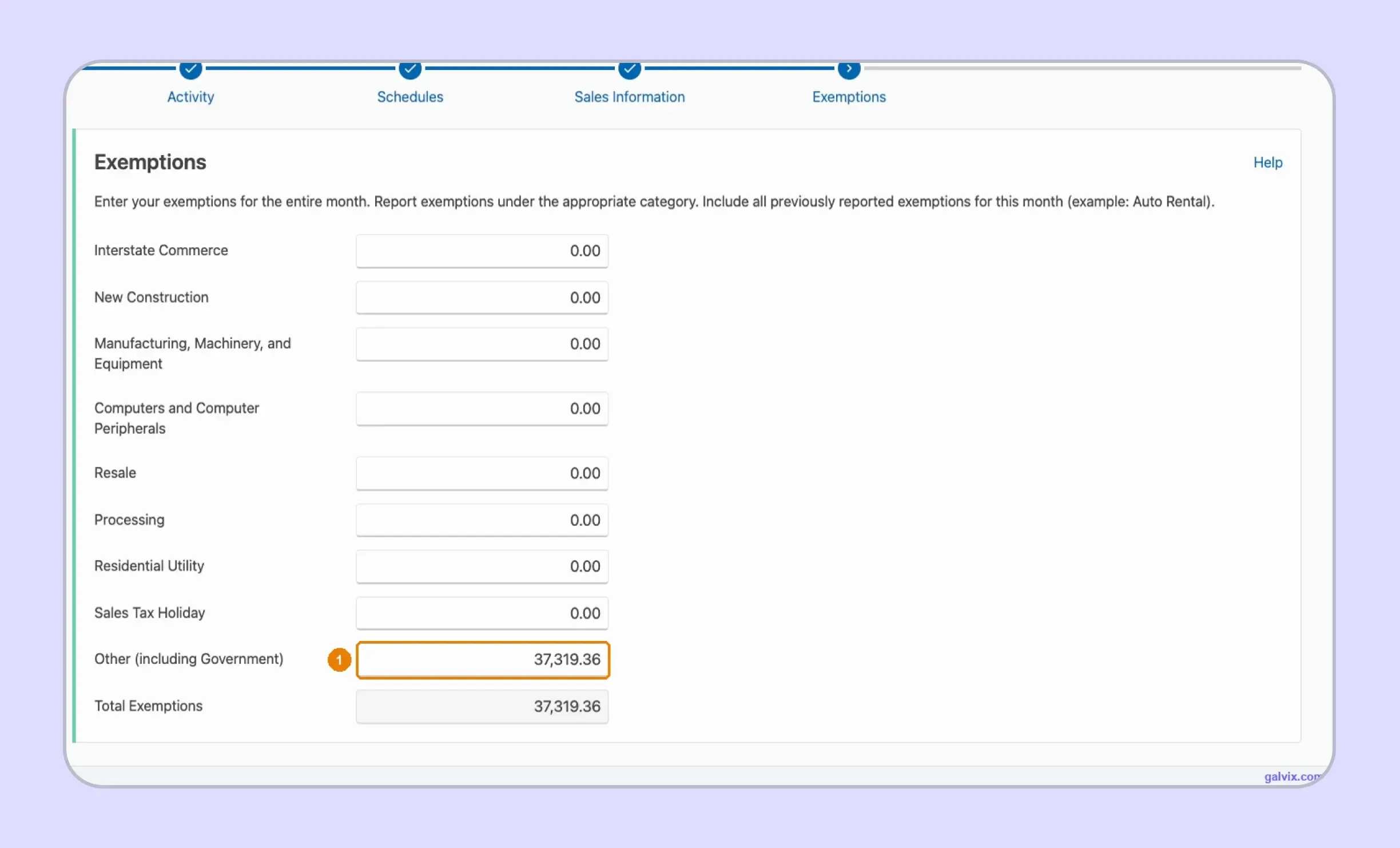
Step 7: Enter Exemptions by Category
Use the Exemptions screen to place qualifying transactions under their correct category, including Resale, Interstate Commerce, Manufacturing, Residential Utility, Sales Tax Holiday, and Other. GovConnectIowa totals the categories automatically, while the filer remains responsible for the classification and supporting documentation.
Step 8: Report Consumer Use Tax
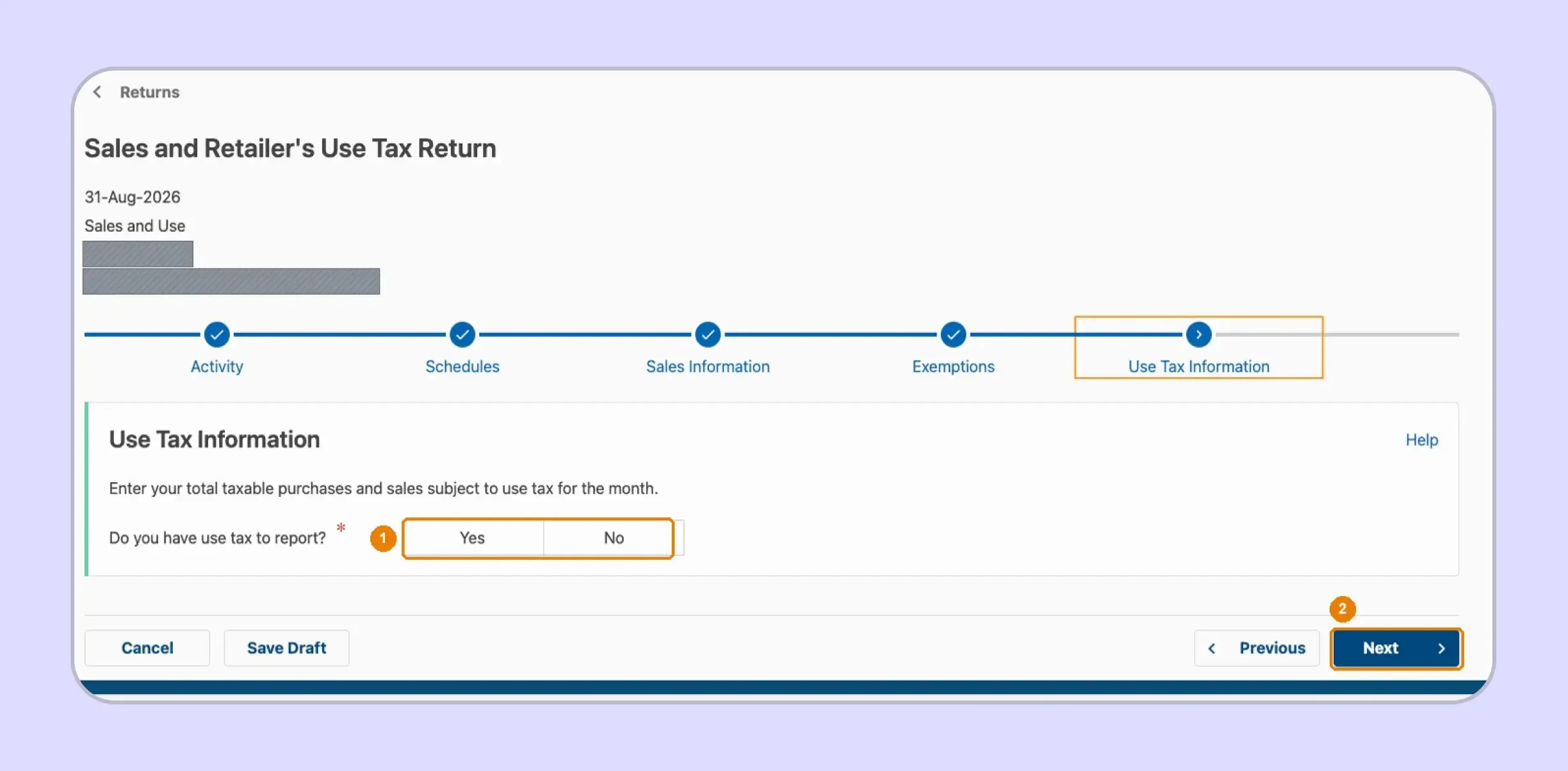
The Use Tax Information screen asks whether there is consumer use tax to report. This can apply when a business purchases taxable tangible personal property or services without paying the required Iowa tax. Selecting ‘Yes’ opens additional reporting fields, while No moves the return forward.
Step 9: Report Local Option Sales Tax
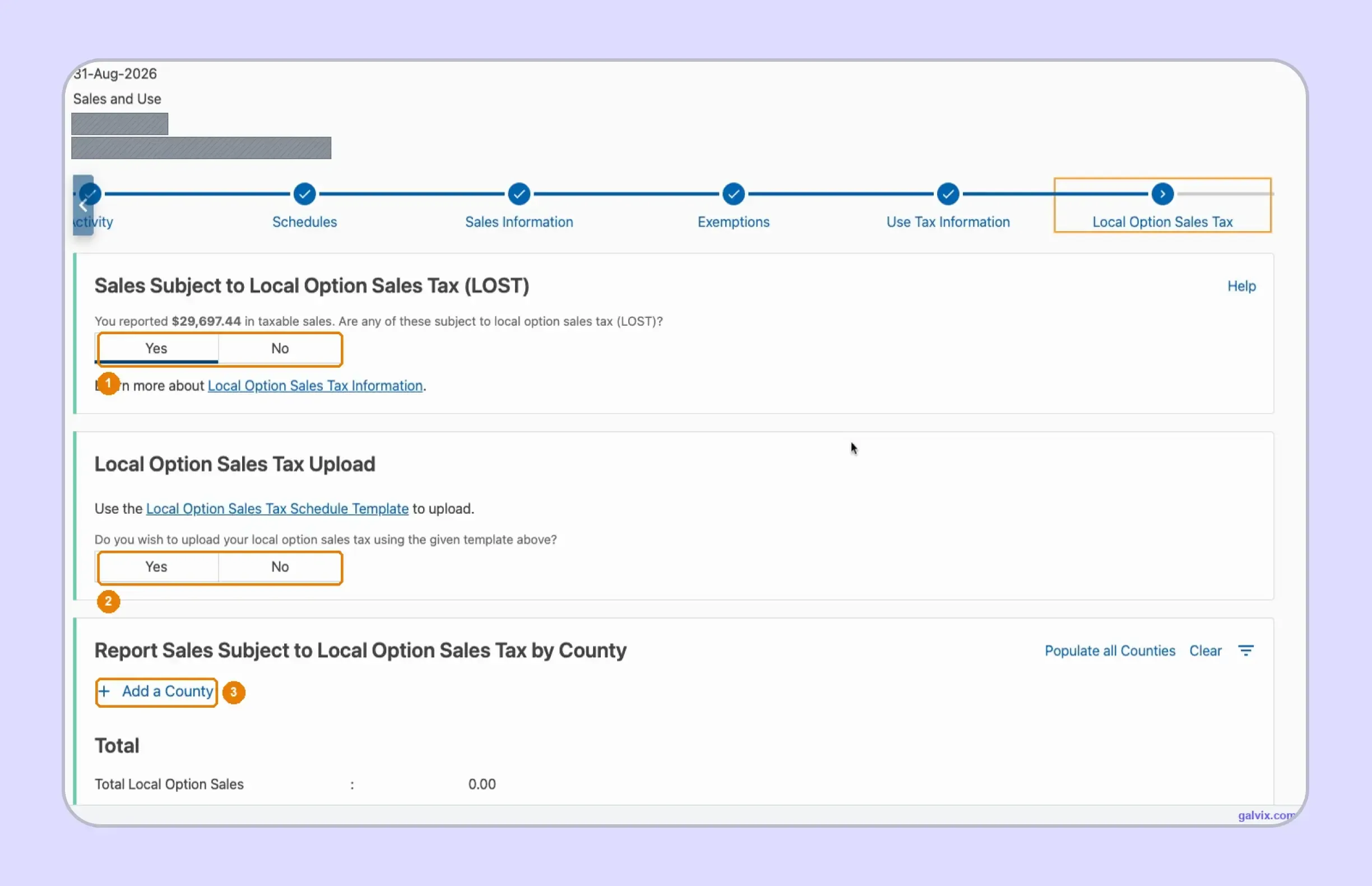
GovConnectIowa shows the taxable amount and asks whether any sales are subject to LOST. Businesses can upload the Local Option Sales Tax schedule or add applicable counties manually. The filer then enters taxable destination sales by county before the portal calculates the related 1% amount.
The live portal does not visibly reconcile county entries against the taxable-sales figure calculated earlier. An incomplete county table can therefore produce a lower LOST amount without a later warning.
Step 10: Review the Iowa Sales Tax Return
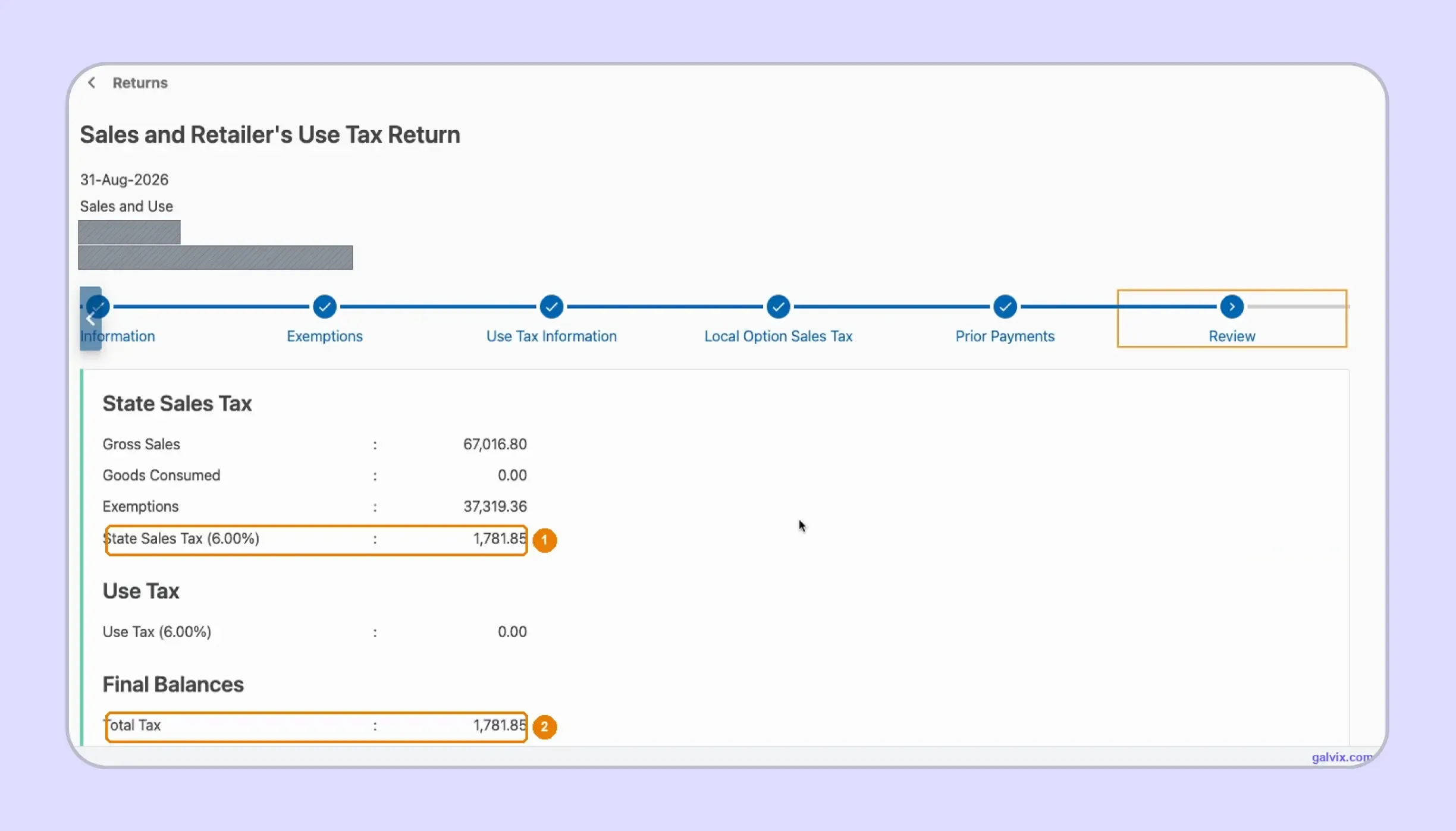
Review Gross Sales, Goods Consumed, Exemptions, State Sales Tax, Consumer Use Tax, LOST, and Final Balances before continuing. The portal calculates the state sales tax based on the entered figures, so compare the result with your own reconciliation before proceeding to payment.
11: Choose How to Pay Sales Tax in Iowa
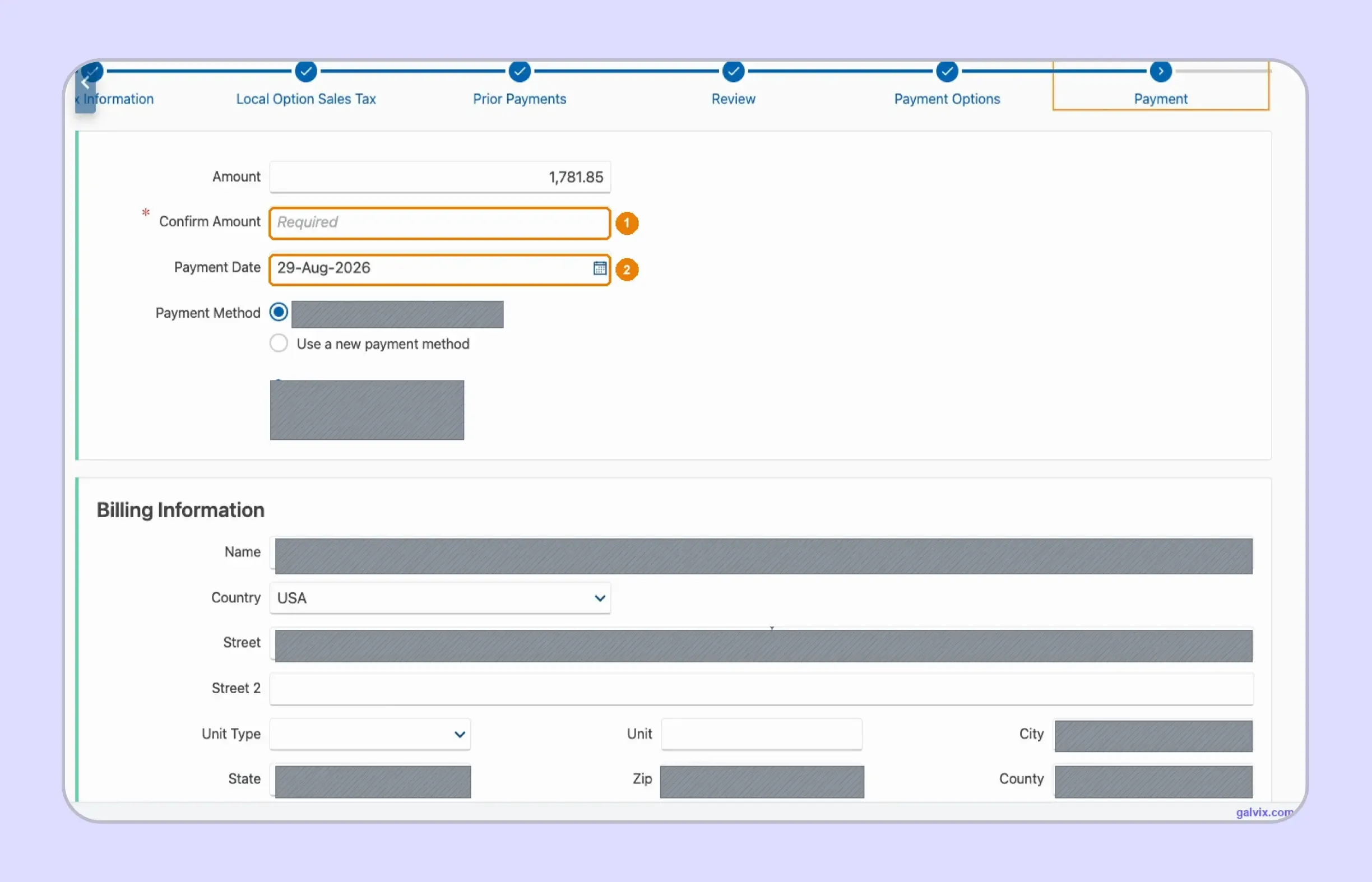
If you are unsure how to pay sales tax in Iowa, GovConnectIowa offers payment options including bank account, credit card, or Pay Later. When using direct debit, confirm the amount and review the Payment Date before authorizing the transaction.
In the captured filing, the payment date defaulted to the preparation date rather than the statutory deadline. Treat this as a portal observation and verify the date displayed for your own return.
Step 12: Submit and Save the Confirmation Number
Complete the final payment information and submit the return. GovConnectIowa then provides a confirmation number, which should be saved with the period’s filing records.
Filing and payment can remain separate when Pay Later is selected, so retain separate evidence if the payment occurs afterward.If an error appears later, return to the Returns list and use View or Amend Return for the affected period.
How Do Exemption Certificates Affect IA Sales Tax Filing?
Exemption documentation supports amounts removed from the taxable base during IA sales tax filing. Iowa requires sellers to obtain a properly completed certificate from purchasers claiming qualifying exemptions and retain that record to support the claimed sales tax exemption.
Iowa Uses Form 31-014 for Many Exemption Claims
Form 31-014 supports qualifying Iowa sales, use, and excise tax exemptions. The exemption certificate must be complete and effective within 90 days of the sale, and the seller must keep it as supporting evidence.
A certificate can cover a single purchase or operate as a blanket certificate where appropriate. Iowa’s instructions state that a blanket certificate remains effective until canceled or until 12 months pass without purchases between the same purchaser and seller.
Exemptions depend on the buyer and transaction. For example, qualifying resale purchases can be exempt, while prescription drugs dispensed under the relevant medical rules can also receive exempt treatment.
Certificate Review Is Different From Registration Verification
- Certificate review: Confirms whether documentation supports the exemption claimed.
- Permit lookup: Checks relevant registration information for the purchaser.
- Transaction eligibility: Determines whether the specific purchase qualifies.
- Record retention: Preserves support for the treatment reported.
These controls answer separate questions. A valid certificate or registration record does not automatically establish that every transaction with that customer qualifies as exempt.
Understanding the distinction is vital when exempt sales flow directly into deductions on an Iowa sales tax return. The seller still needs records supporting why those amounts were excluded from the taxable base.
Businesses reviewing state-specific documentation can use Galvix’s sales tax exemption certificate guide to compare certificate requirements, verification routes, renewal practices, and seller responsibilities across states.
For ongoing management, Galvix can support certificate collection, review, storage, renewal tracking, and the creation of audit-ready records. This keeps certificate work connected with broader sales tax compliance rather than maintaining exemption records in separate folders.
Iowa also participates in Streamlined Sales Tax, offering qualifying businesses an additional registration option through the Streamlined Sales Tax Registration System when they need permits in participating states.
What Should You Double-Check Before Submitting Through GovConnectIowa?
Before submitting the Iowa sales tax return, compare every portal total with the records used to prepare it. The most important checks are taxable sales, LOST allocation, exemptions, consumer use tax, payment timing, and proof that the return was successfully transmitted.
| Portal Check | What the Business Should Verify |
|---|---|
| Taxable sales | Reconcile with transaction records |
| LOST allocation | Confirm applicable destinations appear |
| Exemptions | Match supporting documentation |
| Use tax | Review untaxed purchases separately |
| Payment date | Confirm intended debit date |
| Submission | Save filing confirmation |
This review is crucial because GovConnectIowa performs arithmetic after receiving filer inputs. Accurate portal calculations cannot correct an omitted county, unsupported exemption, or incorrectly classified purchase.
The same principle applies when comparing the amount of sales with the amount of sales tax ultimately reported. Source records should explain the movement from gross activity to the final taxable base.
What Happens if You File or Pay Iowa Sales Tax Late?
Iowa can impose separate penalties for a late return, a late payment, or a failure to use the required electronic methods. Interest also accrues on unpaid tax, so businesses should treat the filing deadline and payment deadline as separate internal controls.
Late Filing and Payment Can Create Separate Penalties
A 5% failure-to-file penalty can apply when a required return is late and less than 90% of the correct tax was paid. A separate 5% failure-to-pay penalty can apply when less than 90% was paid on time.
Businesses sometimes describe these charges as late fees, although Iowa applies them as statutory penalties and interest. For 2026, the Department lists a 10% annual interest rate, equivalent to 0.8% per month.
These rules arise under the relevant Iowa Code penalty provisions. This includes Iowa Code section 421.27 for penalty waivers and related requirements.
Required Electronic Filing Also Matters
Iowa can impose an additional 5% penalty when a filer fails to use the required electronic filing or payment method. For sales and use tax, required return information is submitted through GovConnectIowa.
This requirement gives businesses another reason to track the correct filing deadline, portal access, payment approval, and evidence of filing before the period closes.

How Does Galvix Handle Iowa Sales Tax Filing?
Galvix manages Iowa sales tax filing through a supported managed compliance workflow that begins before data reaches GovConnectIowa. Transaction records are reconciled, the Iowa sales tax return is prepared for specialist review, customer approval is obtained, and filing follows the required state schedule through submission.
For Iowa, that workflow brings together gross sales, marketplace deductions, exemption support, use-tax information, filing frequency, and LOST allocations. Supported sales tax integrations can bring data from commerce, accounting, payment, and ERP systems into the same process, while CSV or XLSX uploads support other systems.
With filing data connected, teams can also review the latest sales tax nexus rules before obligations change during the current calendar year. Registrations, exemption management, and notice handling can remain connected with return preparation, reducing the separate processes finance teams need to maintain as their filing footprint grows.
The same approach becomes useful when Iowa is one of several registered states. Galvix uses modular pricing, so businesses pay only for the services they select. Exact pricing depends on the workload for each service, including return volume, registrations, transaction volume, and exemption activity.
What Can Galvix Manage for Iowa Sellers?
- Reconcile source data before preparing each return.
- Prepare Iowa filings for specialist review and approval.
- Connect exemption records with reported exempt transactions.
- Monitor nexus and registrations across additional states.
- Track deadlines, confirmations, notices, and filing records.
This managed approach is particularly useful when finance teams need reliable sales tax compliance without having to rebuild the same reconciliation process for every state and filing period.
How Can Businesses Keep Iowa Sales Tax Filing Reliable?
Reliable filing begins before GovConnectIowa opens. Gross sales, marketplace activity, exemption records, use-tax purchases, and LOST allocations should already reconcile with source systems before figures reach the Iowa sales tax return.
Teams should also keep permit status, the assigned schedule, tax liability, and all filing deadlines connected to their internal calendar. This creates a repeatable process rather than rebuilding the return from spreadsheets each month.
When Iowa sits alongside several states, Galvix can combine reconciliation, specialist-reviewed filing, exemption support, nexus monitoring, and post-filing follow-up into one managed process.
Book a Galvix demo to review your Iowa and multistate workflow before the next filing period.
Frequently Asked Questions
Can I amend an Iowa sales tax return after submitting it?
Yes. After filing an Iowa sales tax return, return to the applicable period in GovConnectIowa and select View or Amend Return. The live portal displays this option beside filed periods. Keep the original confirmation and amendment records together so your team can trace what changed and when.
Do I need a separate permit for Iowa Local Option Sales Tax?
No separate LOST permit is required when a business already holds the applicable Iowa Sales and Use Tax Permit. Retailers responsible for Iowa tax collect applicable state tax and LOST through the same permit and report the local amount with their regular return.
Can an annual Iowa sales tax filer submit a paper return?
Yes. Iowa currently allows annual sales and use tax filers to submit their return through GovConnectIowa or on paper. Businesses collecting $1,200 or more annually are generally assigned monthly electronic filing, while qualifying seasonal filers also file and pay through GovConnectIowa.
How do I request a change to my Iowa sales tax filing frequency?
Log in to GovConnectIowa when your business needs to request a change to its assigned frequency. The Iowa Department of Revenue directs taxpayers to the account for these requests and recommends checking the established frequency requirements before submitting the change.
Does Iowa offer a discount for filing sales tax on time?
No. Iowa does not currently provide a timely-filing discount or vendor allowance for sales and use tax returns. Businesses should still submit the sales tax return and payment by the assigned deadline, as late filing, underpayment, or failure to use the required electronic methods can result in penalties.
Can remote sellers register through Streamlined Sales Tax in Iowa?
Yes. Iowa participates in the Streamlined Sales and Use Tax Agreement, so eligible sellers can register in participating states through one online streamlined sales tax application. Businesses that only need Iowa registration can instead apply directly through GovConnectIowa.
What should I do if I cannot pay my Iowa sales tax balance in full?
File the required Iowa sales tax return by its deadline even when full payment is unavailable. GovConnectIowa can separate filing from payment through options such as Pay Later, although unpaid balances can still accrue applicable penalties and interest. Consider discussing the specific balance with a qualified tax adviser.
How do I cancel an Iowa sales tax permit when I stop doing business?
An Iowa sales and use permit remains active until the owner cancels it or the Department revokes it. Businesses can manage permit changes through GovConnectIowa, while Iowa also provides a Business Tax Cancellation form when needed. Complete outstanding Iowa tax filings before closing the account.