
Vertex has spent decades earning its reputation among large enterprises managing complex, multi-jurisdictional tax requirements. Built for companies running SAP, Oracle, and global ERP environments, it delivers tax calculation depth that few platforms can match at enterprise scale.
That same depth comes with a cost structure, implementation timeline, and operational overhead that makes little sense for businesses that are not running a dedicated internal tax function. Many mid-market finance teams end up paying for enterprise infrastructure they use at a fraction of its capacity.
The software implementation process alone can run weeks to months, creating bottlenecks that delay go-live and frustrate lean finance teams. For a CFO evaluating compliance spend, the higher costs of Vertex rarely align with the actual filing footprint of a growing business.
If Vertex feels like too much platform for your actual compliance footprint, you are in good company. This guide covers the 12 credible Vertex alternatives available in 2026, including what each one does well and who it genuinely serves.

Why Are Businesses Looking for Vertex Alternatives?
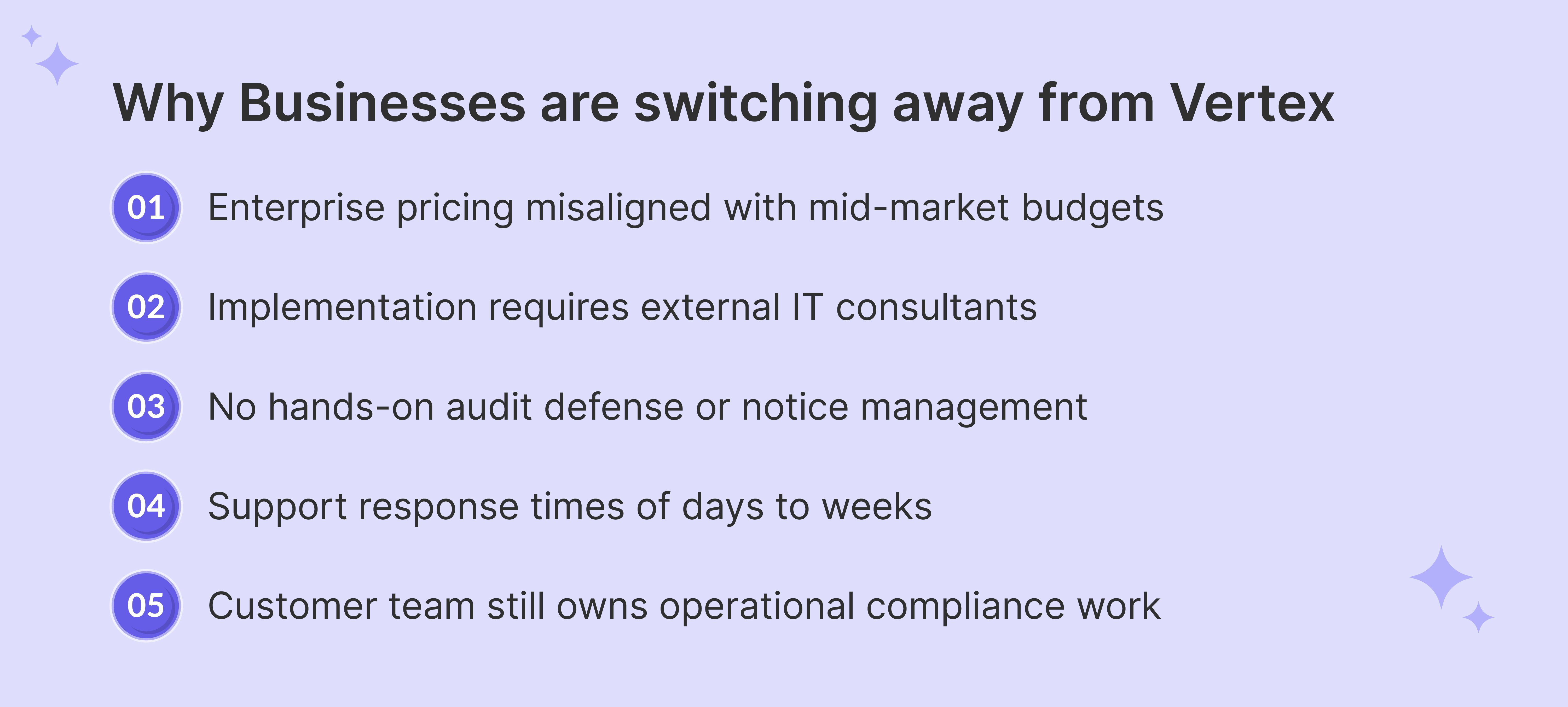
Mid-market and growing businesses increasingly find that Vertex's enterprise architecture creates more operational burden than it eliminates. Here are the reasons why companies look for a Vertex alternative:
Implementation Overhead: Deploying Vertex requires significant developer time and ERP configuration, along with third-party consulting support to go live. The user experience during onboarding is frequently cited as a steep learning curve that demands dedicated IT attention.
Pricing Opacity: Vertex does not publish standard pricing; costs are custom-quoted and frequently tied to transaction volume or individual add-on modules. Finance leaders struggle to forecast annual compliance spend when contracts are structured this way.
Support Gaps: Multiple user reviews on Capterra and G2 report response times of days to weeks for support queries and issue resolution. For time-sensitive filing deadlines, that lag carries real penalty exposure.
Audit Dependency: Vertex positions itself as an audit-risk reduction tool, yet it does not offer hands-on audit defense or notice management for your business. When a state inquiry arrives, the resolution work stays with your team.
The 12 Best Vertex Alternatives for Sales Tax Management
Here are the top Vertex alternatives that you can consider for streamlining your sales tax management:
| Alternative | Best For | Pricing Model | Human Support |
|---|---|---|---|
| Galvix | Companies wanting fully managed compliance | Per-state flat rate, no platform fee | Dedicated tax specialists |
| Avalara AvaTax | Large enterprises with global ERP needs | Volume-based, custom-quoted | Tiered, ticket-based |
| TaxJar | E-commerce businesses, self-service | Tiered monthly plans from $39/mo | Self-service with premium tiers |
| Sovos | Multinational enterprises, VAT and GST | Enterprise custom pricing | Managed service tier available |
| Anrok | SaaS and digital businesses | Revenue-percentage model | Email-based |
| Zamp | E-commerce brands, managed model | Subscription tiers | Dedicated compliance team |
| Kintsugi | SaaS and e-commerce, AI-driven | Volume-based, free tier available | AI assistant and email |
| Quaderno | International sellers, VAT and GST | Monthly plans, volume-based | Email support |
| TaxCloud | Small businesses, SST states | Per-order or flat monthly pricing | US-based phone and chat |
| TaxConnex | Mid-market, telecom, managed outsourcing | Custom-quoted | Dedicated practitioner model |
| Numeral | E-commerce and SaaS, API-first | Per-filing, no monthly subscription | White-glove onboarding |
| Thomson Reuters | Large enterprises, multi-tax types | Enterprise custom pricing | Dedicated enterprise support |
The Best Sales Tax Compliance Company for 2026
After evaluating all 12 platforms on pricing transparency, filing ownership, human oversight, and notice management, Galvix stands out as the most complete solution for growing businesses that want compliance fully off their plate.
Galvix wins because:
- Dedicated specialist reviews every return
- Flat per-state pricing, zero platform fee
- Independent reconciliation before every filing
- Full notice management across all state correspondence
- Setup can be completed in 2 to 7 business days
Galvix
Source: Galvix
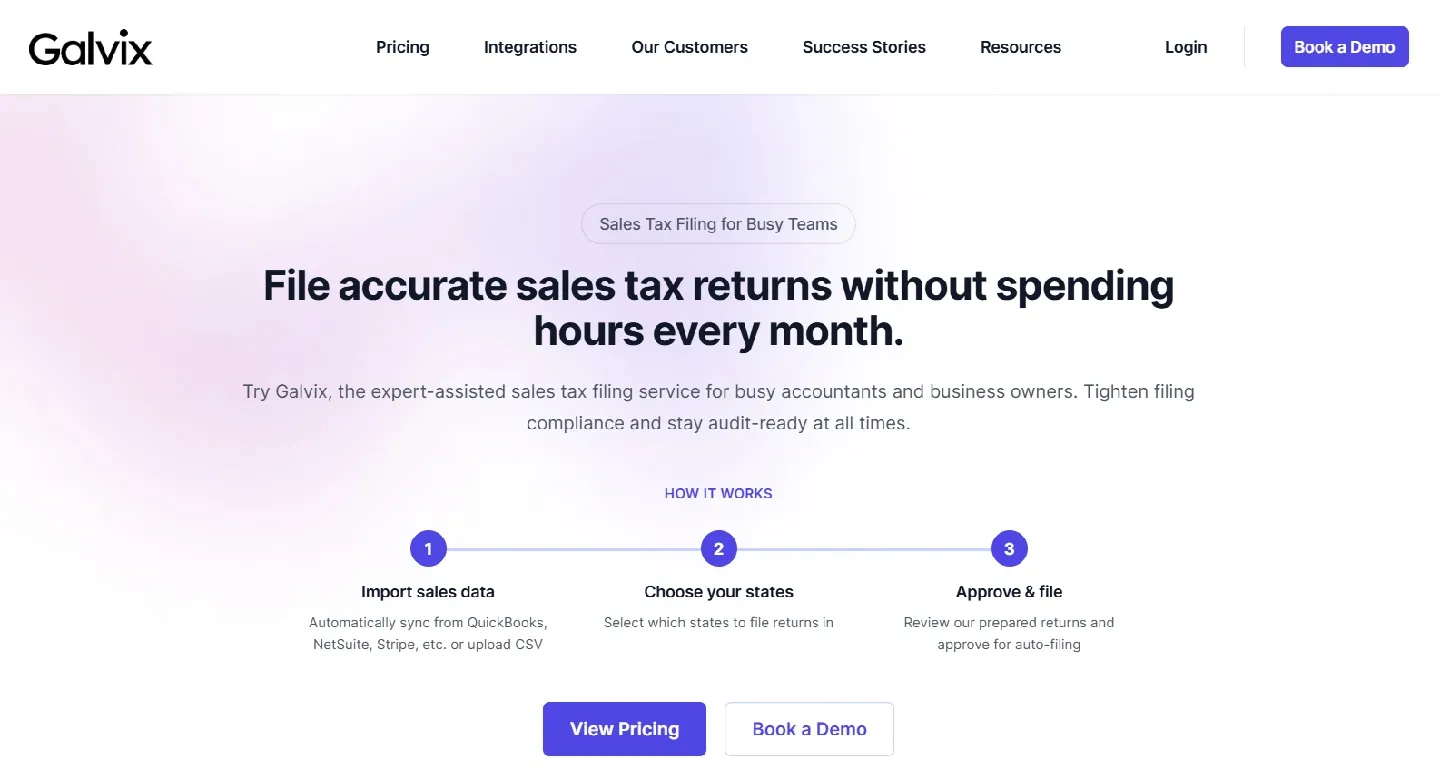
If you are searching for a Vertex alternative that removes the compliance workload entirely rather than shifting it to a different dashboard, Galvix is the answer. Most platforms replace one operational burden with another. Galvix is designed to eliminate the burden from your team's plate.
What are the Key Features of Galvix?
Dedicated Tax Specialists: Every return is prepared and reviewed by a human tax expert before it is filed on your behalf. You review the draft, click approve, and Galvix handles submission and payment without requiring any manual steps from your team.
Proactive Multi-Channel Nexus Monitoring: Galvix syncs data from Shopify, Stripe, Amazon, QuickBooks, NetSuite, and your ERP simultaneously. You receive threshold alerts at 75%, 85%, and 95% before you cross into non-compliance in any new state.
Done-For-You State Registrations: Galvix charges no monthly platform fee. You only pay for the compliance work completed on your behalf. There are no dashboard access charges and no costs during months when no returns are filed for your business.
Independent Return Reconciliation: Before any return is filed, our sales tax software cross-checks your tax liability against your billing data independently. This verification step catches discrepancies that automated platforms typically process and submit without flagging to your team.
Exemption Certificate Management: Customers upload their certificates through a self-service portal. Those certificates are validated and stored in an audit-ready repository so your team has a clean record whenever a state inquiry arrives.
How much does Galvix cost?
Galvix offers two separate pricing models with no hidden fees or annual contracts. The Sales Tax Compliance as a Service product starts at $60 per state per month, covering nexus monitoring, state registrations, monthly filing, notice management, and a dedicated account manager. Visit the Galvix pricing page for exact figures based on your state count and business profile.
Why is Galvix the best Vertex alternative?
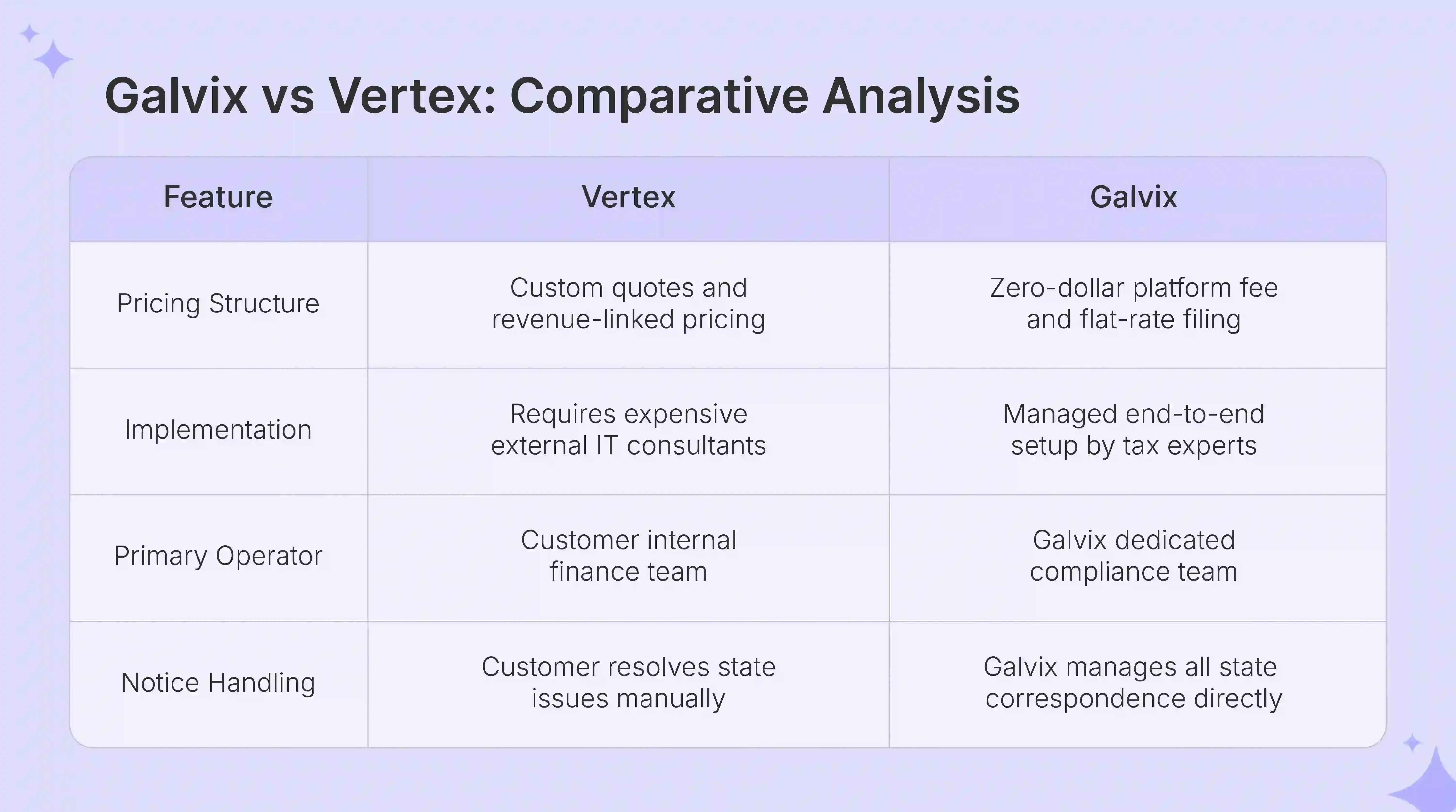
Galvix removes the compliance function from your operations entirely rather than replacing one dashboard with another. Every return goes through independent reconciliation and human specialist review before filing, state registrations are handled for a flat fee, and all state correspondence is owned by Galvix. Vertex assumes you have internal resources to run an enterprise platform, whereas Galvix has been built for teams that lack such support.
Avalara

Source: Avalara
Avalara AvaTax is one of the Vertex competitors in the enterprise and mid-market segments. Its strength lies in deep ERP integrations and a global tax content library covering over 190 countries. For US-only SMBs, however, its modular pricing and lengthy implementation often introduce more complexity, prompting them to look for an Avalara alternative.
What are the key features of Avalara AvaTax
- Real-time tax calculation across 13,000-plus US jurisdictions
- 1,400-plus signed partner integrations with ERP, e-commerce, and POS platforms
- AI-powered product classification and exemption certificate management
What are the pros and cons of Avalara AvaTax
| Pros | Cons |
|---|---|
| Global tax coverage | No transparent published pricing |
| Deep ERP and SAP integrations | Longer support response times |
| Broad product taxability library | Returns filing is a separate paid add-on |
Why Galvix is better than Avalara?
Avalara automates portions of the compliance workflow but leaves your team responsible for accuracy, error resolution, and state correspondence. Galvix assigns a named dedicated account manager with full business context, performs independent reconciliation before every return, and manages all state notices on your behalf, none of which Avalara includes as standard.
TaxJar
Source: TaxJar
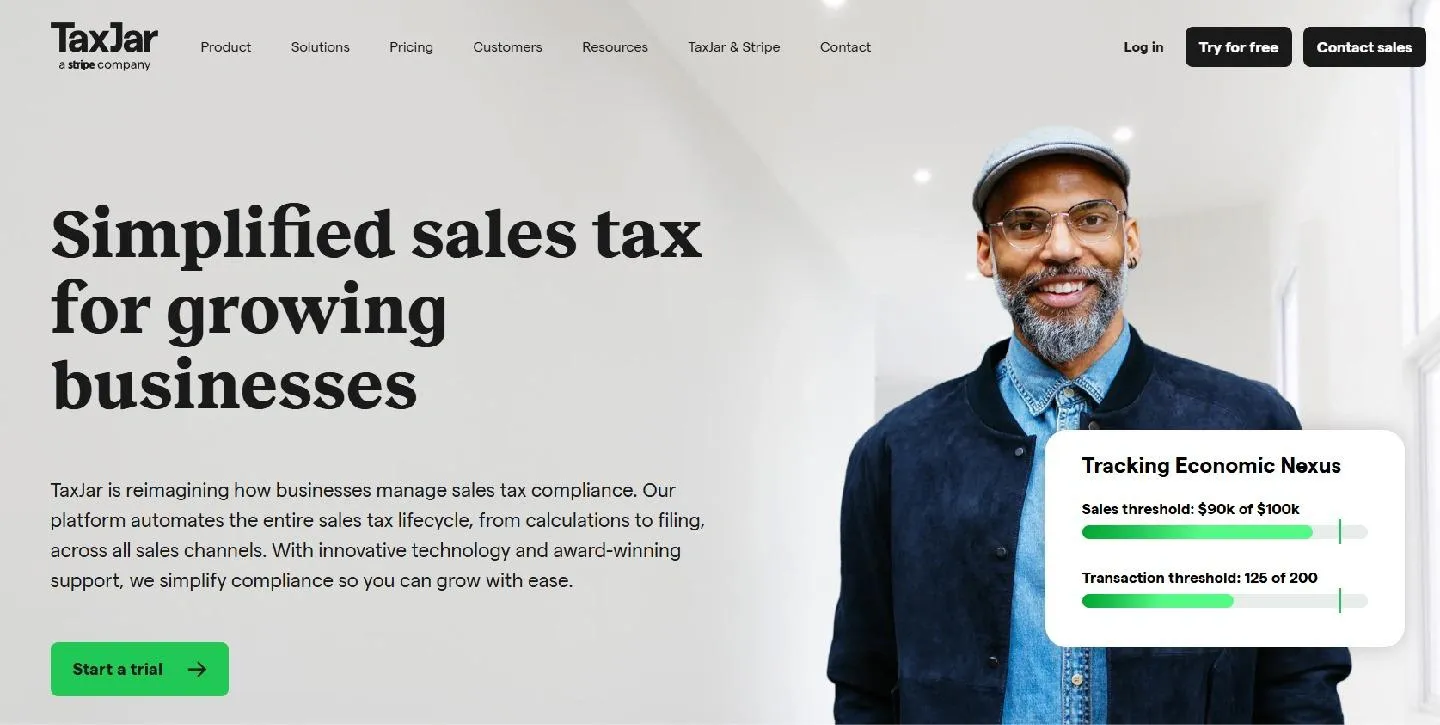
TaxJar, now owned by Stripe, is built for e-commerce sellers who want automated calculations and self-service filing. Its interface appeals to smaller teams seeking a quick setup without enterprise pricing. The platform covers US-only sales tax, which limits its relevance for businesses with international tax obligations.
What are the key features of TaxJar?
- AutoFile feature for automated return submission across registered states
- TaxJar pricing starts at $39 per month
- Native integrations with Shopify, Amazon, BigCommerce, and Stripe
What are the pros and cons of TaxJar?
| Pros | Cons |
|---|---|
| Transparent, affordable pricing | US-only, no VAT or GST support |
| Fast setup for e-commerce sellers | No dedicated human filing oversight |
Why Galvix is better than TaxJar?
TaxJar automates filing but leaves your team responsible for accuracy, error correction, and state notice responses. Galvix provides a dedicated specialist who owns compliance outcomes on your behalf.
Sovos
Source: Sovos
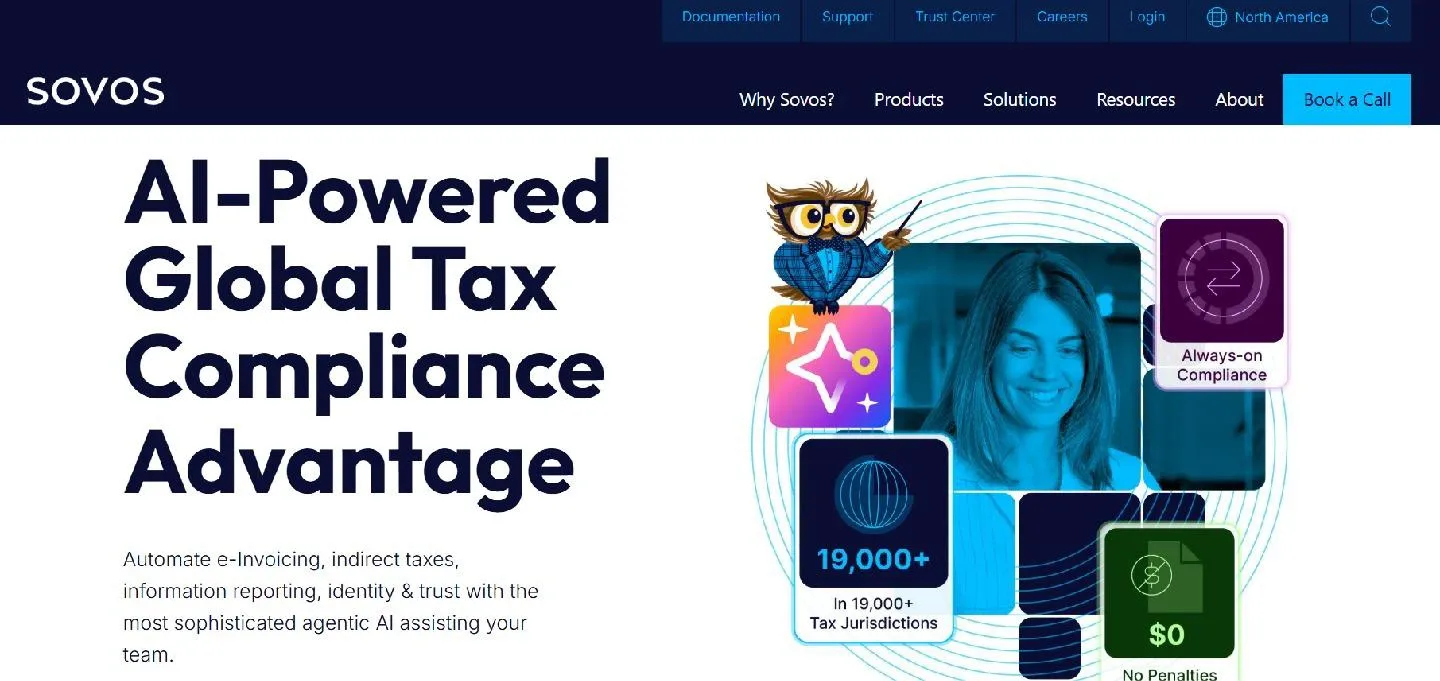
Sovos serves multinational enterprises managing broad indirect tax compliance across VAT, GST, e-invoicing, and US sales tax. Its managed service tier assigns dedicated tax preparers who file on the customer's behalf. The enterprise pricing makes it unsuitable for small and mid-sized businesses.
What are the key features of Sovos?
- Multinational VAT, GST, and e-invoicing coverage across 70-plus countries
- Managed filing service with a dedicated tax preparer
- Regulatory monitoring across changing tax authority requirements
What are the pros and cons of Sovos?
| Pros | Cons |
|---|---|
| Managed filing tier available | Complex implementation for US-only needs |
| Strong regulatory change monitoring | Limited pricing transparency |
Why is Galvix better than Sovos?
Sovos is built for multinationals navigating global indirect tax compliance at enterprise scale. Galvix is purpose-built for US sales tax compliance and is structured around lean finance teams, not dedicated internal tax departments.
Anrok
Source: Anrok
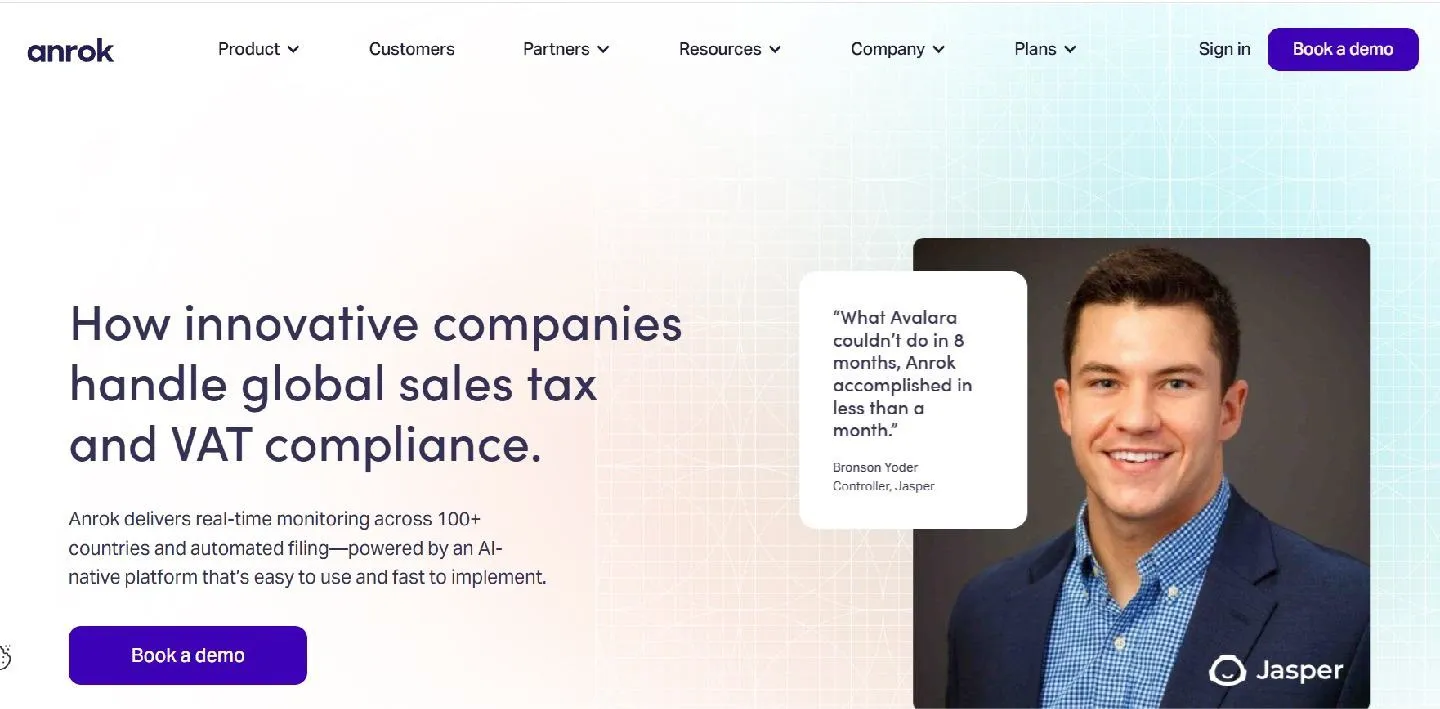
Anrok is primarily built for SaaS and digital businesses managing subscription and usage-based billing. It handles US nexus monitoring, registration, calculation, and filing with strong Stripe and NetSuite integrations. Its revenue-based pricing model means compliance costs grow directly with revenue, compressing gross margins at scale.
What are the key features of Anrok?
Purpose-built for SaaS subscription and usage-based billing structures Real-time US and global VAT and GST calculation via Stripe and NetSuite
What are the pros and cons of Anrok
| Pros | Cons |
|---|---|
| Deep SaaS billing system integration | Revenue-percentage pricing hurts margins |
| Global VAT and GST coverage | Not suited for non-SaaS industries |
| Developer-friendly API | No hands-on audit defense included |
Why is Galvix better than Anrok?
Anrok's revenue-percentage pricing model makes compliance costs unpredictable as a business grows. Galvix charges a flat per-state rate, covering all filing activity regardless of revenue or transaction volume.
Zamp
Source: Zamp
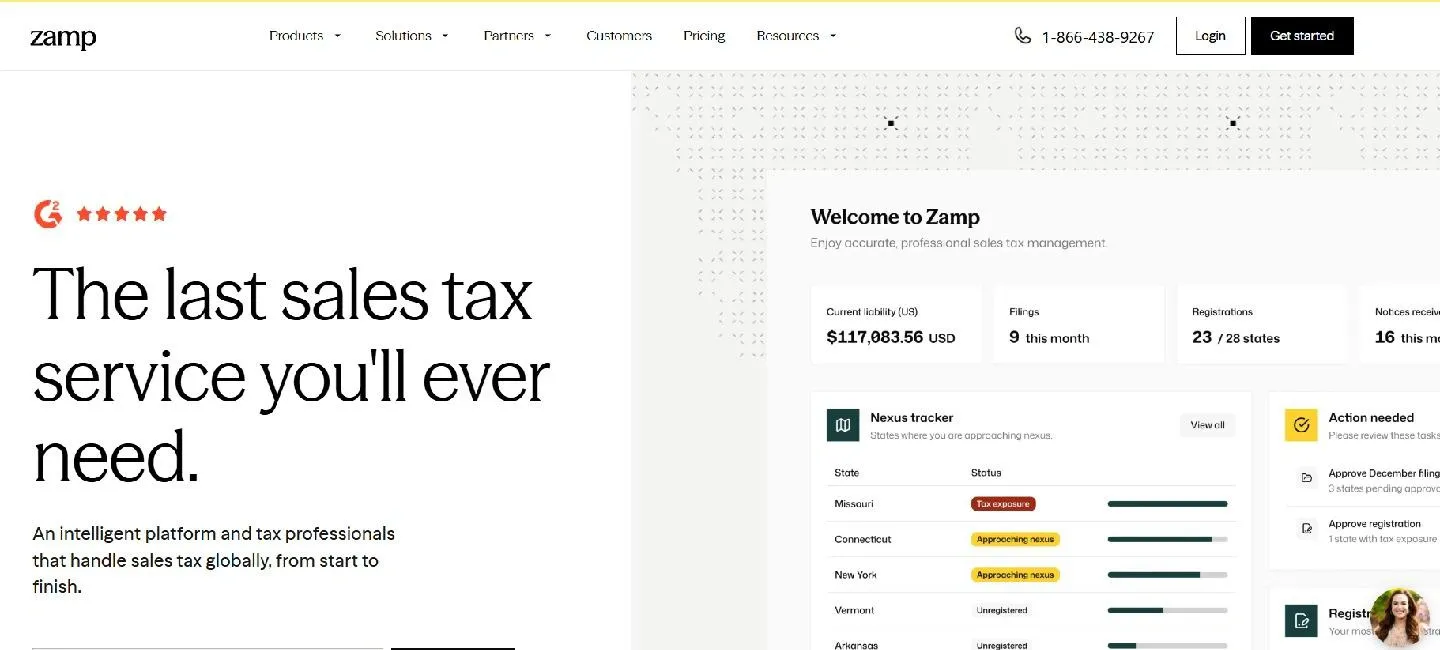
Zamp offers a managed sales tax model covering both "do it for you" and "do it with you" service options. It serves e-commerce brands from startups through $300M-plus companies and includes a dedicated compliance team. Zamp pricing is custom and not publicly listed.
What are the key features of Zamp
- Fully managed and co-managed compliance service options
- Coverage across all 13,000-plus US jurisdictions
- Integration with Shopify, Amazon, BigCommerce, Stripe, and QuickBooks
What are the pros and cons of Zamp
| Pros | Cons |
|---|---|
| Managed service with dedicated team | Monthly platform fee regardless of filing activity |
| Transparent subscription pricing | Primarily e-commerce focused |
Why is Galvix better than Zamp?
Zamp charges a monthly platform subscription fee regardless of filing volume. Galvix charges only for filed returns at a flat per-state rate, and performs independent reconciliation against billing data before human review.
Kintsugi

Source: Kintsugi
Kintsugi is an AI-driven sales tax platform that automates nexus tracking, product classification, and return filing for ecommerce platforms and SaaS businesses. Its machine learning engine handles product taxability classification across states, drawing on a variety of data sources to improve accuracy over time.
Vertex has taken a 10% stake in Kintsugi as part of a strategic partnership. Hence, it might not be the independent Vertex alternative you are looking for.
What are the key features of Kintsugi
- AI-powered nexus monitoring and product taxability classification
- Integrations with Amazon, Shopify, Stripe, BigCommerce, and eBay
- Free plan available; automatic filing requires a paid tier
What are the pros and cons of Kintsugi
| Pros | Cons |
|---|---|
| AI-driven product classification | Free plan excludes automatic filing |
| Modern interface with fast setup | Volume-based pricing can become costly |
Why is Galvix better than Kintsugi?
Kintsugi automates filing but relies on AI classification without a dedicated human reviewer before submission. Galvix assigns a named specialist who reviews every return independently before it reaches a state revenue authority.
Quaderno
Source: Quaderno
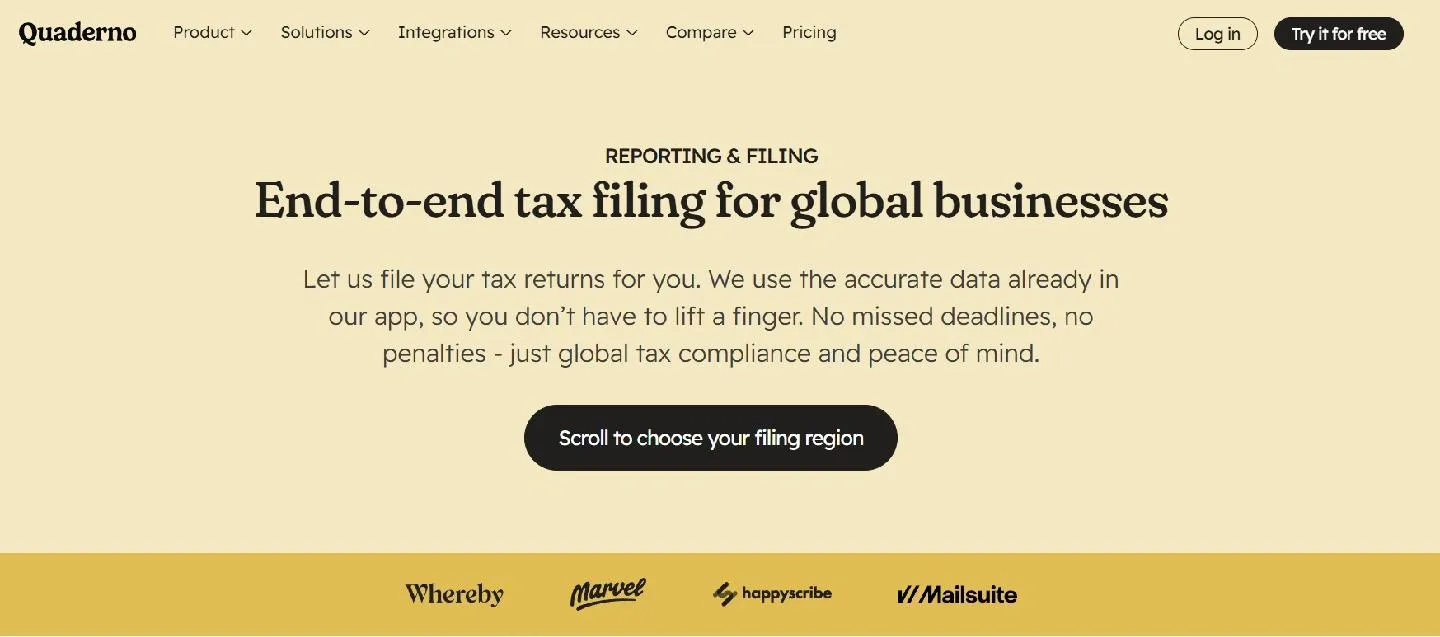
Quaderno is a tax compliance platform for online businesses that manages VAT, GST, and US sales tax across multiple jurisdictions. It automates tax calculations at checkout and offers an optional filing service through partnerships. There is no confirmed human review step before filing under the standard plan, so error-checking remains the customer's responsibility.
What are the key features of Quaderno
- Automated tax calculation for VAT, GST, and US sales tax
- Integrations with Stripe, Shopify, PayPal, WooCommerce, and Xero
- Automated invoicing with tax-compliant pricing across regions
What are the pros and cons of Quaderno
| Pros | Cons |
|---|---|
| International tax coverage | No confirmed human review before filing |
| Automated tax-compliant invoicing | Pricing reported as high for smaller teams |
| Wide payment platform integrations | Customer service response inconsistency |
Why is Galvix better than Quaderno?
Quaderno is better suited for internationally focused businesses managing VAT across multiple countries. Galvix focuses exclusively on US sales tax compliance with a human review step built into every return before filing.
TaxCloud
Source: TaxCloud
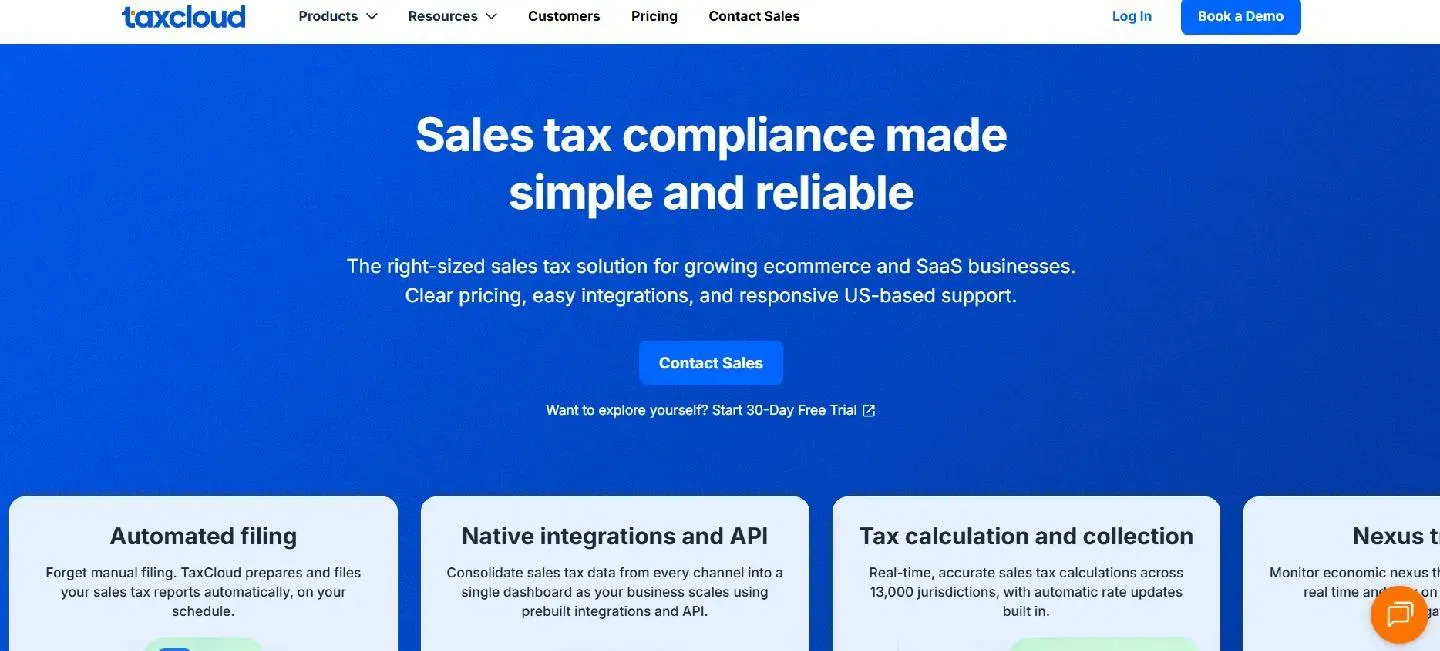
TaxCloud is a US sales tax platform built around the Streamlined Sales Tax program, which provides free or subsidized compliance in 24 participating states. It offers real-time tax calculation, automated filing, and US-based phone and chat support.
What are the key features of TaxCloud
- Streamlined Sales Tax certification covering 24 SST member states
- Lowest plan starts at $199 per year and the premium plan starts at $799 per year
- US-based phone, email, and chat support with fast response times
What are the pros and cons of TaxCloud
| Pros | Cons |
|---|---|
| Transparent per-order pricing | Limited support for complex product taxability |
| Fast US-based support response | Not a managed service; customer owns execution |
Why is Galvix better than TaxCloud?
TaxCloud is a self-service tool where your team retains full ownership of compliance execution. Galvix is a managed service where a named specialist prepares, reviews, and files every return without requiring operational involvement from your team.
TaxConnex
Source: TaxConnex
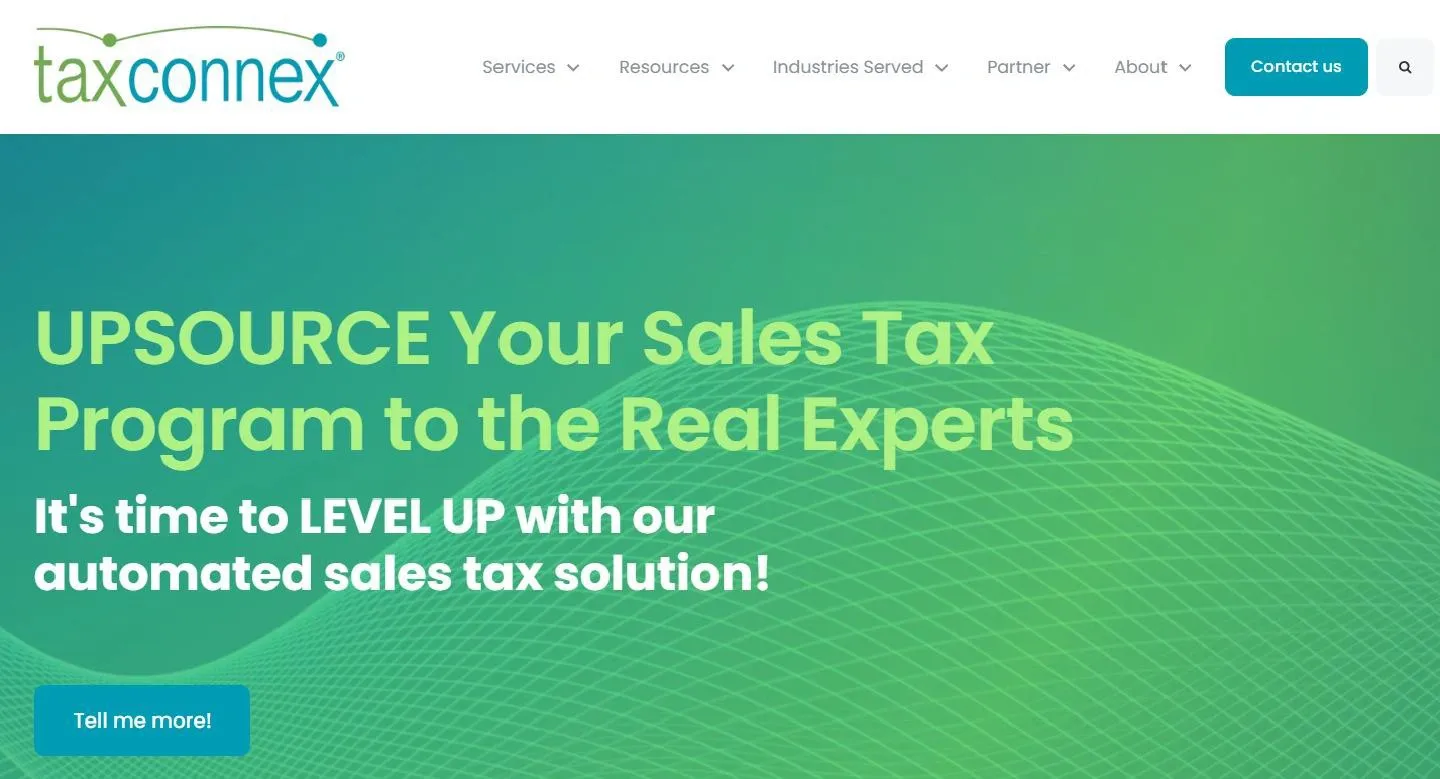
TaxConnex is an outsourced sales and use tax management provider combining human practitioners with proprietary compliance technology. It serves mid-market and enterprise clients across telecom, e-commerce, software, and manufacturing, with pricing based on a custom quote process.
What are the key features of TaxConnex
- Dedicated practitioner model with named account ownership per client
- taxC platform combining AI calculation with human-managed filing
- Telecom tax and regulatory compliance alongside standard sales tax
What are the pros and cons of TaxConnex
| Pros | Cons |
|---|---|
| Dedicated practitioner with full business context | Custom pricing with no published rates |
| Managed filing with human oversight | Implementation complexity for smaller businesses |
Why is Galvix better than TaxConnex?
TaxConnex skews toward mid-market and enterprise clients with complex telecom and multi-entity structures. Galvix is purpose-built for smaller and growing businesses where a lean finance team needs full compliance ownership transferred to dedicated tax specialists.
Numeral
Source: Numeral
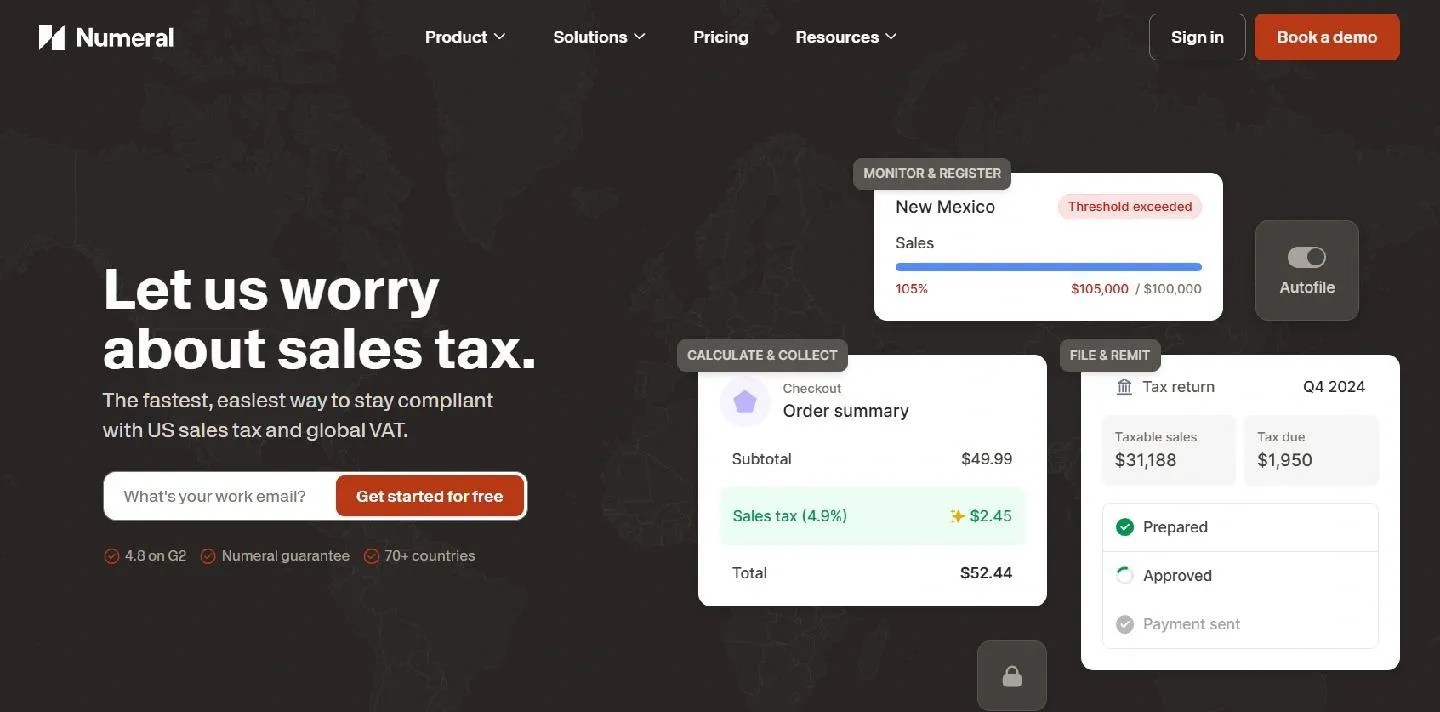
Numeral is a developer-centric, API-first sales tax platform for ecommerce and SaaS businesses building custom compliance workflows. It charges per filing rather than a monthly subscription, which appeals to businesses with low or irregular filing volumes. Its customization options and metadata handling capabilities make it suitable for engineering teams building proprietary billing systems.
What are the key features of Numeral?
- API-first architecture for custom billing and checkout integrations
- Per-filing pricing with no monthly platform subscription fee
- Free Nexus monitoring available independent of the paid compliance tier
What are the pros and cons of Numeral?
| Pros | Cons |
|---|---|
| No monthly subscription; pay per filing | Requires engineering resources to implement |
| Free Nexus monitoring without commitment | No dedicated human specialist included |
Why is Galvix better than Numeral?
Numeral is built for technical teams who want programmatic control over compliance infrastructure. Galvix is built for finance leaders who want the entire compliance function managed externally without engineering involvement.
Thomson Reuters ONESOURCE
Source: Thomson Reuters
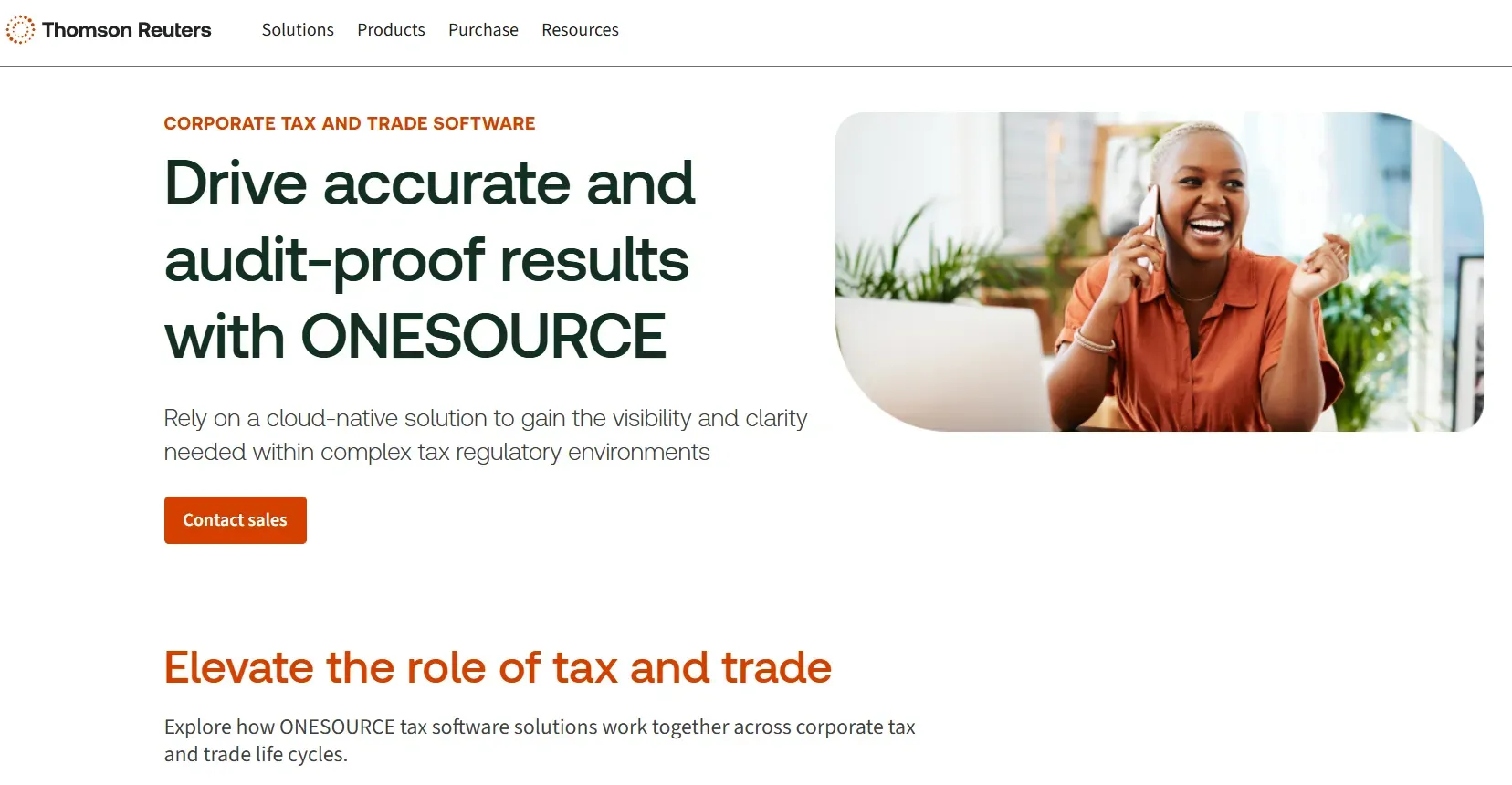
Thomson Reuters ONESOURCE is an enterprise tax platform covering indirect tax, corporate income tax, and statutory reporting across global jurisdictions. The platform has drawn comparisons to IBM Watson and azure machine learning in terms of its data engineering depth and orchestration capabilities for complex tax workflows..
What are the key features of Thomson Reuters ONESOURCE?
- Enterprise-grade indirect tax calculation and statutory reporting
- Deep integrations with SAP, Oracle, NetSuite, and Microsoft Dynamics
- AI-assisted tax data management and e-filing workflow automation
What are the pros and cons of Thomson Reuters ONESOURCE?
| Pros | Cons |
|---|---|
| Comprehensive multi-tax type coverage | Enterprise pricing with no public rates |
| Strong ERP integration depth | Significant implementation time and cost |
Why is Galvix better than Thomson Reuters ONESOURCE?
Thomson Reuters ONESOURCE targets large enterprises managing multi-tax obligations across global jurisdictions. Galvix focuses on US sales tax compliance for growing businesses that need a dedicated specialist team, not additional enterprise software infrastructure.

Evaluating Essential Features in a Vertex Alternative?
Here are the key features you must analyze to select a suitable sales tax software as a Vertex alternative:
Transparent Pricing Models: Look for flat fee structures to avoid unpredictable enterprise subscription invoices. Revenue-linked or transaction-volume pricing causes compliance costs to grow in ways that are difficult to budget for in advance.
Done-For-You Filing: Seek platforms offering dedicated human oversight to prevent expensive automated software errors. When a filing is wrong, the cost of correction consistently exceeds what managed oversight would have cost in the first place.
Multi-Channel Integrations: Ensure the service connects seamlessly with your existing billing infrastructure and payment gateways. Platforms that require manual data uploads introduce reconciliation risk at every filing cycle.
Proactive Notice Management: Choose a provider that handles complex state correspondence directly on your behalf. Notice management is where self-service platforms most frequently leave businesses exposed to penalty escalation.
What Makes Galvix Stand Apart From Every Other Vertex Alternative?
Every platform discussed above automates at least one part of the sales tax process. The meaningful distinction is what happens to the parts that automation cannot cover on its own:
- Sync errors caught before filing rather than discovered after a notice arrives.
- State notices requiring formal, timely responses to avoid escalating penalties.
- Nexus thresholds approaching faster than expected in new high-volume states.
- Returns that need a second set of eyes before reaching a revenue authority.
Vertex solves these challenges by assuming you have a dedicated internal tax team to manage them. Most Vertex alternatives make the same assumption in a smaller package. Galvix was built around the opposite premise: that a growing business with a lean finance function should not need an internal tax department to stay compliant.
Every Galvix return is reviewed by a human specialist before submission. The team handles state registrations, monitors all active nexus thresholds, and responds to state notices on your behalf. Businesses using Galvix report spending under 30 minutes a month on sales tax after onboarding, without adding headcount.
Schedule a personalized Galvix demo today and see what fully managed US compliance looks like for your specific business.

Frequently Asked Questions
What industries is Vertex best suited for
Vertex is best suited for large enterprises in manufacturing, retail, and distribution running SAP or Oracle ERP environments. It was designed for companies with dedicated internal tax functions and high-volume, multi-jurisdictional indirect tax compliance requirements.
How much does Vertex cost compared to its alternatives
Vertex does not publish standard pricing; costs are custom-quoted based on transaction volume and module selection. Self-service Vertex alternatives like TaxJar start from $39 per month, while managed Vertex alternatives like Galvix charge a flat per-state rate with no platform fee.
Does Vertex offer managed filing services
Vertex does not offer a managed filing service. Return preparation, filing, and state notice responses remain your internal team's responsibility. Businesses without a dedicated tax function frequently find this operational burden drives them toward Vertex alternatives with fully managed service models.
What is the biggest drawback of using Vertex for mid-market businesses
The biggest drawback is enterprise pricing combined with the assumption that your team manages ongoing compliance operations. Mid-market finance teams of one to three people end up funding infrastructure built for much larger organizations, then spending significant internal time operating it daily.
Is there a Vertex alternative that handles both compliance and state notices
Yes. Galvix manages the full compliance lifecycle including monthly filing, state registrations, and all state correspondence. When a notice arrives, the Galvix team responds on your behalf. Use Galvix's free nexus study to understand your current exposure before your next filing cycle.